
iron filter installation: what it involves
Iron filter installation takes 3-5 hours and costs $800-$2,500 installed. See media choices, backwash drain needs, and sizing by iron ppm and flow.
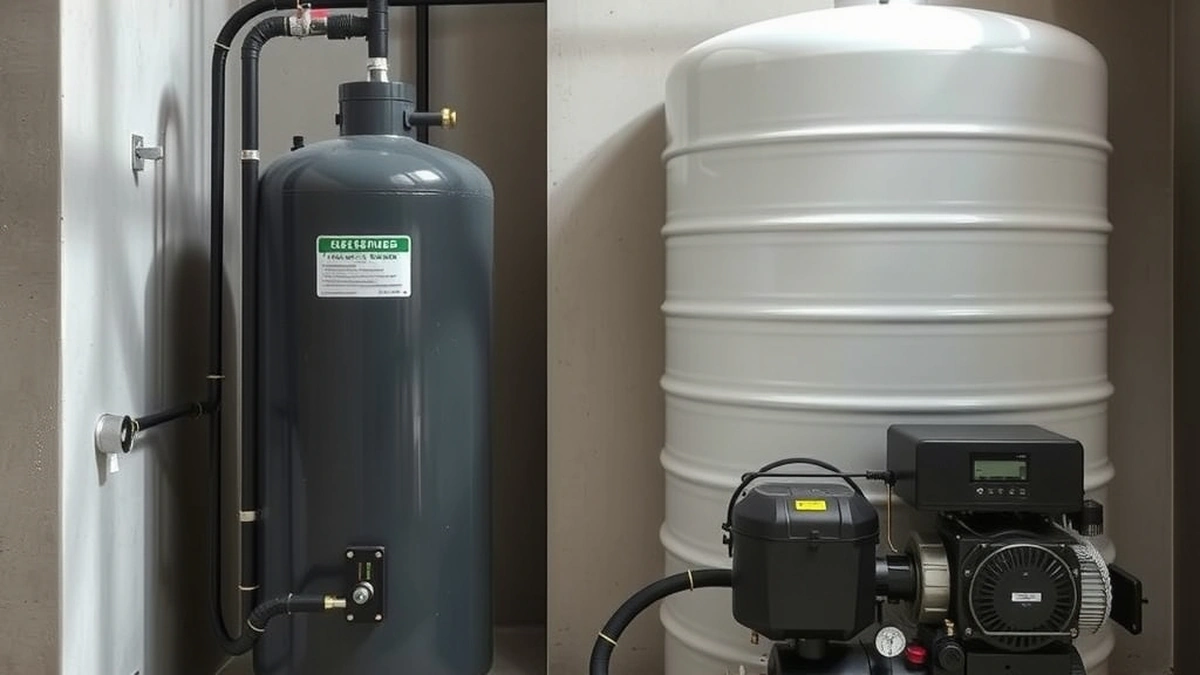
Iron filter installation takes 3-5 hours and costs $800-$2,500 installed. It needs a bypass, a 10-15 foot drain run for backwash, and a 120V outlet, and it must be sized to your iron level and peak flow.
- Installed cost
- $800 - $2,500
- Labor time
- 3 - 5 hours
- Drain run
- 10 - 15 feet
- Power
- 120V outlet
- Backwash flow
- 5 - 10 GPM
Some links on this page are affiliate links.If you buy through them we may earn a commission at no extra cost to you. We do not accept payment for rankings. Read the full disclosure.
Iron filter installation takes 3-5 hours and costs $800-$2,500 installed for a whole-house unit. The job needs a bypass, a drain within 10-15 feet for backwash, and a 120V outlet. Sizing is set by iron concentration in parts per million and peak flow in gallons per minute, not by house size.
What the equipment does
An iron filter is a point-of-entry treatment tank that oxidizes dissolved ferrous iron into ferric particles and then traps them in a granular bed. The bed is backwashed periodically to flush the captured solids to drain.
Three designs dominate residential work. Air injection draws ambient air into the tank to oxidize iron. Chemical oxidation injects chlorine or hydrogen peroxide ahead of a retention tank. Catalytic media uses a coated bed that accelerates oxidation on contact.
Each has a different install footprint. Air injection needs a compressor and a vent. Chemical oxidation needs a metering pump, a solution tank, and a retention tank. Catalytic media needs the least hardware but the most careful pH control.
Choosing the design
| Design | Installed cost | Best for | Extra install work |
|---|---|---|---|
| Air injection | $800 - $1,800 | 1-5 ppm iron, no sulfur | Compressor, vent, drain |
| Chemical oxidation | $1,500 - $2,500 | 5+ ppm, iron bacteria | Pump, tank, retention tank |
| Catalytic media | $900 - $2,000 | 1-3 ppm, low pH risk | Drain, pH check |
| Birm-style media | $800 - $1,600 | Clear water iron, pH 7+ | Drain, pre-filter |
Costs overlap because tank size, not design, often drives the invoice. A 2.5-cubic-foot tank with a metered valve costs more than a 1.5-cubic-foot tank regardless of what media is inside.
The drain and backwash requirement
This is the line item that decides whether the install is a $900 job or a $1,600 job. Backwash flow is typically 5-10 GPM for 10-15 minutes, which means 50-150 gallons per cycle.
The drain must handle that flow without backing up. A floor drain within 10 feet is ideal. A standpipe is next best. A laundry sink works if the air gap is correct. A dry well or a routed line to daylight is the expensive case.
The discharge line needs an air gap or a check valve depending on local code, and it must slope continuously. A sagging line holds water, freezes in a cold crawlspace, and stops backwash entirely.
On a well with a low-yield pump, backwash can outrun recovery. A 5 GPM well feeding a filter that demands 8 GPM during backwash will pull the pressure tank down and trip the pump. Check the well’s yield before specifying a large tank.
Sizing by iron and flow
Iron concentration sets the media volume; peak flow sets the tank diameter. The rule of thumb is 1-2 cubic feet of media per 10 ppm of iron for a household of four, then adjust for flow.
A worked example: 4 ppm iron, 3 bathrooms, peak flow 8 GPM. Media at 1.5 cubic feet handles the load at that flow. A 10-inch by 54-inch tank holds about 1.5 cubic feet and backwashes at 6-8 GPM, which matches the house.
At 8 ppm iron, the same house needs 2.5 cubic feet and a 12-inch tank, with backwash near 10 GPM. If the well cannot supply 10 GPM, an air injection design with a smaller tank and more frequent backwash is the compromise.
Iron above 2-3 ppm is also the practical limit for a softener. That is why the filter usually goes first in the treatment train, with the softener behind it. Iron in well water explains the forms and the test values, and iron filter cost covers the price bands in more detail.
Installation sequence
- Test iron, manganese, pH, and hardness, and confirm whether iron bacteria are present.
- Verify well yield and pressure tank size against the backwash demand.
- Select the design and tank size, then confirm drain location and slope.
- Cut in a bypass and mount the tank on a level, dry base.
- Install the drain line with an air gap and the vent or injection hardware.
- Set the backwash frequency, run a manual cycle, and check for media loss.
What goes wrong after install
Media loss during backwash is the most common complaint. It happens when the backwash flow exceeds the tank’s bed expansion limit, and the fix is a flow restrictor on the drain line, not a new tank.
Iron bacteria are the second. A filter removes iron; it does not disinfect a well. Slimy growth in the toilet tank means the well needs shock chlorination and possibly continuous disinfection, not a bigger filter. Iron bacteria in well covers that distinction.
Pressure drop is the third. A fouled bed or a clogged pre-filter shows up as weak showers and a filter that runs long cycles. A $20 pressure gauge downstream of the tank tells you whether the bed is the problem.
What changes the quote
Four things move the number: design complexity, tank size, drain distance, and whether electrical work is needed. An air injection unit in a basement with a floor drain is a half-day job. A chemical oxidation system with a retention tank and a new outlet is a full day.
Retrofits add surprises. Galvanized pipe, a missing shutoff, or a pressure tank that has to move can add $200-$600. Budget the middle of the $800-$2,500 range and keep $250 in reserve.
For the odor problem that often accompanies iron, sulfur filter installation covers the next tank in the train. If you are deciding between a filter and a softener, iron filter types sets out which design handles which water.
Frequently asked questions
How long does iron filter installation take?
Three to five hours for a whole-house unit with a bypass and drain run. Adding a retention tank for chemical oxidation or a pre-filter housing adds another 1-2 hours.
Does an iron filter need a drain?
Yes. Backwash water has to discharge somewhere, typically a floor drain, standpipe, or dry well within 10-15 feet. Without a drain the media cannot be cleaned and the filter will foul.
What size iron filter do I need for 4 ppm iron?
At 4 ppm and a peak flow of 8 GPM, a 10-inch by 54-inch tank with 1.5-2 cubic feet of media is typical. Above 5 ppm, many installers specify a larger tank or an oxidation step ahead of filtration.
Can an iron filter be installed after a softener?
It should go before the softener. Iron fouls resin, so the filter removes it first and the softener then handles hardness only. Reversing the order shortens resin life.
How much water does backwashing waste?
A typical backwash uses 50-150 gallons per cycle, run every 3-7 days. That is roughly 2,600-7,800 gallons per year, which matters on a well with limited yield.
Do I need a permit to install an iron filter?
Most jurisdictions do not require one for an appliance on an existing line, but a new drain line or a main-line reroute can require inspection. Check with the local building department.
Sources
Some links are affiliate links.If you buy through them we may earn a commission at no extra cost to you. We do not accept payment for rankings. Read the full disclosure.


