Stool Softener and Water: How Much to Take With It
Oral stool softeners are labeled to be taken with a full glass of water. See what that means in ounces, why water matters, and whether hardness affects it.
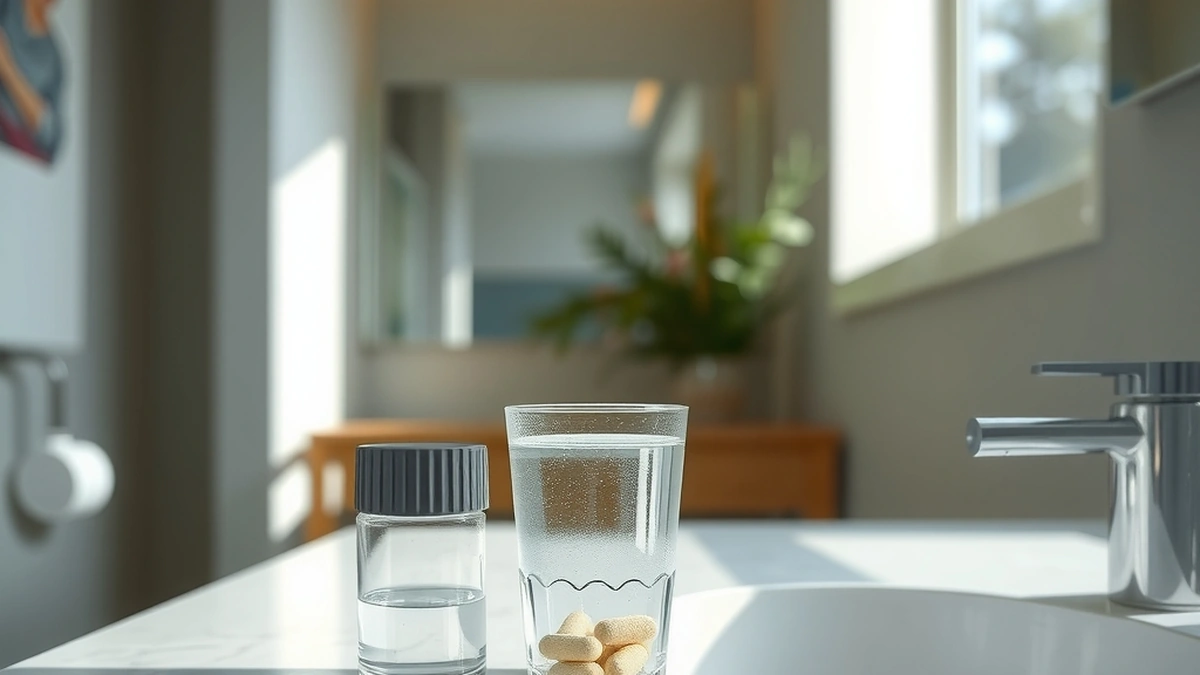
Stool softener labels direct you to take each dose with a full glass of water, about 8 ounces. Water is part of how the product works, so a sip is not enough, and the hardness of that water makes no difference to the dose.
- Water per dose
- About 8 ounces
- Glass size
- 8 - 12 fluid ounces
- Daily fluid target
- Varies by body size
- Water hardness effect
- None on dosing
- Lab water test
- $40 - $150
Some links on this page are affiliate links.If you buy through them we may earn a commission at no extra cost to you. We do not accept payment for rankings. Read the full disclosure.
Oral stool softener labels direct you to take each dose with a full glass of water, about 8 ounces. The water is not a convenience; it is part of how the product works. A sip from the tap is not the same as a full glass, and the hardness of the water does not change the instruction.
What the Label Actually Says
Most oral stool softener products, including store brands, instruct the user to take the dose with a full glass of water. Package directions vary by product and by dose, so the bottle in front of you is the authority.
“Full glass” is generally understood as 8 ounces. A standard drinking glass holds 8 - 12 fluid ounces, and a measuring cup is the reliable way to know.
If the label says to take it with water and you take it with a mouthful, you have not followed the direction. That is the practical answer to the question, and it is the one most people get wrong.
Why Water Is Part of the Dose
Stool softeners are surfactants. They reduce surface tension so water can mix into stool, which is why the class is sometimes described as a wetting agent.
That mechanism depends on water being present. The product does not add water to the body; it helps the water already there do its job. Taking it with a full glass supports the process, and taking it dry works against it.
This is a description of the product’s mechanism, not a treatment recommendation. Follow the label and ask a pharmacist about your situation.
Does Water Hardness Matter
No. The calcium and magnesium in hard water do not interact with the product in any meaningful way, and they do not change the volume you should drink.
Hard water is a plumbing and appliance issue, not a dosing issue. It leaves scale in kettles and soap scum on tile, and it has no bearing on how much water goes with a pill.
If the household is on a private well, the relevant question is whether the water is safe to drink, not whether it is hard. Bacteria and nitrate are the parameters that matter, and a lab panel costs $40 - $150.
Water Quality and What to Drink
| Source | Hardness | Dosing effect | Notes |
|---|---|---|---|
| Municipal tap | Varies | None | Tested and treated by the utility |
| Private well | Varies | None | Test annually for bacteria and nitrate |
| Softened tap | Near zero | None | Small sodium increase |
| Reverse osmosis | Near zero | None | Removes most dissolved solids |
| Bottled | Varies | None | Check the label for sodium |
Softened water adds a small amount of sodium. For most households that is not a concern, and households restricting sodium often keep an unsoftened tap or use reverse osmosis for drinking.
The point is that water choice is about taste, safety, and sodium, not about the stool softener. Any safe drinking water works for the dose.
Building a Routine
- Read the label on your specific product before the first dose.
- Measure 8 ounces of water rather than estimating from a glass.
- Take the dose with the full glass, not a sip.
- Keep water available through the day; thirst varies with activity and climate.
- Record the time if you are taking more than one dose, so you do not double up.
- Ask a pharmacist about interactions with other medicines.
A measuring cup by the sink removes the guesswork. It sounds excessive until you realize that “a glass” ranges from 4 ounces in a juice glass to 16 in a pint tumbler.
Questions a Pharmacist Can Answer
A pharmacist can clarify the dose schedule, whether the product interacts with anything else you take, and what to do if you miss a dose. That is a free conversation at most pharmacies and a better source than a search result.
Bring the bottle. The pharmacist needs the active ingredient and the strength, not just the brand name, because store brands and name brands can differ in formulation.
What “Another Dose” Means on the Label
Many stool softener labels describe a dose as one or two units, with a maximum number of doses in 24 hours. The phrase “another dose” usually refers to the second unit in the same day, not to taking an extra one sooner.
The label sets the interval and the daily limit. Following it matters more than the water volume, and a pharmacist can explain the schedule if the package is unclear.
Doubling up because a dose was missed is not what the label describes. If the timing is confusing, call the pharmacy rather than improvising.
Water and the Rest of the Routine
Fiber and fluid work together, and the product is designed to be taken with water rather than instead of it. A household that drinks little through the day may find the glass with the dose is the easiest one to remember.
Keep a glass by the sink and refill it after each dose. The habit is more reliable than a reminder on a phone, and it makes the 8-ounce instruction automatic.
If the tap water tastes off, the water source is worth a look. Chlorine, sulfur, or iron can make plain water unappealing, and a $40 - $150 lab test identifies the cause. Treating the water is not required for the product to work; it just makes drinking the glass easier.
For water testing in a private well, see water tests for wells and water testing cost. For the difference between hard and soft water, see hard water vs soft water.
Frequently asked questions
How much water should I take with a stool softener?
The label on most oral stool softeners directs a full glass of water, roughly 8 ounces, with each dose. Follow the specific package directions.
Can I take a stool softener with too little water?
A sip is not enough. The product is designed to work with water, and taking it dry can leave it less effective and harder on the throat.
Does hard water affect a stool softener?
No. Calcium and magnesium in hard water do not change how the product works or how much water you should drink with it.
Should I drink extra water during the day?
Fluid needs vary by body size, activity, and climate. The dose instruction covers the glass with the pill, not your total daily intake.
Can I take it with juice or milk instead?
Water is the usual instruction because it adds fluid without other ingredients. Check the label, and ask a pharmacist if you want to use another drink.
What if I miss a dose?
Follow the package directions rather than doubling up. A pharmacist can clarify the schedule for your specific product.
Sources
Some links are affiliate links.If you buy through them we may earn a commission at no extra cost to you. We do not accept payment for rankings. Read the full disclosure.