
Will Water Softener Salt Melt Ice? Yes, With Caveats
Softener salt is sodium chloride and does melt ice, but pellet form and purity make it a costly choice. See the working temperature, cost, and damage risks.
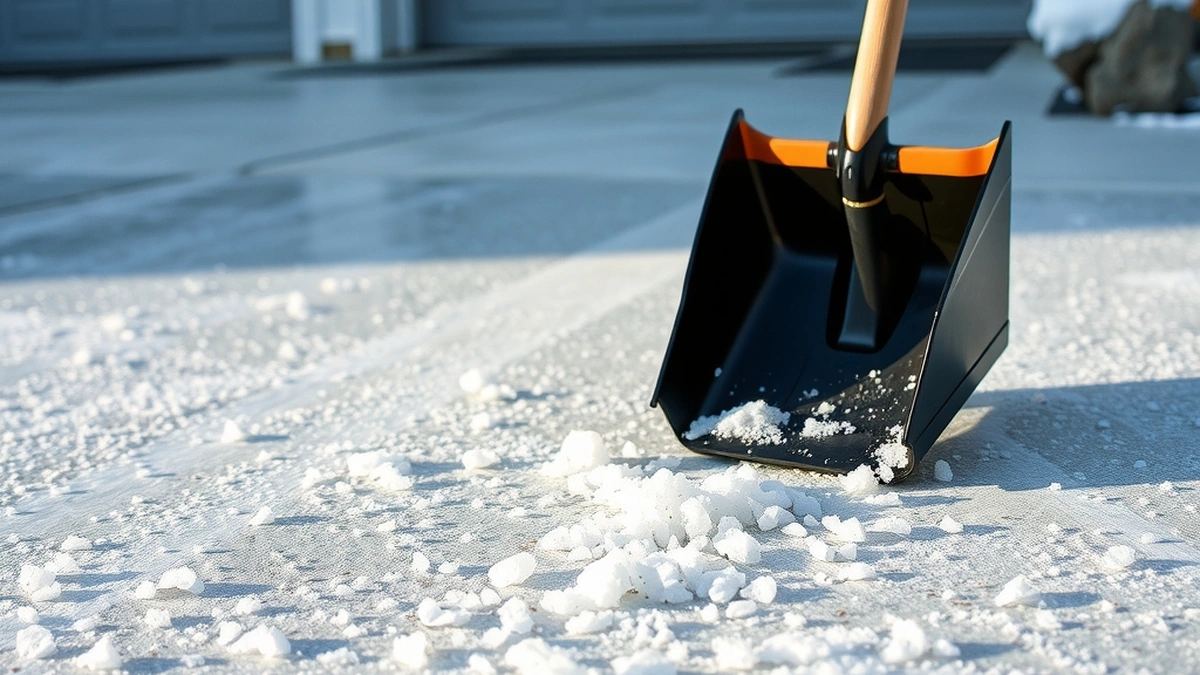
Yes, water softener salt melts ice because it is sodium chloride, which lowers the freezing point of water. It works down to about 15 - 20 degrees Fahrenheit, but pellets dissolve slowly and cost more per pound than purpose-made ice melt.
- Working temperature
- Down to 15 - 20 F
- Bag price
- $7 - $12 per 40 lb
- Rock salt price
- $5 - $8 per 40 lb
- Coverage
- About 100 sq ft per 10 lb
- Concrete risk
- Scaling with repeated use
Some links on this page are affiliate links.If you buy through them we may earn a commission at no extra cost to you. We do not accept payment for rankings. Read the full disclosure.
Yes, water softener salt melts ice. It is sodium chloride, and sodium chloride lowers the freezing point of water, which is the same mechanism behind every road salt. The caveats are speed, cost, and what it does to concrete and plants.
Why Salt Melts Ice
Ice melts when its temperature rises above the freezing point. Salt changes that point by dissolving into the thin layer of water on the ice surface and interfering with the crystal structure.
The result is a brine that stays liquid below 32 degrees Fahrenheit. The ice melts into that brine, and the brine spreads to more ice, continuing the process.
Sodium chloride works best at temperatures near freezing and loses effectiveness as it gets colder. Below about 15 - 20 degrees Fahrenheit, it is too slow to be useful on a driveway.
How Well Softener Salt Performs
Softener salt is pellets or coarse crystals of sodium chloride, typically 99.5 percent pure. It melts ice the same way rock salt does.
The pellet form is the drawback. Pellets are compressed and dense, so they dissolve more slowly than the irregular crystals in a bag of ice melt. On a cold driveway, slow dissolution means slow melting.
Coarse solar crystals perform better than pellets because they have more surface area. If the choice is between the two, use the crystals for ice and save the pellets for the brine tank.
Cost Comparison
| Product | Bag price | Price per lb | Working temp |
|---|---|---|---|
| Softener pellets | $7 - $12 per 40 lb | $0.18 - $0.30 | 15 - 20 F |
| Solar crystals | $6 - $10 per 40 lb | $0.15 - $0.25 | 15 - 20 F |
| Rock salt | $5 - $8 per 40 lb | $0.13 - $0.20 | 15 - 20 F |
| Calcium chloride | $15 - $25 per 40 lb | $0.38 - $0.63 | Below 0 F |
| Magnesium chloride | $18 - $30 per 40 lb | $0.45 - $0.75 | Below 0 F |
Softener salt costs more per pound than rock salt and works the same. Calcium chloride costs more and works at lower temperatures, which is why it is the choice for a deep freeze.
The economics are straightforward: using tank salt on the driveway is convenient, not cheap. A 40-pound bag covers roughly 400 square feet at a light application, or about 100 square feet at a heavy one.
What It Does to Concrete
Sodium chloride accelerates the freeze-thaw cycle in concrete. Water enters the pores, salt lowers the freezing point, and the repeated expansion and contraction scales the surface.
New concrete is the most vulnerable, especially in its first winter. Avoid salt on concrete less than a year old, and use sand or a non-chloride product instead.
Repeated use on older concrete causes spalling at the edges and around joints. Shovel first, apply sparingly, and sweep up the residue when the ice clears.
What It Does to Plants and Pets
Sodium accumulates in soil and pulls water away from roots. Grass along a driveway edge turns brown, and shrubs closest to the pavement suffer first.
Keep salt off beds, and flush the lawn edge with water in spring. A deep watering dilutes the sodium and pushes it below the root zone.
Pets are a separate concern. Salt irritates paws, and pellets can be ingested during grooming. Rinse paws after a walk, and sweep loose pellets off the walkway.
Using It Safely
- Shovel snow and clear ice mechanically before applying salt.
- Apply a light, even layer; more salt does not melt faster.
- Use crystals rather than pellets for faster action.
- Keep salt off concrete younger than one year.
- Sweep residue once the ice clears.
- Store the bag sealed and dry, away from pets.
A little salt goes further than most people expect. The common mistake is pouring a pile at the garage door, which wastes product and concentrates damage in one spot.
Keeping Enough for the Softener
Winter is when softener salt sells out, because ice melt competes for the same production. A household that uses tank salt on the driveway is competing with itself.
Buy the ice melt separately and keep the softener supply for the softener. That also avoids the grit problem: salt that has been spread on a driveway picks up sand and dirt, and it should never go back into a brine tank.
If the bag is clean and dry and has never left the garage, it is fine in the tank. If it has been on the ground, throw the remainder away.
Alternatives for Extreme Cold
Below 15 degrees Fahrenheit, sodium chloride stops being useful. Calcium chloride is the standard alternative, working down to roughly minus 20 degrees, at $15 - $25 per 40-pound bag.
Magnesium chloride sits between the two on temperature and price, and it is gentler on vegetation than sodium chloride. Both cost more than softener salt and both are worth it when the temperature drops.
Sand and grit do not melt ice. They provide traction, which is the safety goal when melting is not possible. A bucket of sand by the door is cheaper than any salt and does not damage concrete.
Pre-wetting salt with water before spreading speeds up the melt, because the brine starts working immediately. A garden sprayer and a five-gallon bucket are enough for a driveway.
The practical stack is: shovel first, salt with crystals or calcium chloride depending on temperature, and sand for traction on the coldest days. Softener salt can fill in, but it is not the best tool for any of those jobs.
For the salt supply, see water softener salt near me. For the ice-melting mechanism in more detail, see does water softener salt melt ice. For salt types, see softener salt types.
Frequently asked questions
Does water softener salt melt ice?
Yes. It is sodium chloride, which lowers the freezing point of water and dissolves ice. Pellets work more slowly than rock salt because they dissolve from the outside in.
How cold is too cold for salt to work?
Sodium chloride becomes ineffective around 15-20 degrees Fahrenheit. Below that, calcium chloride or magnesium chloride products work better.
Is softener salt safe on concrete?
Repeated use can cause surface scaling, especially on new concrete. Apply sparingly, shovel first, and avoid piling salt against the slab edge.
Is it cheaper to use softener salt as ice melt?
No. Purpose-made ice melt and rock salt cost less per pound, and pellets dissolve more slowly. Using tank salt is convenient but not economical.
Will it damage plants and grass?
Yes. Sodium chloride accumulates in soil and damages roots and foliage. Keep it off beds and flush the edge of the lawn in spring.
Can I put the leftover salt back in the softener?
Only if it is clean and dry. Salt that has been spread on a driveway picks up grit and should not go into a brine tank.
Sources
Some links are affiliate links.If you buy through them we may earn a commission at no extra cost to you. We do not accept payment for rankings. Read the full disclosure.


