
Water Softener Salt Near Me: Where to Buy and What to Pay
Hardware stores, farm supply, warehouse clubs, and water dealers all stock softener salt at different prices. Compare channels and bag sizes before driving.
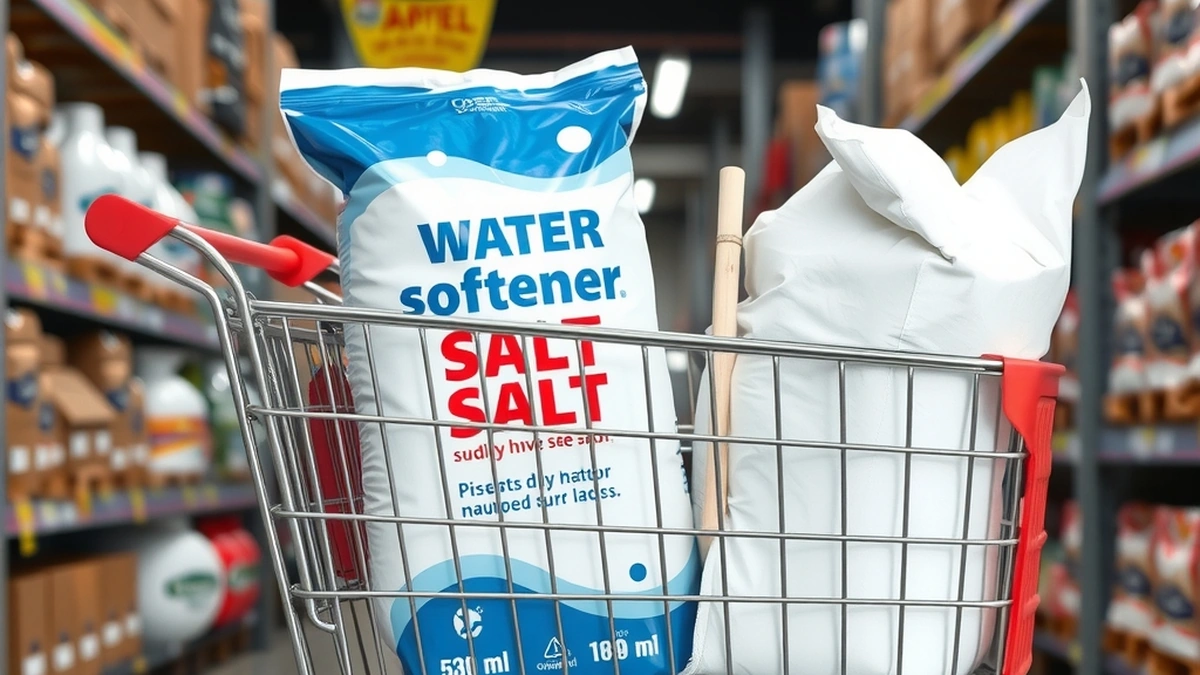
Water softener salt near you is sold at hardware stores, farm supply stores, warehouse clubs, grocery stores, and water treatment dealers, priced $6 - $12 per 40-pound bag. Call ahead for stock, compare price per pound, and buy six to ten bags at a time.
- Hardware store
- $7 - $12 per 40 lb
- Farm supply
- $6 - $10 per 40 lb
- Warehouse club
- $6 - $10 per 40 lb
- Water dealer
- $9 - $16 per 40 lb
- Annual use
- 20 - 30 bags
Some links on this page are affiliate links.If you buy through them we may earn a commission at no extra cost to you. We do not accept payment for rankings. Read the full disclosure.
Water softener salt is sold within a few miles of almost every home, at hardware stores, farm supply stores, warehouse clubs, grocery stores, and water treatment dealers. Prices run $6 - $12 per 40-pound bag, and the cheapest source is usually the one with the most turnover, not the closest one.
The Channels and Their Prices
| Channel | 40 lb price | Stock depth | Notes |
|---|---|---|---|
| Farm supply | $6 - $10 | Deep, pallets | Best per-pound price |
| Warehouse club | $6 - $10 | Pallets | Membership required |
| Hardware store | $7 - $12 | Moderate | Reliable, easy returns |
| Grocery store | $8 - $13 | Shallow | Convenience pricing |
| Water dealer | $9 - $16 | Deep | Delivery available |
| Online | $10 - $20 | Variable | Shipping weight is brutal |
The pattern is volume. A farm supply store that sells salt by the pallet can undercut a grocery store that sells four bags a week, because the freight is spread across a truckload.
Shipping changes the online math. A 40-pound bag costs $25 - $50 to ship individually, so online salt only makes sense when delivery is included in a bulk order or a subscription.
What to Look For on the Bag
The label should say “water softener salt” and name the form: pellets, solar crystals, or potassium chloride. If it says ice cream salt, pickling salt, or pool salt, it is a different product.
Check the weight. Bags come in 25, 40, and 50 pounds, and a 25-pound bag priced like a 40 is a bad deal. Divide the price by the weight and compare cents per pound.
Check the additive line. Plain pellets are the default. Bags with resin cleaner or rust remover cost $3 - $5 more and only help when the water test shows iron.
How Much to Buy
A household uses 800 - 1,200 pounds a year, or 20 - 30 bags of 40 pounds. That is $120 - $400 at typical prices.
Six to ten bags is a sensible single purchase. It covers two to four months, fits in a car, and limits the amount of salt sitting in a humid garage.
A pallet of 40 - 50 bags lasts 18 months to two years. It only makes sense with dry, raised storage and a household that genuinely uses 30 bags a year. Otherwise the bottom bags fuse before they are used.
A Price Check Worth Doing
Before driving, call the two nearest stores and ask three questions: the brand, the bag weight, and the price. That call takes five minutes and routinely finds a $2 - $3 per bag spread within the same town.
Ask whether the store price-matches. Several hardware chains do, and a competitor’s advertised bag price is often enough to get the lower number.
Ask about the pallet price even if you are not buying one. A store that sells pallets will quote a per-bag rate, and that rate tells you how low the market goes. It is useful leverage when a delivery service quotes $14 per bag.
Delivery Math for the Local Buyer
Local delivery from a hardware store or dealer usually runs $10 - $16 per bag, with a 10-bag minimum and a $0 - $40 drop fee. At 10 bags, the per-bag premium over store pickup is $3 - $5.
That premium is worth it once a year for a household using 15 bags, and worth it every drop for a household using 30. The break-even depends on how much the trip costs in time, fuel, and lifting.
One more local source is often overlooked: the water treatment company that installed the softener. Many keep a route for their own customers and will add a household that bought equipment elsewhere. The price is higher, and the driver usually knows the unit.
When to Shop
Fall is the best time. Ice melt demand ramps up in late autumn, and retailers run promotions before the winter rush. Bags can drop $1 - $2, which is $20 - $60 a year at typical use.
Winter is the worst time. Pellet salt sells out, crystals remain, and the remaining stock has been handled and dropped. If the tank runs low in January, buy crystals and plan to clean the tank in spring.
Spring is the second-best window, when ice melt inventory is cleared out and salt returns to the softener aisle.
Loading and Getting It Home
- Check the vehicle payload; ten bags is 400 pounds.
- Load bags flat in the trunk or bed, not stacked against glass.
- Bring a tarp for the trunk liner; salt dust is corrosive to carpet and metal.
- Lift with both hands and set bags down rather than dropping them.
- Unload onto a pallet or plywood, not directly onto concrete.
- Keep the stack off exterior walls and away from floor drains.
A split bag in a garage is more than a mess. Salt pulls moisture from the air, and a damp patch on a concrete floor can damage the slab surface over time.
Local Dealers and Delivery
A water treatment dealer is the most expensive per bag and the most convenient. Many deliver, fill the tank, and check the system while they are there. That service costs $10 - $16 per bag, which is a premium of $3 - $6 over the cheapest local source.
Delivery makes sense for households using more than 20 bags a year, for anyone who cannot lift 40 pounds, and for a brine tank in a basement with a difficult stair run.
For the delivery option, see water softener salt delivery and water softener salt delivery service. For brands, see Diamond Crystal water softener salt and Morton water softener salt. For annual costs, see water softener salt cost.
Frequently asked questions
Where is the cheapest place to buy softener salt?
Farm supply stores and warehouse clubs usually have the lowest per-bag price, followed by hardware stores. Water treatment dealers charge more but may deliver.
How many bags should I buy at once?
Six to ten bags covers two to four months for most homes and limits moisture exposure. Buy more only if storage is dry and elevated.
Does grocery store salt work in a softener?
Only if it is labeled for water softeners. Food-grade and ice-cream salt are different products with different grain sizes and additives.
Can I use pool salt in a water softener?
Pool salt is high-purity sodium chloride but is often too fine and can cake in a brine tank. Use salt labeled for softeners.
Why is salt out of stock in winter?
Ice melt competes for the same production and shelf space. Stock up in fall if the tank tends to run low during winter.
Do I need to call ahead?
Yes, for pellet salt in winter or for pallet quantities. A two-minute call saves a wasted trip, and stock varies by store and week.
Sources
Some links are affiliate links.If you buy through them we may earn a commission at no extra cost to you. We do not accept payment for rankings. Read the full disclosure.


