
Water Softener Salt Delivery Service: Contracts and Costs
A salt delivery service drops bags or pallets on a schedule, sometimes filling the tank. Compare service tiers, contract terms, and per-drop pricing.
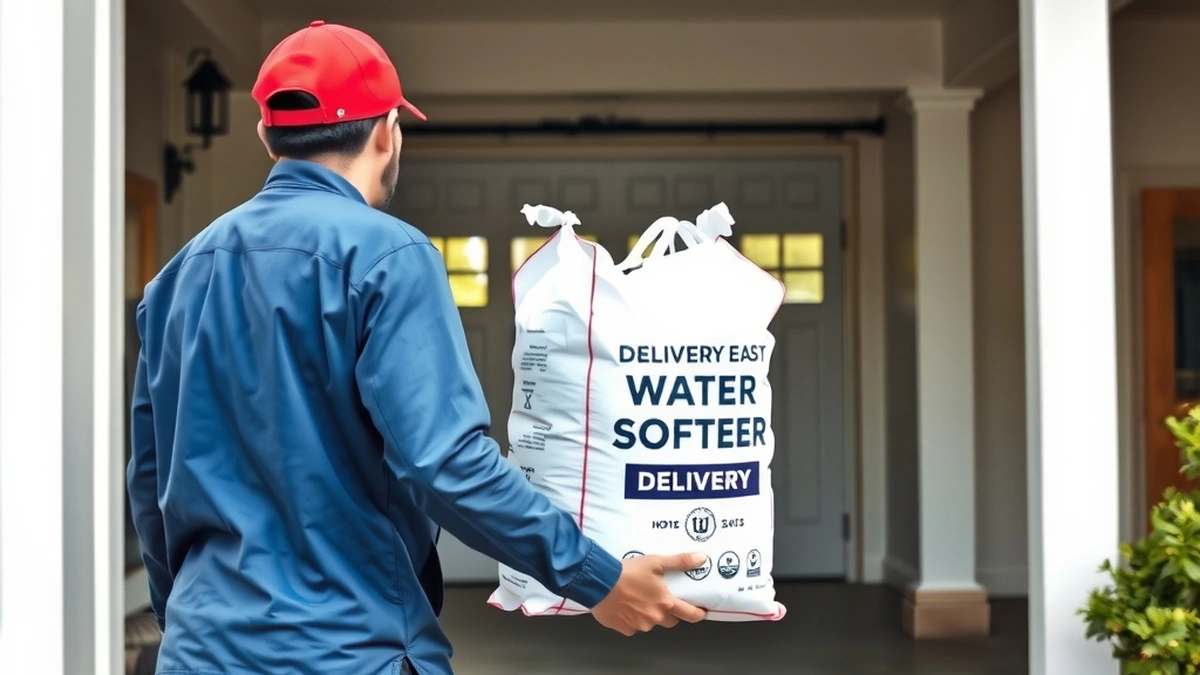
A water softener salt delivery service schedules bags or pallets to your home, with tiers from curbside drop to tank fill and system check. Delivered salt runs $10 - $16 per 40-pound bag, and most households need a drop every two to four months.
- Delivered price
- $10 - $16 per bag
- Service tiers
- Curbside, garage, full service
- Typical minimum
- 10 bags per drop
- Drop frequency
- Every 2 - 4 months
- Annual salt use
- 800 - 1,200 lb
Some links on this page are affiliate links.If you buy through them we may earn a commission at no extra cost to you. We do not accept payment for rankings. Read the full disclosure.
A water softener salt delivery service brings 40-pound bags or full pallets to your home on a schedule. Tiers range from a curbside drop to a full service that fills the brine tank and checks the system. Delivered salt costs $10 - $16 per bag against $7 - $12 at retail.
The Three Service Tiers
Curbside delivery is the base level. The driver leaves a pallet or a stack of bags at the garage, porch, or front door. You move them from there.
Garage or basement placement moves the bags inside the building. That sounds minor until the first winter delivery, when the difference between a pallet in the driveway and a stack beside the softener is an hour of lifting in the cold.
Full service includes filling the brine tank, checking the salt level, and sometimes testing hardness at a tap. Some dealers also inspect the valve and the drain line while they are there. This tier costs the most and is the closest thing to a maintenance plan.
What Each Tier Costs
| Tier | Per bag | Drop fee | Labor included |
|---|---|---|---|
| Curbside | $10 - $13 | $0 - $40 | None |
| Garage placement | $12 - $15 | $0 - $30 | Carry inside |
| Full service | $14 - $16 | Often waived | Tank fill and check |
At 25 bags a year, the difference between curbside and full service is roughly $100. That is the price of never lifting a bag and having someone look at the system four times a year.
The per-bag price is not the whole story. A $10 bag with a $40 drop fee on a 10-bag order is $14 per bag. Ask for the all-in number for a realistic order size before comparing services.
How Much Salt and How Often
Salt demand follows hardness and occupancy. A softener draws 8 - 12 pounds per regeneration, and a family of four at 10 GPG regenerates roughly every three to four days.
That works out to about 70 regenerations a year at 10 pounds, or 700 pounds. Add a margin for harder water and the annual figure lands in the published $120 - $400 cost range at $7 - $12 per bag. In bags, 800 - 1,200 pounds is 20 - 30 bags.
A drop every two to four months keeps the tank between half and two-thirds full. Seasonal homes need a different schedule: a summer cabin might need one drop a year, and a rental property may need a mid-tenancy check.
Evaluating a Provider
- Ask for the per-bag price, the drop fee, and the minimum order in writing.
- Confirm the delivery point and whether stairs change the price.
- Ask whether the driver fills the tank or leaves bags at the door.
- Check the contract length, auto-renewal terms, and cancellation notice.
- Confirm the salt form and brand; some services deliver only pellets.
- Get two quotes and compare the annual total at your real usage, not the per-bag rate.
A dealer who also services softeners has an incentive to notice a failing valve during a delivery. That can be an advantage, and it can also lead to an upsell. Ask for the inspection findings in writing and decide on repairs separately.
Contract Terms to Watch
Auto-renewal is the most common trap. A one-year agreement that renews automatically unless cancelled 30 days before the anniversary is easy to forget. Mark the calendar at signing.
Bundled service plans often price salt at the top of the delivered range and include an annual inspection. That can be fair value if the inspection is real, but ask what it covers. A visual check and a hardness test are not the same as a valve rebuild.
Watch for restocking fees and fuel surcharges. A $15 fuel surcharge per drop adds $60 a year at four drops, which is 10 percent of the salt bill.
Ask what happens when the drop is missed. A route that reschedules within a week is fine; one that pushes you to the next cycle leaves the tank short. Get the rescheduling policy in writing, along with the contact number for a same-week top-up.
Seasonal properties need a different arrangement. A summer cabin that sits empty from October to May does not need a route, and a service that bills monthly will charge for drops it never makes. Ask for a seasonal hold, and confirm the tank is filled before the season starts rather than after the first guests arrive.
Rental properties are the other edge case. A landlord who is not on site cannot check the salt level, and a tenant will not call until the water feels hard. A full-service tier with a tank fill and a hardness check four times a year is the practical answer, even at the higher per-bag price.
When Delivery Is Worth It
Delivery pays when annual use is 20 bags or more, when the tank is in a basement with a difficult stair run, when the household cannot safely lift 40-pound sacks, or when two working adults have no time for a store trip during business hours.
It does not pay for a condo using six bags a year, for a household with a store nearby and easy storage, or for anyone who enjoys the trip. The premium is convenience, and convenience is worth different amounts to different people.
Storage and the First Drop
A year of salt is 800 - 1,200 pounds, which is 20 - 30 bags. Stack on a pallet, keep the stack off concrete, and leave air space around it. Bags against a damp wall absorb moisture and fuse.
Before the first delivery, clear the path from the door to the tank and confirm the tank’s fill opening is accessible. A driver who cannot reach the tank will leave the bags where they land, and the full-service price buys nothing.
For the pricing comparison, see water softener salt delivery and water softener salt cost. For tank levels, see how often to add salt. For the wider running cost, see water softener running cost.
Frequently asked questions
What does a salt delivery service include?
At minimum, bags delivered to the door or garage. Full-service tiers add carrying the salt to the tank, filling it, checking the level, and sometimes testing hardness.
How much does salt delivery cost per bag?
Most services charge $10-$16 per 40-pound bag, against $7-$12 at retail, with some adding a $20-$40 drop fee on small orders.
Is a salt delivery contract worth it?
It is worth it for households using 20 or more bags a year, for anyone who cannot lift 40-pound sacks, and where the brine tank is in a basement with difficult stairs.
Can I cancel a salt delivery contract?
Terms vary. Ask about the notice period, auto-renewal, and any restocking fee before signing, and prefer per-drop billing over a long lock-in.
Will the driver test my water?
Some full-service dealers test hardness at the tap during a delivery. It is not universal, so confirm before assuming the visit includes diagnostics.
How do I know when to schedule a delivery?
Track bag use for two months, then set the interval so the tank never drops below half. Most homes land on a drop every two to four months.
Sources
Some links are affiliate links.If you buy through them we may earn a commission at no extra cost to you. We do not accept payment for rankings. Read the full disclosure.


