
Berkey water filter
Berkey gravity filters use carbon and ceramic elements and need no power or plumbing. See what they remove, what they cost, and where they fall short.
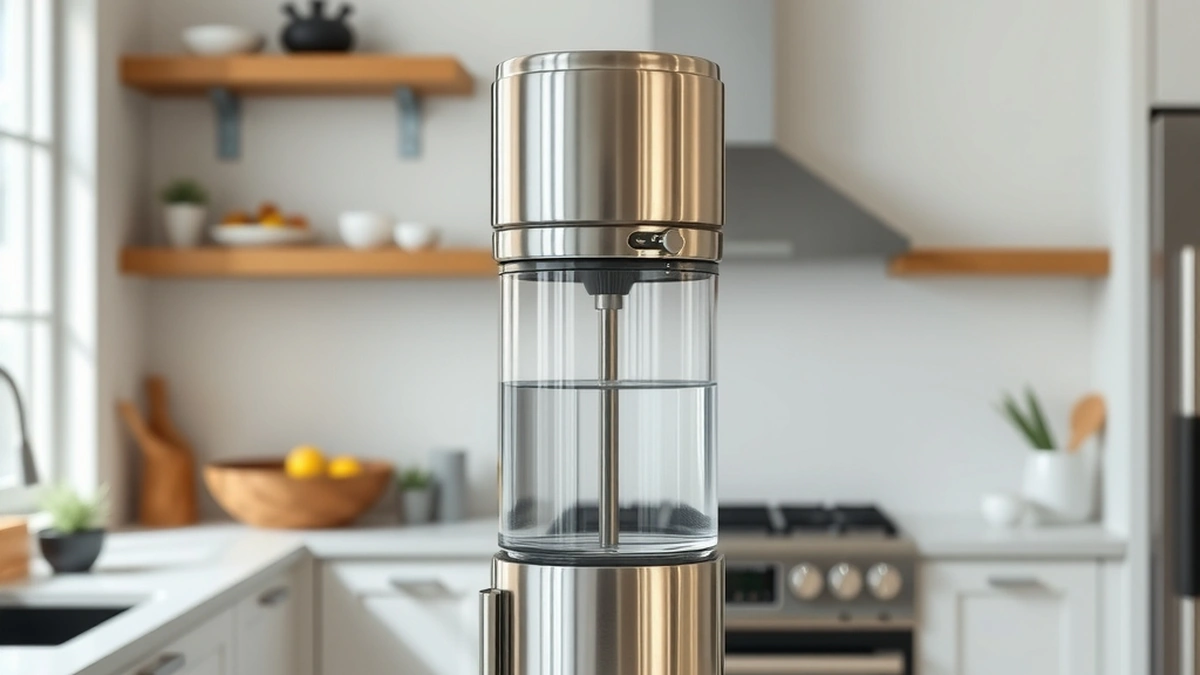
A Berkey water filter is a gravity-fed stainless steel system using carbon and ceramic elements that needs no power or plumbing. Systems cost roughly $300 to $400 and replacement elements about $100 to $150 per pair, filtering on the order of 3,000 gallons per set.
- System cost
- $300 - $400
- Element pair
- $100 - $150
- Rated volume
- About 3,000 gallons
- Power needed
- None
- Best for
- Off-grid and emergency use
Some links on this page are affiliate links.If you buy through them we may earn a commission at no extra cost to you. We do not accept payment for rankings. Read the full disclosure.
A Berkey water filter is a gravity-fed system: water goes in the top chamber, passes through carbon or ceramic elements, and collects in the bottom chamber for dispensing. It needs no power, no plumbing, and no drain, which is why it shows up in off-grid cabins, RVs, and emergency kits.
The Design
Two stainless steel chambers stack. The upper holds raw water, the lower holds filtered water, and a spigot sits at the bottom. Elements screw into the base of the upper chamber and hang into the lower.
Gravity does the work. Flow is slow, roughly a quart every few minutes depending on the element count and the water, which is the trade for needing no infrastructure.
The stainless body is the durable part. The elements are consumables, replaced when the rated volume is reached or when flow slows beyond cleaning.
What the Elements Do
Berkey sells two main element types.
Black elements are a carbon block with a claimed pore size small enough to filter pathogens as well as chemicals. The manufacturer publishes removal claims and independent lab reports, but the certification status is element-specific and worth checking for the exact product you buy.
Ceramic elements are a porous ceramic shell with a carbon core. They are cleanable and excel at sediment and pathogens, but they do not remove dissolved chemicals as effectively as carbon alone.
| Element | Sediment | Chlorine and taste | Pathogens | Dissolved salts |
|---|---|---|---|---|
| Black carbon | Yes | Yes | Claimed, verify | No |
| Ceramic | Yes | Partly | Yes | No |
| Combined system | Yes | Yes | Yes | No |
The last column is the important one. Neither element removes dissolved salts, nitrate, or hardness. A Berkey is not a reverse osmosis system, and it is not a softener.
What It Costs
A two-element system runs roughly $300 to $400. A pair of replacement black elements runs $100 to $150 and is rated for about 3,000 gallons.
Cost per gallon: $125 ÷ 3,000 = about $0.04 per gallon for elements, plus the amortized system. A $350 system over ten years is $35 per year; at 300 gallons a year that adds $0.12 per gallon, for a total near $0.16.
That is competitive with a pitcher and cheaper than bottled water, with the advantage of much higher capacity and no electricity. The disadvantage is speed and manual filling.
| Item | Cost | Life |
|---|---|---|
| System | $300 - $400 | 10+ years |
| Element pair | $100 - $150 | About 3,000 gallons |
| Spigot or sight glass | $15 - $40 | As needed |
| Cleaning supplies | $10 - $20 | Occasional |
Where It Fits
Off-grid and cabin use. No power, no plumbing, no drain. This is the clearest case.
Emergency preparedness. A system that works when the municipal supply is compromised is genuinely useful, provided you have stored raw water to put through it.
Rental kitchens. No installation, no landlord permission, and it moves with you.
Everyday municipal water. It works, but a $30 pitcher or a $150 under-sink filter is faster and cheaper for the same chlorine-taste job.
Where It Falls Short
Speed. Gravity flow is slow. Filling a large system takes minutes and dispensing a gallon takes a while. A family using 2 gallons a day will notice.
No dissolved removal. Nitrate, sodium, hardness, and PFAS at low concentrations are not reliably removed by carbon alone. If the lab report shows those, a different treatment is needed.
No certification shortcut. Removal claims should be checked against the specific element and the specific contaminant. A general “removes 200+ contaminants” claim is not a certification.
Maintenance discipline. Elements need cleaning, and a system that is not cleaned grows biofilm. The stainless body hides this better than a clear pitcher does.
Gravity vs Pressurized
A gravity filter trades speed for independence. A pressurized under-sink unit trades an installation for flow.
| Feature | Gravity filter | Under-sink filter |
|---|---|---|
| Power | None | None for carbon, yes for RO |
| Plumbing | None | Supply and drain |
| Flow | Slow, manual | On demand |
| Capacity | 2 - 3 gallons stored | Unlimited |
| Portability | Yes | No |
| Cost per gallon | Low | Low |
| Best for | Off-grid, emergency | Everyday kitchen use |
A household that wants filtered water at the turn of a handle will be happier with an under-sink unit. A household that wants water when the power is out will be happier with gravity. Some keep both, which is not as extravagant as it sounds: the under-sink unit handles daily use and the gravity system sits in the emergency kit.
Five Steps Before Buying
- Test the water to know what the elements must remove.
- Check the certification for the exact element and contaminant you care about.
- Size the system to daily use; a larger chamber means fewer refills.
- Plan for element cost at $100 to $150 per pair every one to three years.
- Confirm the counter space and the height under the tap you will fill from.
Maintenance
Clean the chambers monthly with warm soapy water and rinse thoroughly. Scrub the elements gently under running water when flow slows; do not use soap on the elements.
Store filtered water no more than a day or two at room temperature. The system is not refrigerated and it is not sterile after the elements.
If the water tastes off after cleaning, the elements may be exhausted rather than dirty. Replacement is the fix, not more cleaning.
For the comparison with other gravity and pitcher options, see water filter pitcher reviews. If the report shows nitrate or hardness, reverse osmosis and whole house water softener cover the treatments that address them, and well water testing covers how to find out.
Frequently asked questions
How does a Berkey water filter work?
Water pours into an upper chamber, passes by gravity through carbon and ceramic elements into a lower chamber, and is drawn from a spigot; no pump or electricity is required.
What do Berkey filters remove?
The elements are rated for chlorine, sediment, and a range of organic compounds, with manufacturer claims extending to some metals and pathogens; certification is element-specific.
How much does a Berkey system cost?
Systems typically run $300 to $400, with replacement element pairs at $100 to $150 and a rated volume of about 3,000 gallons per set.
How long do Berkey filters last?
The manufacturer rates a pair of elements for roughly 3,000 gallons, which is one to three years for a household, and the elements can be cleaned and reused before replacement.
Is Berkey good for well water?
It can filter sediment and taste, but it does not soften water or provide a certified microbiological barrier, so a contaminated well still needs testing and appropriate treatment.
Does Berkey water need refrigeration?
Filtered water stored in the stainless chamber keeps at room temperature, but it should be consumed within a day or two and the system cleaned regularly.
Sources
Some links are affiliate links.If you buy through them we may earn a commission at no extra cost to you. We do not accept payment for rankings. Read the full disclosure.


