
Reverse osmosis
What reverse osmosis is, how the membrane separates dissolved solids, where the process fits in a home, and the costs and limits to expect.
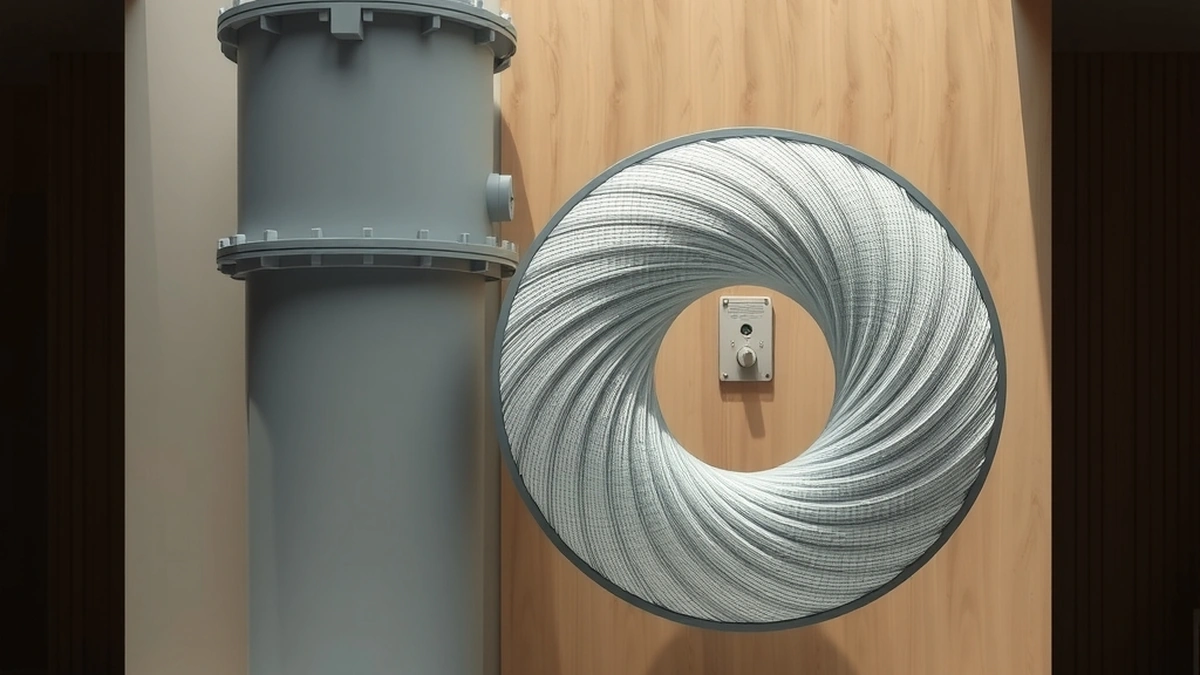
Reverse osmosis is a membrane process that applies pressure to push water against its natural osmotic flow, leaving dissolved salts and larger molecules behind. Residential systems reject 80 to 95 percent of dissolved solids and produce 50 to 75 gallons a day.
- Rejection
- 80 - 95 percent
- Production
- 50 - 75 gallons per day
- Waste ratio
- 3 - 4:1
- Installed cost
- $300 - $900 under sink
- Membrane life
- 2 - 3 years
Some links on this page are affiliate links.If you buy through them we may earn a commission at no extra cost to you. We do not accept payment for rankings. Read the full disclosure.
Reverse osmosis is a membrane process, not a filter in the usual sense. It applies pressure to push water against its natural osmotic tendency, so water crosses a semi-permeable membrane while dissolved salts and larger molecules are left behind. Residential systems reject 80 to 95 percent of dissolved solids.
Osmosis, Reversed
Osmosis is the movement of water across a semi-permeable membrane from a dilute solution to a concentrated one. Put fresh water on one side and salt water on the other, and water crosses to dilute the salt side until the pressure difference balances the flow.
That balancing pressure is the osmotic pressure. Reverse osmosis applies more pressure than that, in the opposite direction, so water is forced from the concentrated side to the dilute side. The membrane passes water molecules and blocks most dissolved ions.
| Term | Meaning |
|---|---|
| Osmotic pressure | Pressure that stops net flow across a membrane |
| Reverse osmosis | Applied pressure above osmotic pressure, reversing flow |
| Permeate | The product water that passes through |
| Concentrate | The reject stream carrying the salts |
| Recovery | Permeate as a percentage of feed |
What the Membrane Is Made Of
Most residential membranes are thin film composite: a polyester support, a polysulfone mid-layer, and an ultra-thin polyamide barrier on top. The polyamide layer is what rejects ions. Because it is so thin, high rejection is achieved at household pressures.
Cellulose triacetate membranes are the alternative. They tolerate chlorine better but reject less and are now uncommon in homes.
The membrane is packaged as a spiral-wound element: flat sheets wrapped around a perforated tube with spacer mesh between the layers. Feed water enters at one end, permeate spirals toward the center tube, and concentrate exits the other end.
The spiral design matters for maintenance. Because the feed spacer is a narrow mesh, particles and scale lodge in it, and once a channel is blocked that section of membrane stops producing. That is why pre-filtration is not optional. A $10 sediment cartridge protects a $60 element whose failure mode is silent.
What It Removes
Reverse osmosis rejects dissolved ions and molecules larger than roughly 0.0001 micron. That covers a broad range.
| Contaminant | Typical rejection |
|---|---|
| Sodium | 85 - 95 percent |
| Calcium and magnesium | 90 - 98 percent |
| Nitrate | 80 - 95 percent |
| Lead | 90 - 98 percent |
| Arsenic | Variable by species |
| PFAS | High with certified membrane |
| Chlorine | Low, needs carbon pre-filter |
| Bacteria | Not a reliable barrier |
The chlorine row is the one that decides maintenance. Chlorine attacks the polyamide layer, so every TFC system has a carbon pre-filter. The membrane does not remove chlorine; the carbon does.
The bacteria row matters for well owners. RO is not a microbiological barrier, because a pinhole or a loose O-ring defeats it. If bacteria are a concern, UV treatment is the tool.
Where It Fits in a Home
Under-sink. The standard residential application. $300 to $900 installed, serving one tap at 50 to 75 gallons per day. This is where RO makes economic sense.
Whole-house. $3,000 to $8,000 installed. Used when the entire supply has a dissolved contaminant that cannot be treated selectively, or when the water is brackish. It wastes proportionally more water and needs larger pre-treatment.
Commercial and industrial. Larger membranes, higher pressures, and recovery systems. Outside residential scope but the same principle.
For most homes the stack is a softener and carbon at the entry, and RO at the kitchen tap. That treats 2 gallons a day to a high standard instead of 300.
Cost and Running Arithmetic
Under-sink equipment runs $200 to $600, installation $300 to $900 total, and consumables $60 to $150 per year. Membranes last 2 to 3 years.
Five-year estimate for a $450 unit installed professionally at $350 labor: $800 + 5 × $100 cartridges + $60 membrane = $1,360, or $272 per year.
The waste stream matters too. At 3 to 4 gallons rejected per gallon produced, a household using 2 gallons a day sends 6 to 8 gallons to drain daily, or 2,200 to 2,900 gallons a year. At typical rates that is a few dollars, not a major cost.
Five Steps to Use It Well
- Test the water so the membrane is matched to the chemistry.
- Soften first if hardness exceeds 7 GPG, or the membrane will scale.
- Carbon first always, to protect the membrane from chlorine.
- Change pre-filters on schedule every 3 to 12 months by type.
- Check rejection annually with a TDS meter and replace the membrane below 80 percent.
The Limits Worth Knowing
RO removes dissolved solids but does not remove everything. It does not reliably remove bacteria, it does not remove dissolved gases like radon, and its performance on some contaminants depends on the species and the membrane.
It also produces a reject stream. That is not a design flaw; it is how the process keeps the membrane clean. Systems that claim near-zero waste achieve it with a second membrane or a pump, at higher cost.
There is a maintenance pattern worth recognising. Membranes rarely fail suddenly. Rejection declines gradually as chlorine damage or scale accumulates, and the first sign is usually a TDS reading creeping up over months. That is why an annual meter check catches a failing membrane long before the water tastes wrong, and why a $20 meter is the most useful accessory an RO owner can buy.
And it is a point-of-use technology at residential scale. Expecting a $400 under-sink unit to fix a whole-house hardness problem is the most common misunderstanding in this category. Reverse osmosis water filter covers the hardware, how reverse osmosis works covers the mechanism in more depth, and reverse osmosis system cost breaks down the quote.
Frequently asked questions
What is reverse osmosis in simple terms?
It is a filtration process that uses pressure to force water through a membrane that blocks dissolved salts and larger molecules, producing low-solids water on one side and a concentrated reject stream on the other.
What does reverse osmosis remove from water?
Most dissolved ions and larger molecules at 80 to 95 percent, including sodium, nitrate, lead, and many PFAS compounds, though performance depends on the membrane and pre-filtration.
Why does reverse osmosis waste water?
The membrane needs a continuous cross-flow to carry rejected salts away; without it, minerals concentrate on the surface and foul the membrane within days.
Does reverse osmosis remove minerals the body needs?
It removes most dissolved minerals, but the amounts in drinking water are small compared with food intake, and the removal is not a safety concern.
Can reverse osmosis be used for a whole house?
Yes, at $3,000 to $8,000 installed, but it is reserved for specific water chemistry because treating every gallon to that standard is expensive and wastes water.
How long does an RO membrane last?
Two to three years on properly pre-treated municipal water, shorter if chlorine reaches the membrane or if hardness and sediment are high.
Sources
Some links are affiliate links.If you buy through them we may earn a commission at no extra cost to you. We do not accept payment for rankings. Read the full disclosure.


