countertop reverse osmosis troubleshooting
Countertop RO slow, leaking, or tasting off? Check the reservoir seal, filters, and air locks. See causes and the $20-$120 fixes that solve them.
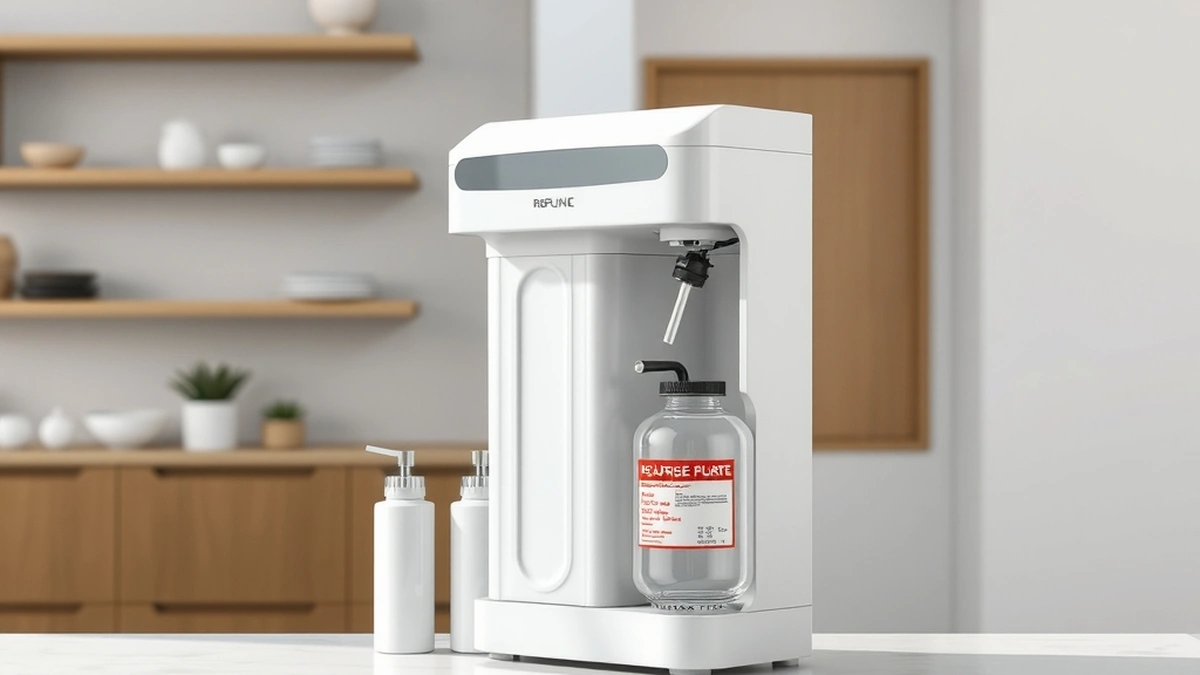
Most countertop RO problems are an air lock after refilling, a clogged prefilter, a misseated reservoir, or a batch that simply has not finished. Check those four before assuming the unit has failed.
- Batch time
- 3 - 5 hours
- Filter cost
- $30 - $90
- Membrane
- $40 - $80
- Typical fix
- $0 - $120
- Reservoir
- 1 - 2.5 gallons
Some links on this page are affiliate links.If you buy through them we may earn a commission at no extra cost to you. We do not accept payment for rankings. Read the full disclosure.
Most countertop RO problems are an air lock after refilling, a clogged prefilter, a misseated reservoir, or a batch that simply needs more time. Check those four before concluding the unit has failed. A batch takes three to five hours, and impatience explains a surprising share of support calls.
Start with the obvious
A countertop unit has no plumbing to fail, so the failures are mechanical and electrical: the reservoir, the seal, the power, and the filters.
Confirm the reservoir is seated flat and the lid switch is engaged. Many units will not run with the lid off or the reservoir a few degrees off level.
Confirm power at the outlet with a lamp. A unit on a switched outlet that someone turned off looks exactly like a dead unit.
Confirm the batch has had time. A 1-gallon batch at 0.15 GPH takes nearly seven hours, and the manual’s “3-5 hours” assumes warm water and a clean membrane.
The symptom table
| Symptom | Likely cause | Fix |
|---|---|---|
| No production | Power, lid switch, air lock | Cycle power, reseat |
| Slow production | Clogged prefilter | $10 - $25 |
| Cloudy water | Air or carbon fines | Run one batch |
| Leak at base | Reservoir seal | Reseat or replace |
| Off taste | Exhausted carbon filter | $15 - $40 |
| Chalky film | Hard water scale | Descale with vinegar |
A chalky film on the reservoir is mineral scale from the feed water, not a sign that the membrane has failed. Descale monthly in hard water.
Diagnose in this order
- Confirm the outlet has power and the unit is switched on.
- Remove and reseat the reservoir, checking the seal.
- Fill with warm tap water and start a batch.
- Time the first hour of production.
- Check the prefilter age against the change interval.
- Taste and smell the finished water.
Warm water matters. Feed at 50°F cuts output roughly in half, and a cold kitchen in winter makes a healthy unit look slow.
Clearing an air lock
An air lock happens when the pump draws air after a refill. The unit runs, makes noise, and produces nothing.
Turn the unit off, remove the reservoir, and check that the intake is not blocked by the reservoir’s seat.
Refill, reseat, and restart. Most units purge the air within a minute. If not, run a cleaning cycle per the manual, which forces water through the pump.
Filters and membrane
A prefilter that is six months old on a household making a gallon a day is due. Change it and re-time a batch.
The carbon stage protects the membrane from chlorine. Running a unit with an exhausted carbon filter is the fastest way to destroy a $40-$80 membrane.
Membrane life is two to three years. A membrane that no longer improves taste or reduces TDS has failed, and replacement is the fix.
Leaks
A leak at the base is almost always the reservoir seal. Remove the reservoir, wipe the seal, and check for cracks or grit.
A leak from the housing is a cracked body, usually from freezing or from dropping the unit. That is a replacement, not a repair.
Dry the base thoroughly before reassembling. Water trapped under the reservoir triggers a leak sensor on some units and prevents operation.
Taste problems
Flat taste is normal for RO water because minerals are removed. A remineralization cartridge adds some back.
A plastic taste points to a new reservoir or tubing that needs rinsing, or to water that sat in the unit for days.
A musty taste means biofilm. Clean the reservoir with vinegar, replace the carbon filter, and do not leave water sitting between trips.
When to replace the unit
A cracked housing, a failed pump, or a control board fault usually exceeds the value of a $200-$600 appliance.
If the unit is more than four years old and needs a pump plus a membrane, replacement is the better arithmetic.
If it needs only filters, service it. A $60 filter set restores a unit that has years left.
What the batch time is telling you
Time a full batch from empty to full and write the number down. It is the single most useful diagnostic on a countertop unit.
A 1-gallon batch on a healthy unit takes four to five hours at room temperature. Six hours in winter with cold feed water is normal. Seven hours in July is a clogged prefilter.
If the time doubles after a filter change, the new cartridge is the wrong type or is not seated. If it doubles on its own, the membrane is scaling.
A unit that finishes a batch in two hours is either producing less than a gallon or bypassing the membrane. Measure the output volume to tell which.
Track the number for three batches and you will know your unit’s normal. Every future problem becomes a comparison rather than a guess. Reverse osmosis maintenance covers the plumbed equivalent of the same measurements.
Prevention
Empty and dry the reservoir if the unit will sit for more than two days, and clean it weekly.
Descale monthly in hard water and every three months in soft water.
Change filters on the calendar, not on symptoms. A filter changed late costs more in membrane life than it saves in cartridges.
Keep the unit out of direct sun. A translucent reservoir in a window grows algae, and that taste does not rinse out. Countertop reverse osmosis maintenance covers the cleaning schedule, and countertop reverse osmosis installation covers setup errors. “”
Frequently asked questions
Why is my countertop RO not producing water?
Check that the reservoir is seated and full, that the lid switch is engaged, and that the unit has power. An air lock after refilling stops production until the unit is cycled off and on.
Why is my countertop RO water cloudy?
Air bubbles from a recent fill or carbon fines from a new filter. Both clear within one or two batches, and neither indicates a fault.
Why is my countertop RO leaking?
A reservoir seated at an angle, a cracked seal, or a full tank tipped during handling. Dry the base, reseat the reservoir, and check the seal for cracks.
How long should a batch take?
Three to five hours for 0.75-1 gallon. A batch that takes twice as long usually means a clogged prefilter or a scaled membrane.
Can I use the unit without the carbon filter?
No. The carbon stage protects the membrane from chlorine, which damages it permanently. Running without it shortens membrane life to months.
Why does my water taste flat?
RO removes most dissolved minerals, and minerals carry much of the taste. A remineralization cartridge or a rest in the fridge restores some of it.
Sources
Some links are affiliate links.If you buy through them we may earn a commission at no extra cost to you. We do not accept payment for rankings. Read the full disclosure.