
Culligan water filter
Culligan sells whole-house and under-sink filtration through dealers. See what the equipment does, how the pricing model works, and the alternatives.
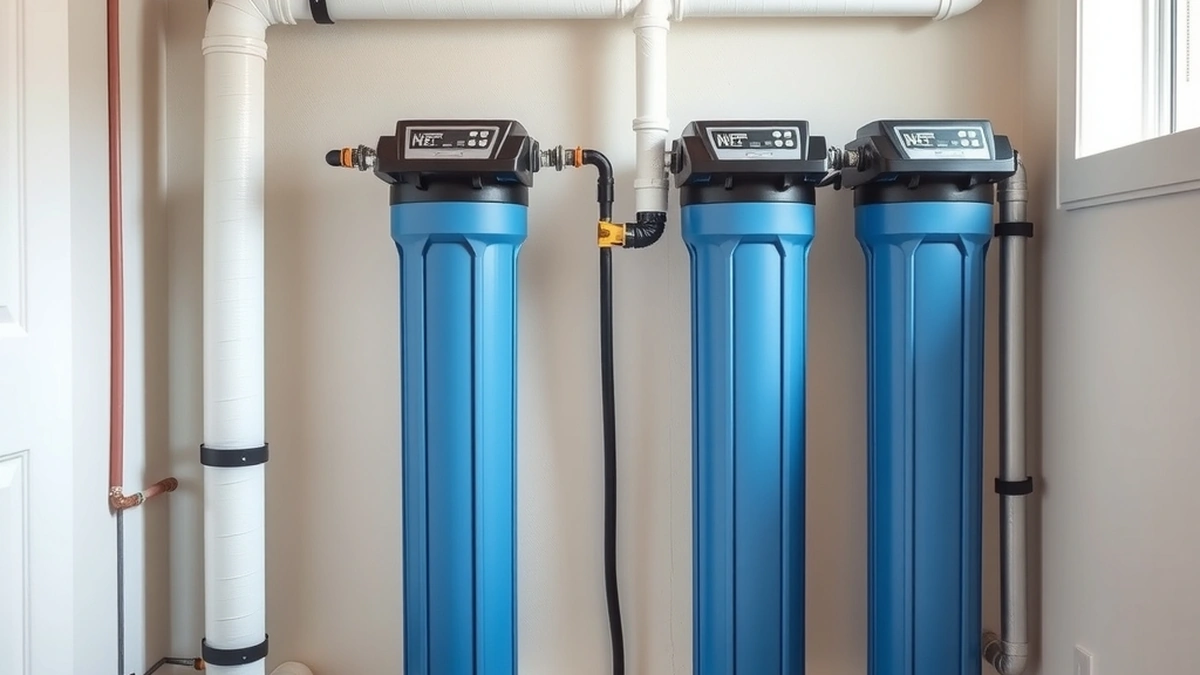
Culligan water filters are sold through local dealers rather than retail, covering whole-house carbon, under-sink, and reverse osmosis. Installed pricing runs above generic equipment because the dealer bundles installation, service, and cartridges.
- Sales model
- Dealer, not retail
- Typical installed cost
- $1,000 - $4,000+
- Cartridge source
- Dealer or proprietary
- Service
- Dealer scheduled
- Generic equivalent
- $500 - $1,800 installed
Some links on this page are affiliate links.If you buy through them we may earn a commission at no extra cost to you. We do not accept payment for rankings. Read the full disclosure.
Culligan water filters are sold through local dealers, not retail shelves. That single fact explains most of the pricing difference: the dealer model bundles a water test, installation, service visits, and cartridge supply into one relationship. The filtration itself is carbon, ion exchange, and reverse osmosis, the same mechanisms sold in generic housings.
What the Product Line Covers
Culligan’s residential range spans four categories.
Whole-house carbon filtration. A tank or housing that removes chlorine, taste, and odour at the point of entry. This is the closest equivalent to a generic big blue carbon system.
Water softening. Ion exchange softeners, which is the category the brand is best known for. Sizing and cost follow the same logic as any softener.
Under-sink drinking water. Carbon and reverse osmosis units at the kitchen tap.
Specialty media. Iron, sulfur, and arsenic treatment for well water, usually quoted after a lab test.
| Product type | Function | Generic equivalent |
|---|---|---|
| Whole-house carbon | Chlorine, taste | Big blue carbon, $500 - $1,800 |
| Softener | Hardness | Standard softener, $1,200 - $4,500 |
| Under-sink RO | Dissolved solids | Under-sink RO, $300 - $900 |
| Iron filter | Iron and manganese | Iron filter, $800 - $2,500 |
How the Pricing Model Works
A dealer quote is not comparable to a retail price because it is not the same product. The dealer price typically includes:
- An in-home water test
- Equipment and installation
- A service contract or scheduled maintenance
- Cartridge supply
- A warranty that may depend on dealer service
That bundle has real value if you want someone else to handle maintenance. It also means you cannot easily compare a dealer quote to a $700 online housing, because one includes a year of service and the other is a box.
The honest comparison is total cost over ten years, not sticker price. A generic system at $1,000 installed plus $150 per year in cartridges is $2,500 over ten years. A dealer system at $2,500 installed with cartridges and service included might land at a similar ten-year figure, or higher, depending on the contract.
Where Proprietary Cartridges Matter
Many dealer systems use cartridges sold only through the dealer. That is the main long-term cost difference. A proprietary cartridge at $60 changed twice a year is $120 per year; a standard 10-inch carbon block at $25 changed twice a year is $50.
Over ten years, that is $700 more for the proprietary path, before any service contract. That is the number to weigh against the convenience of dealer service.
| Cartridge path | Cost each | Changes per year | Ten-year cost |
|---|---|---|---|
| Proprietary dealer | $60 | 2 | $1,200 |
| Standard 10-inch | $25 | 2 | $500 |
| Big blue 4.5 inch | $45 | 2 | $900 |
What the Equipment Does Well
The hardware is competent. Whole-house carbon tanks are sized correctly for the house, installation is done by a trained technician, and the dealer handles the drain and bypass details that DIY installs often skip.
The service model also means the cartridge actually gets changed. A large share of generic filter systems fail not because the housing is bad but because the homeowner forgets the schedule. A dealer that shows up twice a year solves that.
Where It Falls Short
The pricing is opaque until a dealer visit, which makes comparison shopping difficult. Proprietary cartridges limit your options. And the equipment itself offers no filtration mechanism you cannot get elsewhere.
There is also the sales structure to consider. Dealer visits often include a softener recommendation regardless of what the water test shows, because the visit is a sales call as well as a service call. Ask for the lab results in writing and compare the recommendation against them: if the report shows 4 GPG hardness and the quote recommends a softener plus a whole-house carbon system plus an under-sink RO, the recommendation is a package rather than a diagnosis.
If the appeal is “someone else handles it,” the dealer model delivers that. If the appeal is “the best carbon for the money,” a generic housing with a certified cartridge does the same job for less.
Five Questions to Ask a Dealer
- What is the total installed price, including the water test and any permit?
- Are the cartridges proprietary, and what do they cost per year?
- Is service included, or billed per visit, and at what rate?
- What is the warranty, and does it require dealer service to stay valid?
- What is the cancellation or buyout terms if the equipment is leased?
That last question matters. Some dealer arrangements are leases or rentals rather than purchases, and the total cost over the term can exceed the purchase price substantially. The softener version of that comparison is in water softener price versus rental.
The Alternative Path
A generic whole-house carbon system installed runs $500 to $1,800 with cartridges at $80 to $300 per year. A softener runs $1,200 to $4,500 installed. Those are the numbers to beat.
The trade is that you own the maintenance. Changing a cartridge takes ten minutes and a wrench, twice a year. For a homeowner comfortable with that, the generic path is cheaper over any horizon longer than about five years.
That does not make the dealer option wrong. It makes it a service purchase rather than an equipment purchase, and it should be judged on whether the service is worth the premium to you. A household that travels, rents the property out, or simply does not want to touch plumbing is buying something real. A household that keeps a wrench in the garage is paying for a schedule it could keep itself.
If the water test shows hardness rather than chlorine, the decision is a softener either way. Culligan water softener covers that product line specifically, and water filter system covers the generic alternative in more detail.
Frequently asked questions
Where can I buy a Culligan water filter?
Through a local Culligan dealer rather than a retail store, which means pricing is quoted after an in-home water test and usually includes installation.
Is Culligan equipment better than generic filters?
The equipment is competent and the dealer model adds installation and service, but the filtration mechanisms are the same carbon and ion exchange used in generic housings.
Do Culligan filters use proprietary cartridges?
Many models do, which means replacements come from the dealer; that is the main long-term cost difference against standard 10-inch cartridges.
How much does a whole-house Culligan filter cost?
Dealer quotes commonly run above the $500 to $1,800 generic installed range, and the difference reflects installation, service visits, and the cartridge contract rather than the housing itself.
Can I install a Culligan system myself?
Generally no, because the dealer model includes installation and the warranty may depend on it; DIY is more feasible with generic housings that use standard cartridges.
What is the alternative to a dealer filter?
A generic big blue or standard housing with NSF-certified cartridges costs less upfront and lets you buy replacements anywhere, at the cost of doing your own service.
Sources
Some links are affiliate links.If you buy through them we may earn a commission at no extra cost to you. We do not accept payment for rankings. Read the full disclosure.


