
Does a Softener Remove Fluoride? What Works Instead
A water softener removes hardness minerals, not fluoride. Here's what actually reduces fluoride in home water.
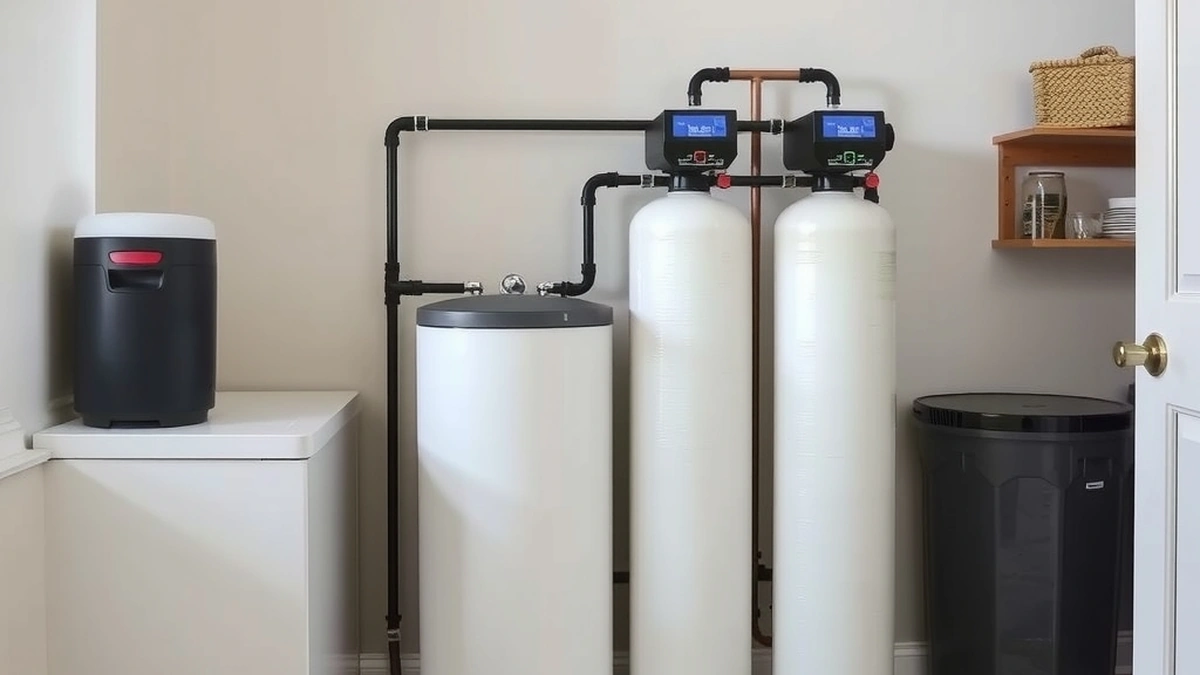
No. A water softener exchanges calcium and magnesium for sodium or potassium. It does not remove fluoride. No. A water softener does not remove fluoride.
- What a softener removes
- Hardness minerals (calcium, magnesium)
- Fluoride reduction options
- Reverse osmosis, distillation, activated alumina
- Softener installed cost
- $1,200–$4,500
- Under-sink RO installed cost
- $300–$900
Some links on this page are affiliate links.If you buy through them we may earn a commission at no extra cost to you. We do not accept payment for rankings. Read the full disclosure.
No. A water softener does not remove fluoride. It exchanges hardness minerals such as calcium and magnesium for sodium or potassium ions, but fluoride passes through the resin bed unchanged. If your goal is fluoride reduction, you need a different treatment technology.
How a Water Softener Works
A water softener uses ion exchange resin to remove dissolved hardness minerals. As water flows through the resin tank, calcium and magnesium ions trade places with sodium or potassium ions attached to the resin beads. The resin eventually saturates and must be regenerated with a salt brine solution, which flushes the captured minerals down the drain.
This process is specific to divalent cations like calcium and magnesium. Fluoride is an anion, meaning it carries a negative charge, so it is not attracted to the resin in the same way and is not captured during the softening cycle. A softener will protect your water heater and plumbing from scale, but it will not change the fluoride concentration in your water.
What Actually Reduces Fluoride
Reverse osmosis is the most common residential method for reducing fluoride. An under-sink RO system forces water through a semi-permeable membrane that rejects 80–95 percent of dissolved contaminants, including fluoride. Typical installed costs run $300–$900, with equipment priced at $200–$600. Annual operating costs are estimated at $60–$150 for cartridges and membrane replacement. RO membranes typically last 2–3 years, and these systems produce waste water at a ratio of roughly 3–4:1.
Distillation is another option. It boils water and condenses the steam, leaving dissolved minerals behind. Distillers are less common for whole-house use because of energy consumption and slow production rates.
Activated alumina filters can also reduce fluoride, though they are more often applied in point-of-use cartridges rather than whole-house softener tanks. Standard activated carbon filters, sediment filters, and salt-free conditioners do not meaningfully remove fluoride.
Softener Costs and Capacity
If you are buying a softener for hardness, not fluoride, here are the numbers to consider. Softener equipment costs $600–$2,500. Professional installation adds $500–$1,500, bringing total installed cost to $1,200–$4,500. Ongoing salt costs are estimated at $120–$400 per year. Resin beds typically last 8–12 years, and a rebed runs $300–$600. Total system life is estimated at 10–15 years.
Capacity is measured in grains. Residential softeners commonly range from 24,000–64,000 grains. Salt use per regeneration is estimated at 8–12 pounds. To size a system, multiply your grains-per-gallon hardness by daily water usage and by the number of days between regenerations. For example, a household with 10 grains-per-gallon hardness using 300 gallons per day produces 3,000 grains of hardness daily. A 32,000-grain softener would theoretically need regeneration every 10 to 11 days, not accounting for reserve capacity or iron.
A softener can handle clear-water iron up to 2–3 ppm in some cases, but higher iron levels usually require a dedicated iron filter. Iron filter installation costs $800–$2,500. If you also have sulfur or sediment concerns, whole-house filters typically deliver 8–15 gallons per minute depending on the model.
Testing Comes First
Before purchasing any equipment, test your water. A laboratory water test costs $40–$150 and will report hardness, fluoride, iron, pH, and other parameters. Knowing your fluoride level in parts per million and your hardness in grains per gallon determines whether you need a softener, an RO system, or both.
Water hardness is commonly classified as soft at 0–3 grains per gallon, moderate at 3–7, hard at 7–10, and very hard at 10 or more. If your water is hard and your fluoride is elevated, you may need both a softener for scale protection and an RO unit at the kitchen tap for drinking water.
Combining Systems
Many homes install a softener at the point of entry to protect plumbing and appliances, then add an under-sink RO system for drinking and cooking water. This division of labor makes sense because softeners are not designed for contaminant removal at the tap, and RO systems are not sized to treat all the water in a house.
Whole-house reverse osmosis exists but costs significantly more, with installed systems ranging $3,000–$8,000. For most households, a softener plus a point-of-use RO unit is the more practical and lower-cost path.
If you are considering a salt-free conditioner instead, installed costs run $500–$1,800. These devices alter hardness minerals to reduce scale but do not remove them and do not remove fluoride. Carbon filtration systems cost $500–$1,800 installed, with cartridges estimated at $80–$300 per year and replacement intervals of 6–12 months. Carbon is effective for chlorine, taste, and odor, but not fluoride.
Bottom Line
A water softener removes hardness minerals, not fluoride. If your water test shows fluoride levels you want to reduce, reverse osmosis is the standard residential solution. Under-sink RO costs $300–$900 installed and rejects 80–95 percent of fluoride. Test your water first, then match the equipment to the actual contaminants in your supply.
For more on softener pricing, see our breakdown of water softener costs and installation pricing. If you are looking at whole-house filtration, review whole-house water filter costs. For RO pricing details, see reverse osmosis system cost.
Frequently asked questions
Does a water softener remove fluoride?
No. Softeners target hardness minerals like calcium and magnesium through ion exchange. Fluoride passes through the resin bed unchanged.
What does a water softener remove?
A softener removes dissolved calcium and magnesium, and in some cases small amounts of dissolved iron up to 2–3 ppm. It does not remove fluoride, nitrate, or most dissolved chemicals.
What reduces fluoride in drinking water?
Reverse osmosis systems reject 80–95 percent of fluoride. Distillation and activated alumina filters can also reduce fluoride. Carbon filters and softeners do not.
How much does a water softener cost installed?
Softener equipment runs $600–$2,500, with installation adding $500–$1,500, for a total installed range of $1,200–$4,500.
How much does under-sink reverse osmosis cost?
Equipment costs $200–$600. Installed, expect $300–$900. Annual running costs are estimated at $60–$150 for filters and membrane replacement.
Should I test my water before buying treatment?
Yes. A laboratory water test costs $40–$150 and tells you hardness, fluoride, iron, and other levels so you buy the right equipment for your water.
Sources
Some links are affiliate links.If you buy through them we may earn a commission at no extra cost to you. We do not accept payment for rankings. Read the full disclosure.


