
Drain requirements for a softener install
A softener dumps brine and backwash water to drain. See the air gap, line size, distance, and slope rules that keep the install legal and dry.
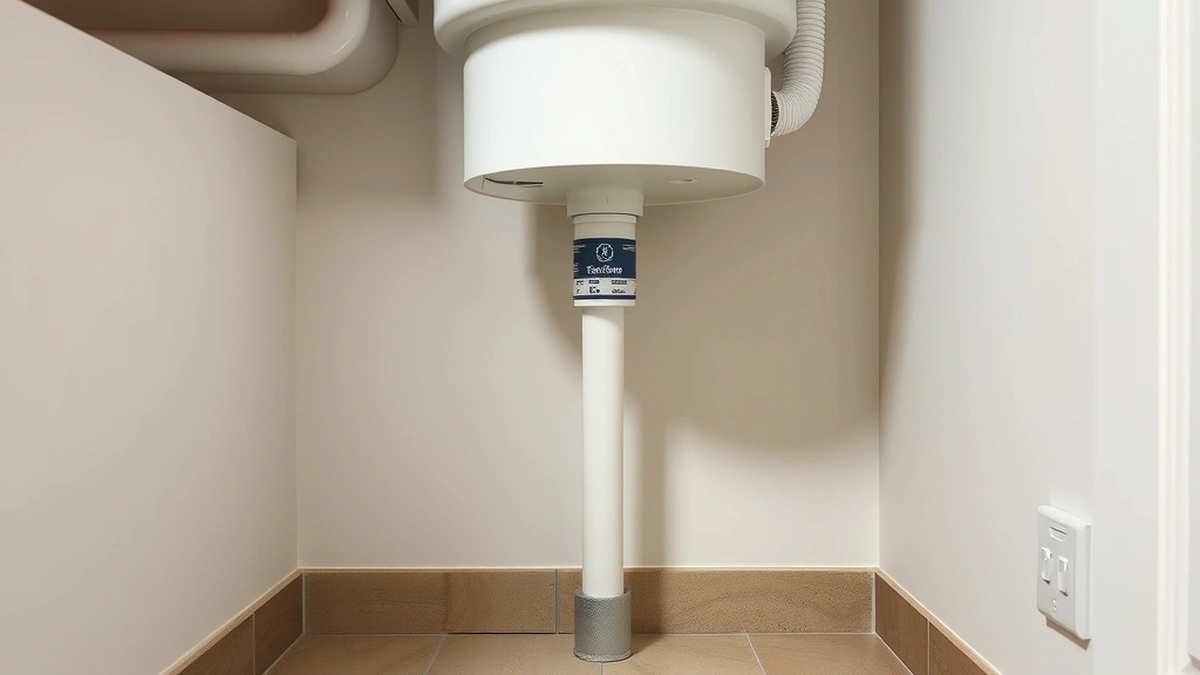
A softener needs a drain within about 30 feet, a 1/2 inch or larger discharge line, and an air gap or check valve to prevent backflow. The line must slope continuously downhill, and the drain must handle a backwash flow of roughly 2 to 5 gallons per minute.
- Drain distance
- Up to about 30 feet
- Discharge line
- 1/2 inch minimum
- Backwash flow
- 2 - 5 gpm
- Backflow protection
- Air gap or check valve
- Typical added cost
- $100 - $400
Some links on this page are affiliate links.If you buy through them we may earn a commission at no extra cost to you. We do not accept payment for rankings. Read the full disclosure.
A softener needs four things from a drain: proximity, capacity, slope, and backflow protection. Get all four and the install is quiet for years. Miss any one and you get a flooded floor, a failed regeneration, or a code violation discovered at resale.
What the Softener Actually Discharges
During regeneration, the valve runs a sequence: backwash, brine draw, slow rinse, fast rinse, and brine refill. Water goes to drain during the first four.
Backwash flow for a residential unit is typically 2 to 5 gallons per minute, depending on tank diameter. A 10 inch tank backwashes at roughly 2.5 to 3 gpm; a 12 inch tank at 3.5 to 4.5 gpm. The whole sequence lasts about 60 to 90 minutes and discharges somewhere in the range of 40 to 80 gallons.
That is not a huge volume, but it arrives at a flow rate a small line cannot always carry, especially if the run is long or uphill.
The Air Gap Rule
An air gap is a physical separation between the end of the discharge line and the highest possible water level in the drain. It prevents drain water from siphoning back into the softener and, from there, into the potable supply.
Most codes require one. A typical air gap fitting mounts on the standpipe or the floor drain and holds the hose end above the flood rim. A check valve is an alternative in some jurisdictions, but an air gap is the more robust answer because it has no moving parts to fail.
| Protection | Cost | Reliability | Code acceptance |
|---|---|---|---|
| Air gap fitting | $15 - $50 | High, no moving parts | Widely accepted |
| Check valve | $10 - $30 | Depends on the seat | Varies by jurisdiction |
| Direct connection | $0 | None | Usually prohibited |
Do not push the drain hose directly into a standpipe and seal it. That is the single most common code violation on softener installs, and it is the one that can contaminate drinking water.
Distance, Slope, and Line Size
The line has to carry water away faster than the valve delivers it. Three variables set whether it can.
Distance. About 30 feet is the practical limit for a 1/2 inch line. Beyond that, friction losses exceed the low head available during backwash.
Slope. The line must fall continuously toward the drain. A sag creates a trap that fills with brine and sediment, and eventually blocks.
Diameter. 1/2 inch inside diameter is the minimum. 3/4 inch is better for runs over 15 feet or for units with high backwash flow.
Fittings. Every elbow adds resistance. Two 90 degree elbows are roughly equivalent to several feet of straight pipe. Use sweeping bends where possible.
If the drain is uphill, the softener cannot push water up it. A small condensate pump can lift discharge, but that adds a failure point and needs a check valve and a high-level safety switch.
Drain Options Ranked
| Drain type | Suitability | Notes |
|---|---|---|
| Floor drain nearby | Best | Air gap required, check capacity |
| Utility sink | Good | Air gap above the rim, watch for splash |
| Standpipe with trap | Good | Must have air gap, trap must be vented |
| Washing machine standpipe | Good | Often already present and sized correctly |
| Sump pit | Conditional | Check local rules on brine discharge |
| Sewer stack via wye | Good | Requires a trap and air gap, more work |
| Outside dry well | Conditional | Check local rules, may be prohibited |
The last two rows are where jurisdiction matters most. Some municipalities prohibit brine discharge to a storm drain or a dry well because of the chloride load. Others allow it. Confirm before you plumb, because moving a drain line after the fact is expensive.
What It Costs
If a floor drain or utility sink is within a few feet, the added cost is an air gap fitting and a length of hose: $25 to $75. If a new drain connection is needed, expect $100 to $400 in materials and labor, more if a trap and vent must be added.
That sits inside the installation line of a softener quote, which runs $500 to $1,500 on top of $600 to $2,500 in equipment. A quote that does not mention the drain is either assuming an existing one or planning to connect illegally.
Five Steps to Plan the Drain
- Locate the nearest acceptable drain and measure the run.
- Confirm the drain can take 5 gpm without backing up; test with a bucket and a timer.
- Choose the air gap fitting for the drain type and mount it above the flood rim.
- Run the line with continuous fall, using 3/4 inch for runs over 15 feet.
- Test the full regeneration cycle with the line in place and watch for leaks or backup.
After the Install
Check the drain line twice a year. Look for kinks, salt crust at the end, and slow drainage. A partially blocked line shows up as water pooling around the drain during regeneration, which most people never see because they are asleep.
If the brine tank overflows, the first suspect is a blocked drain or a stuck float, not the valve. That diagnosis belongs with salt mushing in the brine tank and softener leaking. For the valve side, adding a shut-off and bypass explains how to isolate the unit while you work.
One last point: brine is salty. Do not route it onto a lawn, a garden bed, or a septic drain field edge where it will accumulate. A drain to sanitary sewer, a floor drain, or a permitted dry well is the correct destination, and local rules decide which of those you are allowed to use.
Frequently asked questions
How far can a softener be from a drain?
About 30 feet is the practical limit with a 1/2 inch line, and less if the run is uphill or has many fittings, because backwash flow is gravity-fed or low-pressure.
Does a water softener drain need an air gap?
Most plumbing codes require an air gap or an approved backflow preventer on the discharge, so drain water cannot siphon back into the softener or the potable supply.
What size drain line does a softener need?
One half inch inside diameter is the common minimum; 3/4 inch is better for long runs or for units with high backwash flow.
Can a softener drain into a floor drain?
Yes, and that is the simplest option if one is nearby, provided there is an air gap between the discharge line and the drain opening.
Can a softener drain into a sump pit?
Often yes, but confirm local rules, since some jurisdictions treat sump discharge differently from sanitary sewer and prohibit brine in a foundation drain.
What happens if the drain is blocked?
Backwash water backs up into the brine tank or overflows at the valve, which can flood the floor and leave the resin unregenerated until the blockage is cleared.
Sources
Some links are affiliate links.If you buy through them we may earn a commission at no extra cost to you. We do not accept payment for rankings. Read the full disclosure.


