
Hard carbonated water
What happens when hard water meets carbonation, why sparkling water makers scale up, and how to protect the machine.
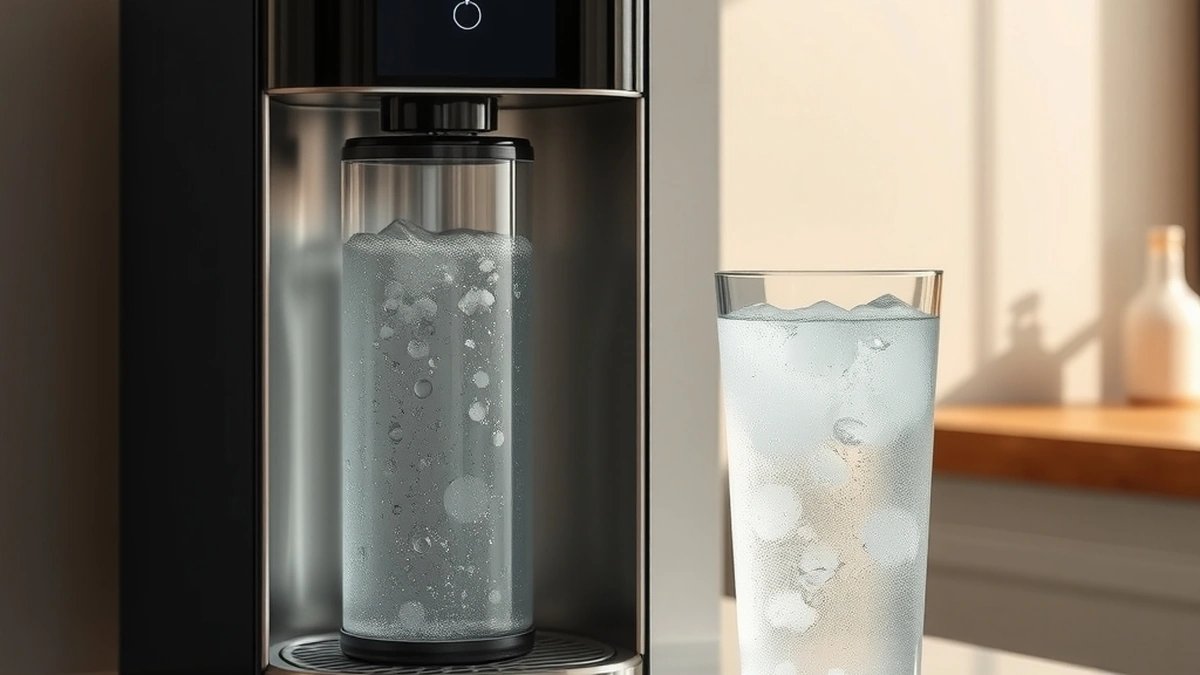
Hard carbonated water is sparkling water made from hard tap water, and the minerals that cause hardness stay in the bottle. They also scale a sparkling water maker over time, so filtered or softened water is the practical input.
- Hard water
- Above 7 gpg
- Very hard
- 10+ gpg
- Softener installed
- $1,200 - $4,500
- Under-sink RO
- $300 - $900
- Water test
- $40 - $150
Some links on this page are affiliate links.If you buy through them we may earn a commission at no extra cost to you. We do not accept payment for rankings. Read the full disclosure.
Hard carbonated water is sparkling water made from hard tap water, and the minerals that make the water hard stay in the glass. Carbonation adds carbon dioxide, not filtration. The practical consequences are taste, scale on the machine, and a residue that builds up if the bottle is left to dry.
What carbonation does and does not do
Carbonating water dissolves carbon dioxide under pressure, forming carbonic acid. That lowers the pH slightly and gives the sharp taste, and it is also why carbonated water can leave a slightly different residue when it dries.
It does not remove calcium or magnesium. A water at 12 grains per gallon is still 12 gpg after carbonation, and the minerals are still in the bottle.
The acidity can dissolve a little surface scale, which is why some people notice a cleaner look in a kettle after carbonating. It does not soften the water or prevent new deposits.
Why the machine scales
A sparkling water maker has a nozzle, a bottle, and a valve. Water left in any of them evaporates and leaves calcium carbonate behind.
Repeated use builds a film on the nozzle and a ring inside the bottle. Over months, the valve can stick and the carbonation level drops, which most owners notice as a weaker fizz before they notice the deposit.
The fix is the input water, not a stronger cleaning routine. Filtered or softened water carries far less mineral load, so the same usage leaves far less deposit and the machine keeps its carbonation pressure longer.
Hardness by the numbers
| Hardness | Classification | What it means in a soda maker |
|---|---|---|
| 0 - 3 gpg | Soft | Minimal scale, clean taste |
| 3 - 7 gpg | Moderate | Some film over time |
| 7 - 10 gpg | Hard | Visible scale, taste affected |
| 10+ gpg | Very hard | Fast scale, frequent cleaning |
A test kit or lab test at $40 to $150 gives the number. Without it, the cleaning schedule is a guess, and most households either descale too often or too late.
Choosing the input water
Four options, in order of mineral load.
Reverse osmosis water has almost no minerals, so it leaves no scale. It can taste flat because the minerals that give water character are gone, and some households add a trace mineral sachet or blend a little tap water back in.
Softened water has sodium in place of calcium and magnesium, so it does not scale. It tastes slightly different, and households watching sodium intake sometimes prefer a different source for drinking.
Filtered water removes chlorine and sediment but keeps hardness. It improves taste without changing the scale problem much.
Tap water is the default. On soft water it is fine; on 15 gpg water it is the reason the machine needs descaling. A cheap carbon pitcher filter removes chlorine but leaves every grain of hardness, so it is not a fix for scale.
Cleaning and descaling
- Remove the bottle and the nozzle according to the manual.
- Soak the bottle in a mild descaler or a vinegar solution.
- Wipe the nozzle and valve with a damp cloth, not a soaking wet one.
- Rinse thoroughly and dry before reassembly.
- Descale monthly on hard water, quarterly on soft water.
Do not put the machine body in water. The valve and the gas mechanism are not designed for immersion, and a soaked valve is a replacement rather than a repair.
The water-side fix
A whole-house softener at $1,200 to $4,500 installed removes hardness from every tap, which solves the soda maker and the kettle and the shower door at once. That is a large spend for a soda maker, so the justification is usually the rest of the house.
An under-sink reverse osmosis system at $300 to $900 installed gives the cleanest input at one tap, which is often the kitchen where the soda maker lives.
A carbon filter at $500 to $1,800 installed improves taste but does not remove hardness, so the scale continues and the machine still needs descaling on schedule.
Carbonated hard water tastes mineral-forward. Some people prefer it; others find it chalky.
Carbonated soft water tastes cleaner but can seem flat. The difference is the mineral content, not the carbonation, which is why two glasses with the same fizz can taste completely different.
Carbonated reverse osmosis water is the blankest of the three. It is a good base for adding flavour, and a poor choice for someone who likes the taste of their local water.
When to test
Test if the water has never been analysed, if the soda maker scales quickly, or if the taste changed after a utility switch.
A hardness test also tells you whether a softener is justified for the rest of the house. A soda maker alone rarely justifies a whole-house system, but the scale on the kettle, the dishwasher, and the shower door usually does.
For the softening options, see water softener installation cost and salt based versus salt free softener. For the point-of-use option, reverse osmosis system cost covers the under-sink numbers.
Bottom line
Hard carbonated water keeps its minerals, and those minerals scale the machine. Use filtered or softened water, descale on a schedule, and treat the hardness at the source if the rest of the house shows the same deposits.
Frequently asked questions
Can you carbonate hard water?
Yes. Carbonation does not remove calcium or magnesium, so the minerals stay in the water and the taste reflects them.
Does carbonation cause limescale?
Carbonation makes water slightly more acidic, which can dissolve some scale, but it does not remove hardness minerals and can leave deposits as it dries.
Why does my sparkling water maker scale up?
Water left in the bottle or the machine evaporates and leaves calcium carbonate behind, and repeated use builds a film on the nozzle and the bottle.
What water should I use in a soda maker?
Filtered or softened water reduces scale and improves taste; reverse osmosis water is the cleanest input but may taste flat without minerals.
Does a carbon filter soften water?
No. A carbon filter removes chlorine and taste compounds, not calcium and magnesium.
Is hard sparkling water bad for you?
Hardness minerals are not a contamination issue; the practical concerns are taste, scale on equipment, and the sodium content if the water is softened.
Sources
Some links are affiliate links.If you buy through them we may earn a commission at no extra cost to you. We do not accept payment for rankings. Read the full disclosure.


