How Often Should a Water Softener Regenerate?
Metered softeners regenerate when capacity is used, often every 3 to 10 days. See the math, the signs of over- and under-regeneration, and the settings.
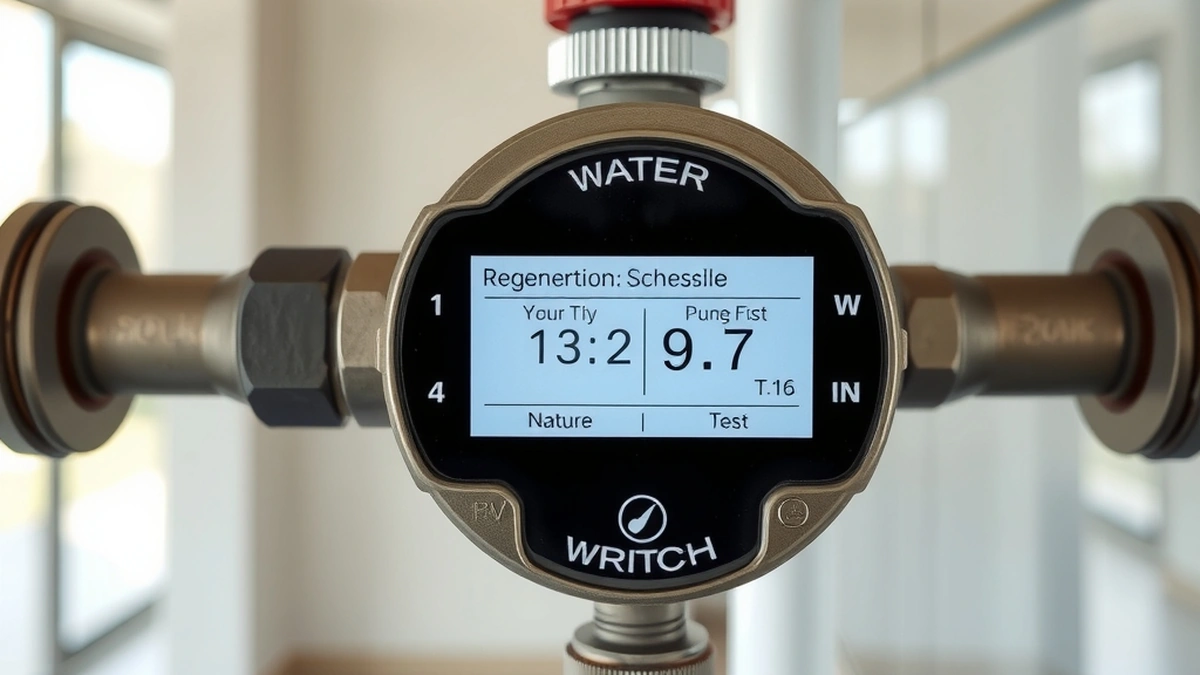
A metered water softener regenerates when its usable capacity is spent, typically every 3 - 10 days for a family home. A timer unit runs on a fixed schedule, often nightly or every few days, regardless of how much water was used.
- Metered interval
- Every 3 - 10 days
- Salt per cycle
- 8 - 12 lb
- Regeneration water
- 20 - 60 gallons
- Typical capacity
- 24,000 - 64,000 grains
- Salt per year
- $120 - $400
Some links on this page are affiliate links.If you buy through them we may earn a commission at no extra cost to you. We do not accept payment for rankings. Read the full disclosure.
A water softener should regenerate when its usable capacity is spent, not on a fixed calendar. For a typical family home, that works out to every 3 - 10 days. The exact interval comes from capacity divided by daily grain load.
Metered vs Timer Control
A metered valve counts gallons and calculates how many grains have been removed. When the remaining capacity reaches the reserve, it schedules a regeneration, usually at night.
A timer valve regenerates on a fixed schedule regardless of use. It is common on older and budget units, and it is the reason some households burn through salt.
Demand-initiated regeneration, which combines a meter with a reserve calculation, is the most efficient common design. It regenerates only when needed and only as often as the load requires.
The Arithmetic
Daily grain load is hardness in grains per gallon times gallons used per day. A family of four at 12 GPG using 250 gallons a day carries 3,000 grains daily.
Usable capacity is the tank’s rated capacity minus the reserve. A 32,000-grain unit set to regenerate at 24,000 grains has 24,000 grains of usable capacity.
Divide usable capacity by the daily load: 24,000 divided by 3,000 equals eight days. That unit regenerates roughly every eight days, or about 45 times a year.
Typical Intervals
| Household | Daily load at 10 GPG | Usable capacity | Interval |
|---|---|---|---|
| 2 people, 150 gal | 1,500 grains | 20,000 | 13 days |
| 3 people, 200 gal | 2,000 grains | 24,000 | 12 days |
| 4 people, 250 gal | 2,500 grains | 24,000 | 9 - 10 days |
| 5 people, 300 gal | 3,000 grains | 32,000 | 10 - 11 days |
| 5 people at 20 GPG | 6,000 grains | 48,000 | 8 days |
The pattern is that larger households and harder water shorten the interval, while a larger tank lengthens it. A unit that regenerates every day is either oversized for its settings or set to a timer schedule.
A unit that regenerates every three weeks is running close to its limit, and the water may turn hard before the cycle starts.
Signs of Too Much Regeneration
The first sign is salt consumption above the expected range. A household using 25 bags a year when the math says 12 is regenerating twice as often as needed.
The second is a softener that runs a cycle every night with a full tank and low use. That is a timer setting, not a demand.
The third is a salt bill that climbs without a change in occupancy or hardness. Check the valve settings before assuming the unit is failing.
Signs of Too Little Regeneration
Hard water at the end of the interval is the classic symptom. The shower feels fine after a regeneration and progressively worse over the following week.
Spotting on glass and poor lather returning between cycles point the same way. So does a resin bed that tests hard even though salt is present and the valve runs.
The fix is to lower the hardness setting, lower the capacity setting, or shorten the interval so regeneration happens before exhaustion.
Setting It Correctly
- Test the raw water and record hardness.
- Measure or estimate daily gallons from the utility bill or a meter.
- Calculate the daily grain load.
- Set the valve to the measured hardness, not the default.
- Set capacity so regeneration happens before exhaustion, with a reserve.
- Choose a 2 a.m. regeneration time.
- Test the treated water weekly for the first month.
The reserve matters. A unit set to use 100 percent of its capacity will exhaust before the cycle in a week with extra laundry or guests.
Salt Dose and Efficiency
The salt dose per regeneration is a separate setting. A higher dose restores more capacity but uses more salt, and the efficiency curve flattens quickly.
Most residential units run best at a moderate dose with more frequent regeneration. The valve manual lists the capacity at each dose, and the difference between settings can be 20 percent of the annual salt bill.
A household spending $300 a year on salt can often cut that to $200 by fixing the hardness setting and the dose, without changing any hardware.
What the Cycle Looks Like
A regeneration takes 60 - 120 minutes from start to finish, and most of it is quiet. The backwash phase runs water to the drain, the brine draw pulls salt water through the bed, and the rinse phases clear the lines.
The household may notice a pressure drop if a tap is opened during the cycle, and the water can run slightly salty for a few minutes after. That is normal and clears with a flush.
The brine tank refills at the end, and the water level should sit a few inches above the salt. If the tank is dry after a cycle, the refill is failing.
Many valves keep a history of regeneration dates and water used. If the unit regenerates every night with a low daily load, the meter or the setting is wrong.
A log that shows regeneration every two days in a two-person home suggests an oversized hardness setting or a meter that is counting wrong. A log that shows a gap of three weeks suggests the capacity is set too high.
The log is the first thing a service technician checks, and it is the reason to note the settings when the unit is installed.
For the mechanism, see how does a water softener system work. For the schedule versus salt use, see salt dose and efficiency. For sizing, see what size water softener do i need.
Frequently asked questions
How often should a softener regenerate?
A metered unit regenerates when its capacity is used, which is every 3-10 days for most homes. A timer unit regenerates on a fixed schedule, often nightly or every two to three days.
Is it bad for a softener to regenerate every night?
It wastes salt and water if the capacity is not spent. Nightly regeneration is normal only in high-hardness, high-use homes or on a timer valve set that way.
How do I calculate regeneration frequency?
Divide usable capacity by the daily grain load. A 24,000-grain usable capacity with a 3,000-grain daily load regenerates about every eight days.
What happens if a softener regenerates too often?
Salt and water use rise, and the valve and resin wear faster. The water stays soft, so the waste is invisible except on the salt bill.
What happens if it regenerates too little?
The resin exhausts before the next cycle, so hard water comes through at the end of the interval. That shows up as spotting and poor lather.
Should I set regeneration for 2 a.m.?
Yes, if the valve allows it. Night-time regeneration avoids a pressure drop when someone opens a tap during the cycle.
Sources
Some links are affiliate links.If you buy through them we may earn a commission at no extra cost to you. We do not accept payment for rankings. Read the full disclosure.