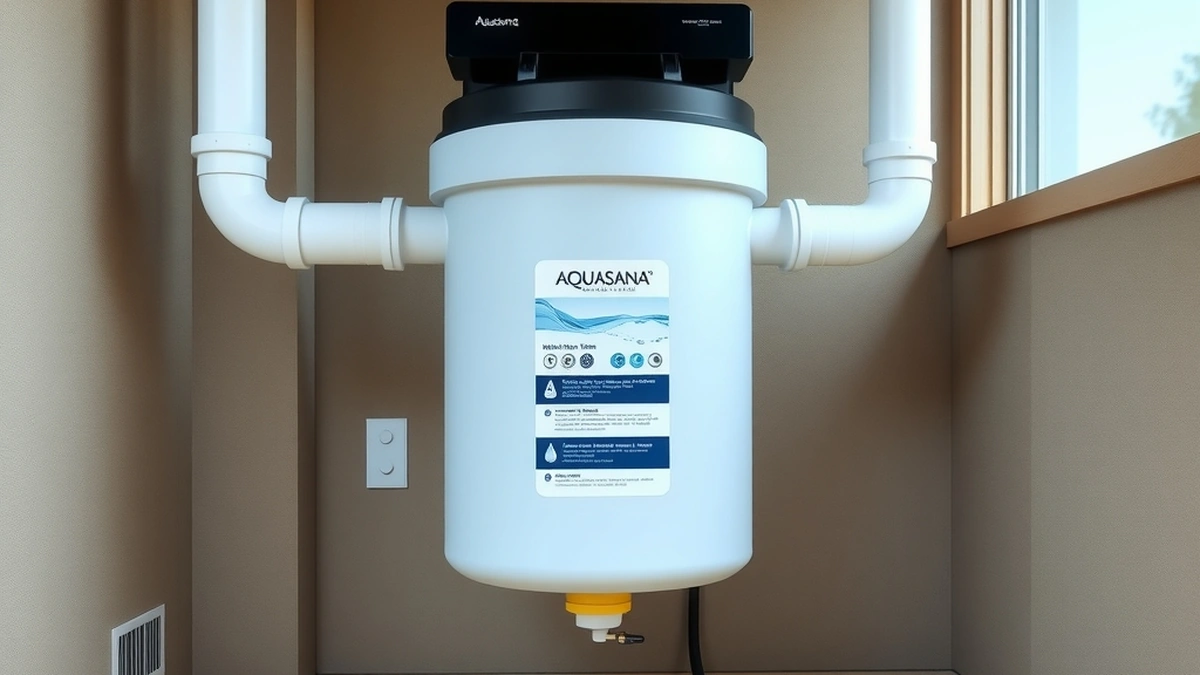
How to choose a UV water purifier
Choose a UV purifier by flow rate, dose, and pre-filtration. See lamp life, sleeve material, and the $300-$900 installed range for whole-house units.
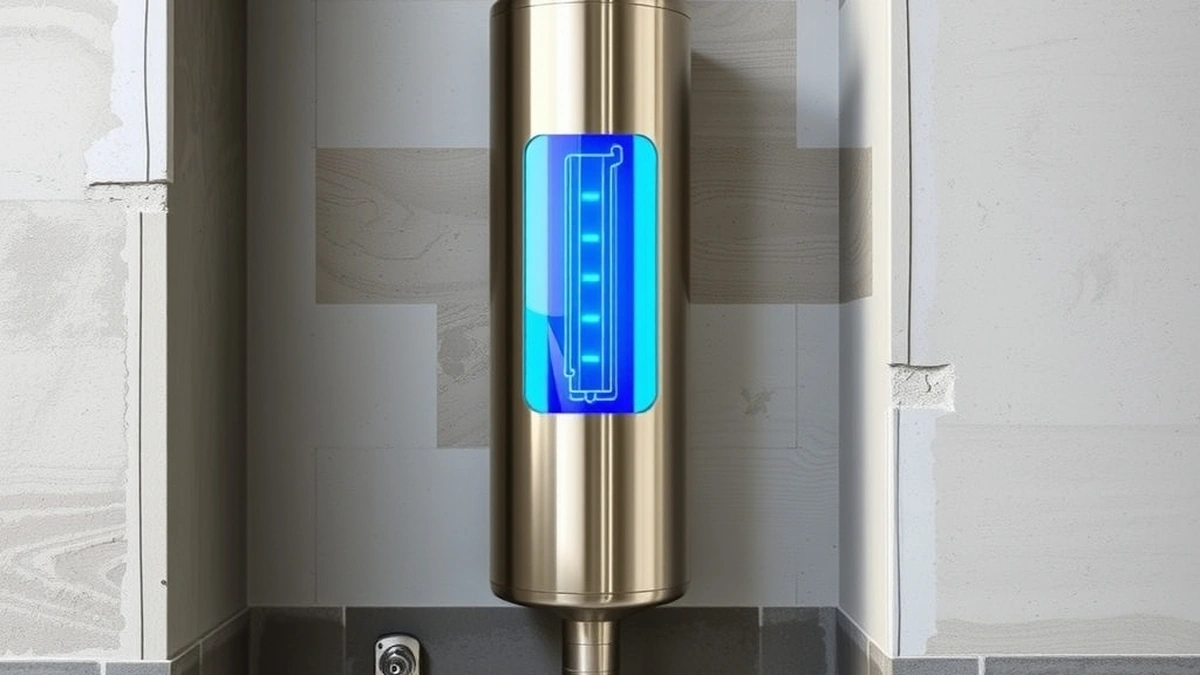
Choose a UV water purifier by matching its rated flow at your target dose to peak household demand, then confirm a 5-micron pre-filter. Whole-house units run $300-$900 installed and lamps cost $30-$90 per year.
- Installed cost
- $300 - $900
- Rated flow
- 8 - 15 GPM
- Lamp life
- 12 months
- Lamp cost
- $30 - $90
- Pre-filter
- 5 micron
Some links on this page are affiliate links.If you buy through them we may earn a commission at no extra cost to you. We do not accept payment for rankings. Read the full disclosure.
Choose a UV water purifier by flow at a stated dose, then by the pre-filter that makes the dose meaningful. Whole-house units run $300-$900 installed and lamps cost $30-$90 a year. A bigger lamp on unclear water is still unclear water.
What UV does and does not do
A UV water purifier exposes water to light at 254 nanometers, which inactivates bacteria, viruses, and protozoa. It does not remove them, and it does not remove sediment, minerals, or chemicals.
That distinction decides where the device belongs. UV sits last in a treatment train, after sediment, iron, sulfur, and softening, because it needs clear water to work.
A UV unit on turbid water is a lamp in a cloudy tube. The dose that reaches a microorganism drops sharply with turbidity, which is why every manufacturer specifies a pre-filter.
Flow, dose, and the rated number
Dose is lamp intensity times contact time. Manufacturers publish a curve: at 5 GPM the unit delivers 40 mJ/cm², at 10 GPM it delivers 30, at 15 GPM it delivers 20.
Residential targets are 30-40 mJ/cm². Choose the flow where your target is met, not the maximum flow printed on the box.
A three-bathroom home peaks near 8-10 GPM. A unit rated at 10 GPM and 30 mJ/cm² fits. A unit rated at 15 GPM may only deliver 20 mJ/cm² at that flow, which is below target.
Match the number to peak demand, not average. Showers and laundry overlap.
Point of entry versus point of use
| Factor | Point of entry | Point of use |
|---|---|---|
| Flow | 8 - 15 GPM | 1 - 3 GPM |
| Cost installed | $300 - $900 | $150 - $500 |
| Lamp | 20 - 40 watts | 6 - 15 watts |
| Protects | Every tap | One tap |
| Power | Utility room outlet | Cabinet outlet |
Whole-house is correct for a private well. Under-sink is correct when only drinking water matters, which on a municipal supply is most of the time.
Whole house UV versus under sink UV compares dose and cost for both, and the short version is that whole-house costs more and covers showers.
Chamber, sleeve, and lamp quality
Stainless steel chambers resist UV and heat and are standard for whole-house units. Plastic chambers are cheaper and fine at low flow.
The quartz sleeve is what separates the lamp from the water. A low-iron quartz sleeve transmits more UV than ordinary glass; a cheap sleeve absorbs output before it reaches the water.
Lamp quality matters. A name-brand lamp delivers its rated output for its rated life; a generic lamp may start lower and fade faster. Ask for the lamp part number.
Power and controller features
Every unit needs a grounded 120V outlet within cord reach. A lamp draws 15-40 watts continuously, which is $15-$50 per year.
Useful controller features: a lamp-life indicator, an audible alarm, and a dry-contact output for a building alarm. A sight glass lets you confirm the lamp is lit without dismantling anything.
A flow switch that turns the lamp off when no water moves saves a few dollars and adds a failure point. Most homeowners skip it.
Installation constraints
A vertical mount with the lamp pointing down is required on most units so air pockets do not form around the sleeve. Horizontal mounting is allowed only if the manufacturer rates it.
Clearance for lamp removal is 20-40 inches in front of the chamber, depending on lamp length. A unit installed tight to a wall cannot be serviced.
A bypass is mandatory so the house can run during lamp changes.
A buying sequence
- Test for bacteria and turbidity, and fix iron, hardness, and sediment first.
- Measure peak flow by counting simultaneous fixtures.
- Choose a unit whose rated flow at 30-40 mJ/cm² exceeds that peak.
- Confirm a 5-micron pre-filter is part of the install.
- Check lamp price, sleeve price, and local availability.
- Verify vertical clearance for lamp removal.
What to ignore
Ignore wattage as a proxy for performance. A 40-watt lamp in a poorly designed chamber can deliver less dose than a 25-watt unit with better hydraulics.
Ignore “sterilizer” claims that imply complete removal. UV inactivates; it does not filter.
Ignore units with no dose-versus-flow data. A manufacturer who will not publish the curve is asking you to trust a number rather than a measurement. UV water purifier installation covers the plumbing and power, and UV lamp replacement explains why the annual change is not optional. “”
The maintenance you are signing up for
A UV purifier has one annual consumable and one regular cleaning task, and both are non-negotiable.
The lamp changes every 12 months at $30-$90, whether or not it still glows. Output at 254 nanometers fades with hours, and a lamp at 60 percent of its original output may not deliver the dose the unit was rated for.
The quartz sleeve needs cleaning every six months, because minerals and iron deposit on the outside and block light. A brown sleeve on a well with iron is a treatment failure upstream, not a UV fault.
The pre-filter changes every 3-6 months at $10-$30. That cartridge is what keeps the water clear enough for the lamp to work.
Total annual cost lands at $60-$140. Budget it before buying, because a UV unit that is not maintained is a flow restriction with a blue light on it. UV water purifier maintenance covers the schedule in detail, and bacteria in well water explains why a positive test may mean the well needs shocking rather than a bigger lamp.
Frequently asked questions
How do I size a UV water purifier?
Match the unit's rated flow at your target dose to peak household demand. A unit rated at 10 GPM and 30 mJ/cm2 delivers less dose if you push 12 GPM through it.
What dose does a residential UV system need?
Thirty to forty millijoules per square centimeter is the common residential target. Manufacturers publish dose-versus-flow curves, and the rated flow is where the dose is met.
Does a UV purifier need a pre-filter?
Yes, at 5 microns. Particles shield microorganisms from the light, so unclear water cannot be reliably treated regardless of lamp power.
How long does a UV lamp last?
Twelve months. Output at 254 nanometers declines with hours even though the lamp still glows, so the change is calendar-based.
Is stainless steel better than plastic?
Stainless resists UV degradation and heat and is the standard for whole-house units. Plastic chambers are cheaper and adequate for low-flow point-of-use units.
Can a UV purifier be used on municipal water?
Yes, but it is usually unnecessary if the utility supply is already disinfected. UV is most useful on private wells and on systems where bacterial contamination is a concern.
Sources
Some links are affiliate links.If you buy through them we may earn a commission at no extra cost to you. We do not accept payment for rankings. Read the full disclosure.