
UV water purifier installation: what it involves
UV purifier installation takes 1-3 hours and needs a 120V outlet, a bypass, and a sediment pre-filter. See point-of-entry versus under-sink setups.
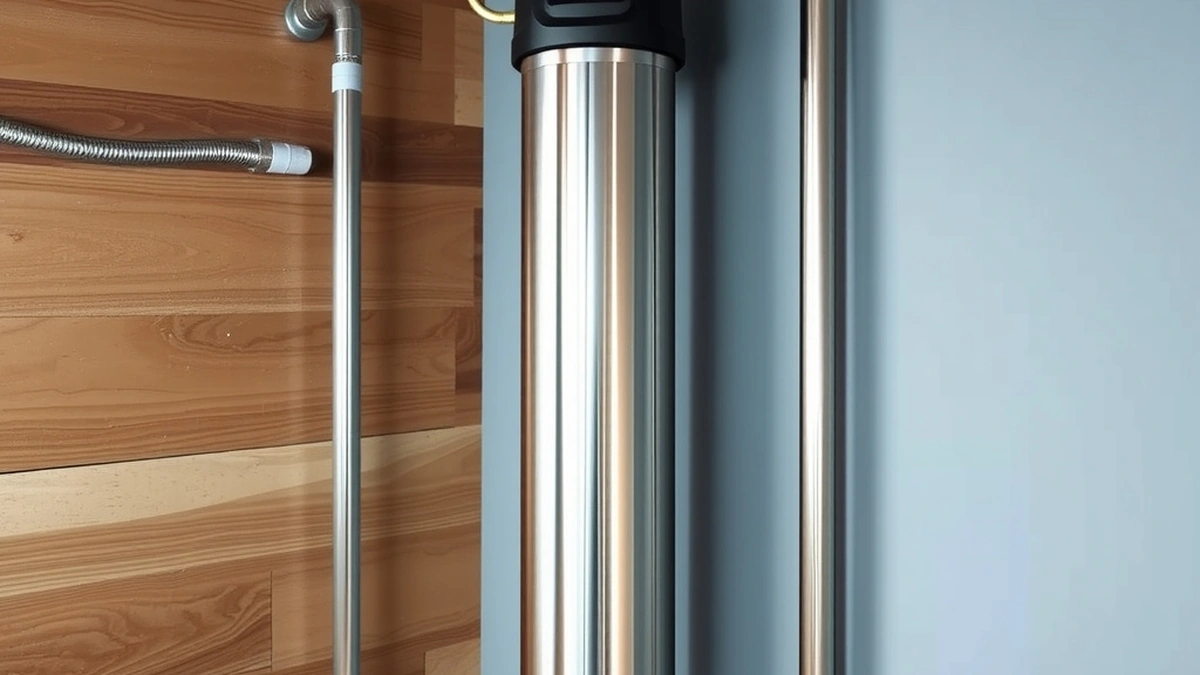
UV water purifier installation takes 1-3 hours and requires a 120V outlet, a bypass, and a sediment pre-filter ahead of the lamp. Point-of-entry units go on the main line; under-sink units go after the cold supply.
- Labor time
- 1 - 3 hours
- Power required
- 120V grounded outlet
- Pre-filter
- 5 micron sediment
- Lamp replacement
- Every 12 months
- Lamp cost
- $30 - $90
Some links on this page are affiliate links.If you buy through them we may earn a commission at no extra cost to you. We do not accept payment for rankings. Read the full disclosure.
UV water purifier installation takes 1-3 hours and needs three things: a 120V outlet, a bypass, and a sediment pre-filter. The unit itself mounts on the pipe and does the rest. There is no drain line, no salt, and no regeneration cycle to program.
What a UV purifier is, physically
A UV water purifier is a stainless or plastic chamber holding a quartz sleeve and a low-pressure mercury lamp that emits at 254 nanometers. Water passes the sleeve in a thin film, and the dose delivered depends on lamp output, contact time, and water clarity.
That last factor drives the installation rules. UV does not remove anything; it inactivates what is in the water, and particles can shield organisms from the light. A 5-micron sediment filter ahead of the chamber is not optional on a well system.
The hardware is compact: a 2-inch by 10-20 inch chamber, a controller ballast, a lamp, a sleeve, and mounting clamps. Most residential units support 8-15 GPM, matching whole-house filter flow ratings.
Point of entry versus under sink
| Factor | Point-of-entry | Under-sink |
|---|---|---|
| Location | Main line after filtration | Cold supply at one tap |
| Flow | 8 - 15 GPM | 1 - 3 GPM |
| Install time | 2 - 3 hours | 1 - 2 hours |
| Cost | $300 - $900 installed | $150 - $500 installed |
| Protects | Every tap, including showers | Drinking water only |
| Outlet needed | Basement or utility room | Cabinet |
Point-of-entry is the right choice for a private well serving the whole house. Under-sink is the right choice when only drinking water matters, such as a municipal supply where the concern is the building’s own plumbing.
For a direct comparison of the two, whole house UV versus under sink UV covers dose, flow, and cost. The short version: whole-house units are bigger, need more power, and treat water you never drink.
The electrical side
Every UV unit needs a grounded 120V outlet within cord reach, usually 6 feet. The controller draws 15-40 watts continuously, so the annual electricity cost is $15-$50.
An outlet in a basement utility room is usually there. An outlet in a sink cabinet often is not, and adding one costs $150-$350 with an electrician. That line item surprises people who budgeted only for the purifier.
Some units offer a dry-contact or flow-switch option that turns the lamp off when no water moves. It saves a few dollars a year and adds a wiring step. Most homeowners skip it.
Do not put a UV unit on a switched outlet. Someone will flip the switch for a shop vac and the house will run untreated for a week without any alarm.
Pre-filtration and water quality
UV needs clear water. Iron above 2-3 ppm stains the sleeve and blocks light. Hardness above 7 grains per gallon scales the quartz, which is why softeners usually sit upstream. Turbidity above 1 NTU cuts dose significantly.
The treatment order on a well is: sediment filter, then iron or sulfur removal if needed, then softener if hardness is high, then UV last. Putting UV first means it is trying to disinfect water that still carries the particles and minerals that will foul it.
Sediment cartridges ahead of UV need changing every 3-6 months. A clogged pre-filter starves the chamber and drops flow, and a starved chamber overheats the lamp.
Sizing by flow and dose
Lamp size is set by flow rate and the target dose, typically 30-40 mJ/cm² for residential use. A 10-inch, 15-watt lamp handles 6-8 GPM; a 20-inch, 40-watt lamp handles 12-15 GPM.
Match the unit to peak household flow, not average. Two showers plus a washing machine can pull 8-10 GPM, and a unit rated at 5 GPM at that draw delivers a fraction of its rated dose.
Temperature matters too. Cold water absorbs differently and the lamp output is stable, but flow through a cold line can be higher than expected in winter when supply pressure rises.
Six steps to install it
- Test the water for iron, hardness, and turbidity; fix those before the lamp.
- Shut off the main, drain the line, and cut in a bypass.
- Mount the chamber vertically with the lamp pointing down.
- Install the 5-micron pre-filter upstream of the chamber.
- Wire the controller to a dedicated, unswitched outlet and verify the lamp is lit.
- Run water for 5 minutes, check for leaks, and record the lamp install date.
What changes the quote
Four things move the number: whether an outlet exists, whether a pre-filter housing must be added, whether the pipe is copper or PEX, and whether the chamber fits the available space. A vertical run with 2 feet of clear pipe is the easy case.
The lamp is the recurring cost, not the install. At $30-$90 every 12 months, plus $10-$25 for a sleeve O-ring set, annual upkeep is $40-$115. Skipping the lamp change is the most common maintenance failure; UV lamp replacement explains why a glowing lamp is not a working lamp.
For the filter that has to sit in front of it, whole house water filter installation covers the cut-in. And if a sulfur odor is the reason you are treating the well, sulfur filter installation is the upstream step UV cannot replace.
Frequently asked questions
Does a UV purifier need a pre-filter?
Yes. A 5-micron sediment filter ahead of the lamp keeps particles from shielding microorganisms. UV only works on water that is already clear; turbidity blocks the light.
How much electricity does a UV purifier use?
A residential lamp draws about 15-40 watts, roughly the same as a small light bulb. Running continuously for a year costs $15-$50 at typical US electricity rates.
How long does UV purifier installation take?
One to three hours for an under-sink or point-of-entry unit on accessible pipe. Adding a pre-filter housing or a new outlet adds 30-90 minutes.
Can a UV purifier be installed horizontally?
Only if the manufacturer rates it for horizontal mounting. Most units must be vertical with the lamp pointing down so air pockets do not form around the sleeve and reduce treatment.
How often does a UV lamp need replacing?
Every 12 months, whether or not it still glows. Lamps lose germicidal output at 254 nm over time even while producing visible light, so the calendar matters more than the glow.
Does a UV purifier remove sediment or chemicals?
No. UV is a disinfection step only. It does not remove iron, hardness, nitrate, lead, or taste and odor compounds, so it sits after filtration, not instead of it.
Sources
Some links are affiliate links.If you buy through them we may earn a commission at no extra cost to you. We do not accept payment for rankings. Read the full disclosure.


