How to choose a water distiller
Choose a distiller by batch size, power draw, and cleaning effort. See stainless vs plastic, output per cycle, and the $150-$500 price band.
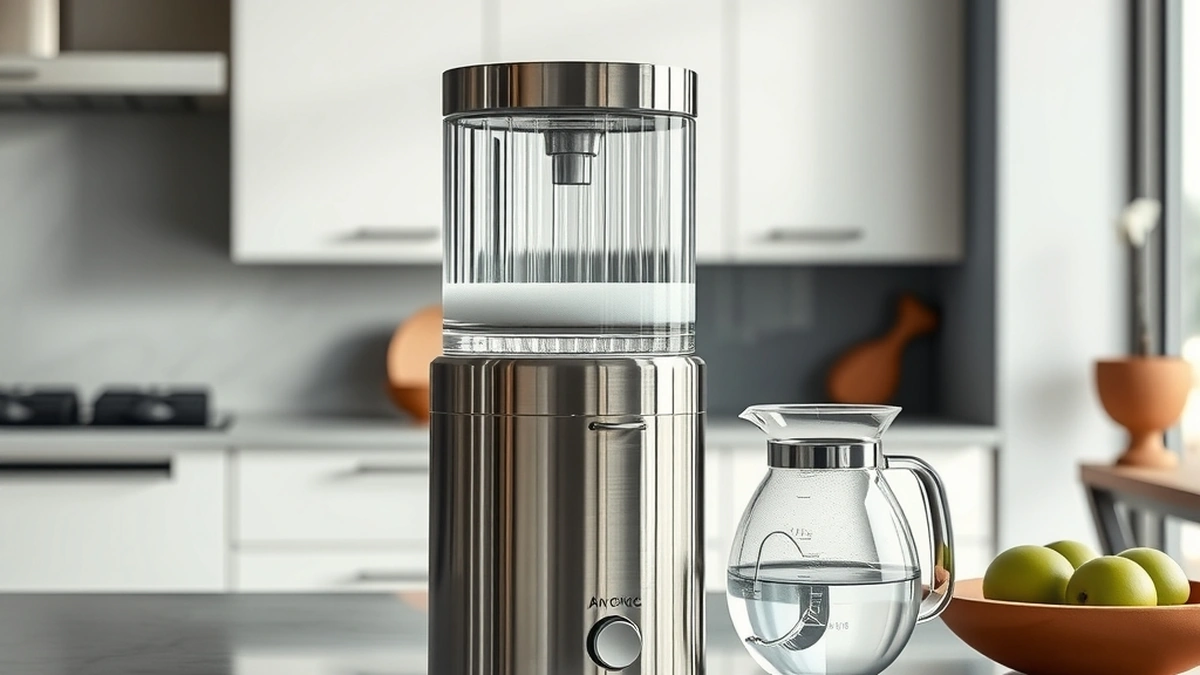
Choose a water distiller by batch size and how often you will clean it. Countertop units cost $150-$500, produce 0.75-1 gallon per 3-5 hour cycle, and draw 500-800 watts.
- Unit cost
- $150 - $500
- Batch output
- 0.75 - 1 gallon
- Cycle time
- 3 - 5 hours
- Power draw
- 500 - 800 watts
- Carbon filter
- Every 6 months
Some links on this page are affiliate links.If you buy through them we may earn a commission at no extra cost to you. We do not accept payment for rankings. Read the full disclosure.
Choose a water distiller by batch size and by how willing you are to descale it. A countertop unit costs $150-$500, produces 0.75-1 gallon per 3-5 hour cycle, and draws 500-800 watts. The cleaning routine decides whether it lasts three years or ten.
What distillation does
A water distiller boils water, captures the steam, and condenses it into a separate container. Dissolved minerals, metals, and most contaminants stay behind in the boiler.
That is a different process from filtration. A carbon filter adsorbs; a distiller separates by phase change. Distillation removes a broader range of dissolved solids than carbon, including nitrate and most metals.
It does not remove everything. Volatile organic compounds with boiling points below water can carry over with the steam, which is why many units add a carbon post-filter.
Batch size and daily output
| Batch size | Output | Cycles for 2 gal/day | Best for |
|---|---|---|---|
| 0.75 gallon | 0.6 - 0.75 gal | 3 | One person |
| 1 gallon | 0.8 - 1 gal | 2 - 3 | Couple |
| 1.5 gallons | 1.2 - 1.5 gal | 2 | Family of three |
A batch runs 3-5 hours. That means a household using 2 gallons a day needs two or three cycles, which is why batch size matters more than price for daily use.
If you need water on demand rather than in batches, a distiller is the wrong format. An RO system produces continuously and stores in a tank.
Boiler material and build
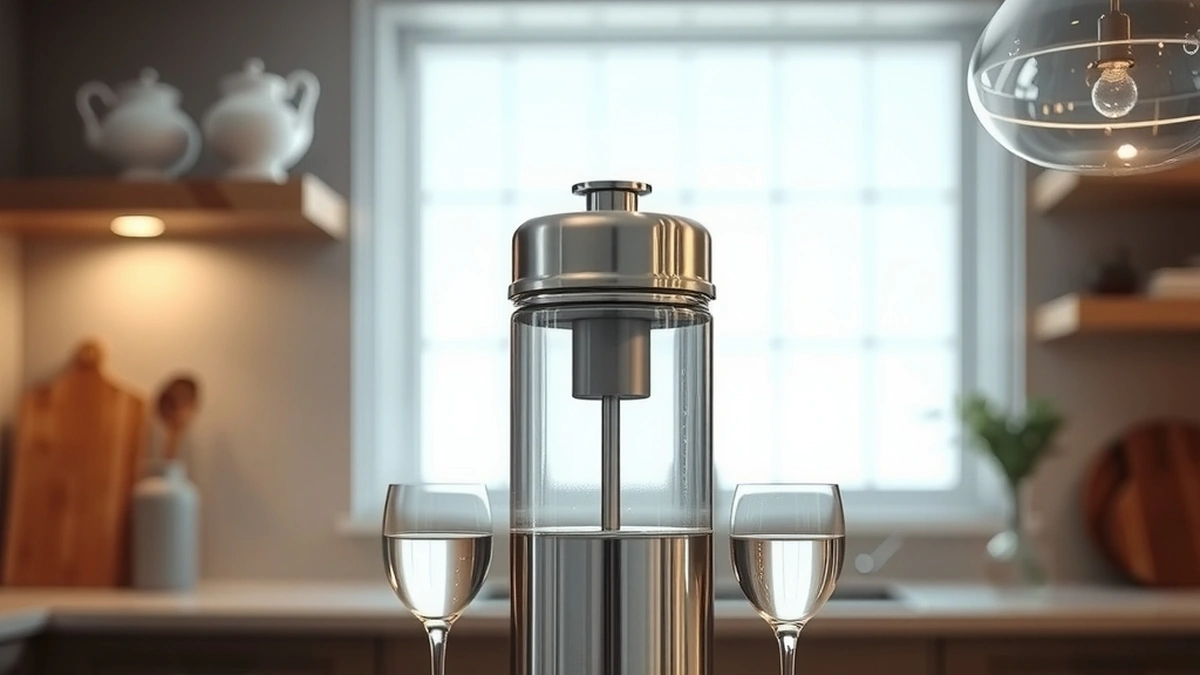
Stainless steel is the right boiler material. It resists heat, does not absorb odors, and tolerates descaling with citric acid or vinegar.
Plastic boilers are cheaper and shorter-lived. Heat cycling degrades them, and scratched plastic holds residue that affects taste.
Check the condenser design. A unit with a fan and a large coil condenses faster and uses less electricity per gallon than a passive unit with a small coil.
Check the lid seal. A gasket that does not seal loses steam, which reduces output and wastes power. Replacement gaskets should be available and cheap.
Power and heat
A distiller draws 500-800 watts for hours, which is 1.5-4 kWh per batch. At 16 cents per kWh, that is $0.24-$0.64 per batch.
The unit also dumps heat into the kitchen. In summer that is a real cost if the air conditioning is running; in winter it is free heat.
Do not run a distiller on a circuit shared with a microwave or a space heater. A 700-watt continuous load on a 15-amp circuit with other draws will trip the breaker.
Cleaning effort, the real differentiator
Every batch leaves minerals in the boiler. Hard water at 10 grains per gallon leaves enough scale that descaling weekly is necessary.
A unit with a wide boiler opening is easy to scrub. A unit with a narrow neck and a hidden element is a chore, and chores get skipped.
Descaling takes 30 minutes with vinegar or citric acid. A unit that needs it every three batches is manageable; one that needs it every batch because the boiler is small is not.
Ask how the element is mounted. An exposed element is easy to clean and easy to replace. A sealed element that scales internally is a disposable appliance.
A buying sequence
- Estimate daily drinking water in gallons.
- Choose a batch size that covers a day in two cycles or fewer.
- Confirm a stainless boiler and an accessible element.
- Check the carbon filter price and availability.
- Confirm the unit fits under the cabinets with the lid open.
- Read noise and cleaning reviews, not just the star rating.
What to ignore
Ignore output claims that ignore cycle time. “One gallon” means one gallon per four hours, not per hour.
Ignore glass carafes marketed as a feature. They break, and a replacement costs more than a plastic one.
Ignore units with no replacement parts listed. A $200 distiller without a available gasket is a $200 distiller with a two-year life. Water distiller installation covers placement and power, and water distiller maintenance covers the descaling rhythm. “”
Running costs beyond the sticker
A distiller’s purchase price is roughly a third of its five-year cost. Electricity and cleaning supplies make up the rest, and both scale with how much water you make.
At 1 gallon per day and $0.35 per gallon in electricity, a year costs $128. Add $30 for two carbon filters and $10 for descaling acid, and the annual figure is $168.
Over five years that is $840 plus the $150-$500 purchase price, or $990-$1,340 total. Compare an under-sink RO at $300-$900 installed with $60-$150 per year in filters: $600-$1,650 over the same period, with no batch labor.
The distiller wins when a specific contaminant requires it or when no plumbing is available. It loses on convenience and, usually, on cost per gallon at volume. It also loses on heat: four hours of 700-watt operation in a small kitchen is noticeable in July, and a unit tucked into a corner cabinet will run hotter and slower than one on an open counter.
If the decision is close, run the arithmetic on your own daily gallons rather than the label’s. A household that drinks one gallon a day has very different math from one that drinks three, and the distiller’s batch limit binds sooner as volume rises. Water distiller versus reverse osmosis lays the comparison out, and reverse osmosis system cost covers the plumbed alternative in detail.
Frequently asked questions
What size distiller do I need?
One that produces at least a gallon per day for a two-person household. A 1-gallon batch unit running once daily covers drinking and cooking for two.
Is stainless steel better than plastic?
Yes for the boiler. Stainless resists heat and scale and does not absorb odors. Plastic is acceptable for the carafe and lid if they are heat-rated.
How much electricity does a distiller use per gallon?
About 0.5-1 kWh per gallon, or $0.08-$0.20 at typical rates. Inefficient units with poor condensers sit at the top of that range.
Do I need a carbon filter on a distiller?
Many units include one to catch volatile compounds that boiling does not separate. Replace it every six months, or the water can taste flat or slightly chemical.
How noisy is a water distiller?
About as loud as a small fan. The condenser fan runs for hours, which matters in a studio apartment or an open kitchen.
Can a distiller run on 12 volts or solar?
Standard units need 120V. A few travel models run on 12V but produce very little water and are not practical for daily household use.
Sources
Some links are affiliate links.If you buy through them we may earn a commission at no extra cost to you. We do not accept payment for rankings. Read the full disclosure.