
Kinetico water softener
How Kinetico twin-tank softeners work, what to check before buying one, and how dealer pricing compares with standard systems.
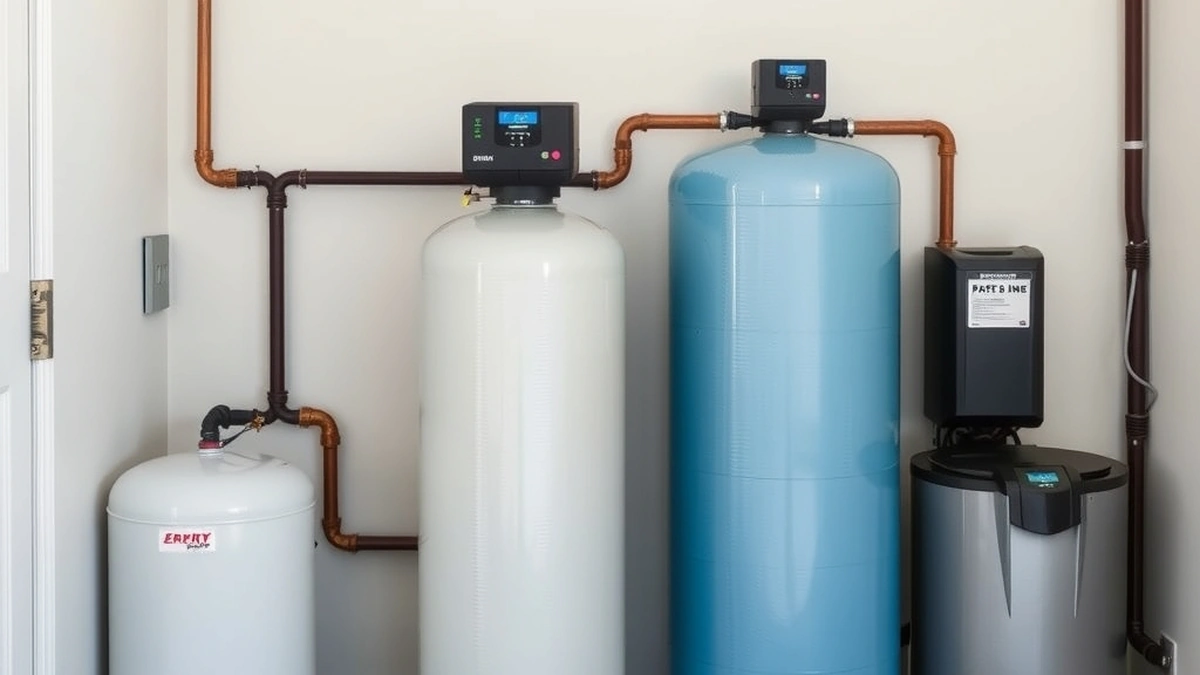
A Kinetico water softener is a twin-tank, non-electric system that meters water use and regenerates with one tank in service. It is dealer-sold as an installed package, so compare the all-in quote with the $1,200 to $4,500 band for standard softeners.
- System type
- Twin tank, non-electric
- Regeneration
- Metered, demand-driven
- Standard installed band
- $1,200 - $4,500
- Salt per year
- $120 - $400
- Resin life
- 8 - 12 years
Some links on this page are affiliate links.If you buy through them we may earn a commission at no extra cost to you. We do not accept payment for rankings. Read the full disclosure.
A Kinetico water softener is a twin-tank, non-electric system that meters water use and regenerates one tank while the other stays in service. It is sold through dealers as an installed package rather than as a box on a shelf, which makes the quote the number that matters. Compare that all-in figure with the $1,200 to $4,500 band used for standard installed softeners.
How the system works
Two resin tanks share one control valve. A turbine meter counts the water passing through, and when the capacity is used the valve switches flow to the second tank and regenerates the first.
Because the valve is driven by water flow, the unit needs no electrical connection. That matters in a power outage and in a utility space without an outlet, and it removes one code question from the installation.
Continuous soft water is the practical benefit. A single-tank system is bypassed during regeneration, so hard water reaches the taps for part of the cycle. A twin-tank system avoids that window.
What to check before buying
The dealer quote should state four things: the grain capacity, the tank size, the salt dose per regeneration, and the warranty terms.
Grain capacity for residential softeners typically ranges from 24,000 to 64,000 grains. Sizing uses daily gallons multiplied by hardness in grains per gallon, with a reserve for days when demand spikes.
Four people at 75 gallons per day is 300 gallons. At 12 gpg, that is 300 x 12 = 3,600 grains per day, and a 36,000-grain unit with a reserve regenerates roughly every nine days.
Ask whether the quote includes the brine tank, the bypass valve, the drain line, and the permit if the municipality requires one. A dealer price that excludes installation labour is not comparable with an installed price, and the gap between the two can be several hundred dollars.
What it costs to run
| Item | Typical range | Notes |
|---|---|---|
| Salt per year | $120 - $400 | Depends on hardness and volume |
| Salt per regeneration | 8 - 12 lb | Set by the valve and capacity |
| Resin rebed | $300 - $600 | Every 8 - 12 years |
| Standard installed softener | $1,200 - $4,500 | Benchmark for comparison |
| Water test | $40 - $150 | Before any equipment choice |
Salt is the recurring cost. A household regenerating twice a week at 10 pounds per cycle uses about 1,040 pounds per year, which is roughly 26 bags of 40 pounds. At the low end, a household on 6 gpg water may use half that, which is why the water test comes before the equipment quote.
Resin is the long-term cost. At 8 to 12 years, most systems need one rebed during their life, and the $300 to $600 line should be in the budget rather than a surprise.
Twin tank versus single tank
| Factor | Twin tank | Single tank |
|---|---|---|
| Soft water during regeneration | Yes | No, bypass period |
| Electrical supply | Not required on non-electric models | Usually required |
| Footprint | Larger, two tanks | Smaller |
| Controls | Metered, flow-driven | Metered or timer |
| Price | Dealer-quoted package | $1,200 - $4,500 installed typical |
A single-tank metered softener is the standard residential choice and costs less. A twin-tank system costs more and solves the regeneration gap, which matters in a large household or one that uses water around the clock. For a household of two on moderate hardness, the gap is rarely worth the premium; for six people on 15 gpg, it often is.
Sizing and installation
- Test the water at $40 to $150 and record hardness and iron.
- Measure daily use or estimate 75 gallons per person per day.
- Multiply gallons by hardness to get grains per day.
- Choose a capacity that allows a regeneration interval of about a week.
- Confirm the installation point: after the meter or pressure tank, before the water heater.
- Check the drain, the bypass, and the electrical outlet if the model needs one.
Iron above 2 to 3 ppm exceeds what most softeners handle, and an iron filter at $800 to $2,500 installed should come first. Otherwise the resin fouls and the softener underperforms while the dealer blames the water. A pre-filter is cheaper than a resin rebed at $300 to $600, and it keeps the warranty argument simple if performance drops.
Warranty and service
A dealer-sold softener usually carries a longer parts warranty than a valve bought online, and the warranty often depends on annual service by the dealer. That is not unreasonable, and it is worth pricing as part of the package rather than as a free extra.
Read the service clause before comparing totals. A ten-year warranty that lapses without a $250 annual visit is a $2,500 commitment over the term, and the comparison against a generic unit changes once that is included.
Dealer-installed systems usually carry a parts and labour warranty that depends on annual service. Ask what the service visit covers, whether it is included, and what voids the warranty.
Ask for the warranty document before signing, and confirm whether it transfers if the house is sold. A softener warranty is usually measured in years rather than decades, but the transfer question still matters at resale and at a refinance.
Bottom line
A Kinetico softener is a twin-tank, non-electric system sold as an installed package. Judge it on the all-in quote, the grain capacity, and the service terms, and compare that number with the $1,200 to $4,500 band for standard installed softeners.
For the sizing arithmetic, see water softener sizing and water softener grain capacity. For a head-to-head with another dealer brand, culligan versus kinetico covers the differences, and water softener installation cost breaks down the standard lines.
Frequently asked questions
How does a Kinetico water softener work?
It uses two resin tanks and a turbine meter, so one tank softens while the other regenerates, and the valve is driven by water flow rather than electricity.
Is Kinetico worth the price?
It depends on the installed quote and the warranty. Compare the all-in price and service terms with the $1,200 to $4,500 band for standard softeners.
Does a Kinetico need electricity?
No. The control valve is driven by the flow of water through a turbine, which is useful in a power outage and in locations without an outlet.
How much salt does it use?
Salt use depends on hardness and volume, typically 8 to 12 pounds per regeneration, with annual salt costs of $120 to $400.
How long does the resin last?
Resin typically lasts 8 to 12 years, after which a rebed at $300 to $600 restores capacity.
Can I buy a Kinetico online?
Kinetico systems are generally sold and installed through authorised dealers rather than retail channels, so pricing is quoted per job.
Sources
Some links are affiliate links.If you buy through them we may earn a commission at no extra cost to you. We do not accept payment for rankings. Read the full disclosure.


