
Pur water filter
PUR pitchers and faucet mounts use carbon and ion exchange to cut chlorine, lead, and some metals. See what each format removes and what it costs.
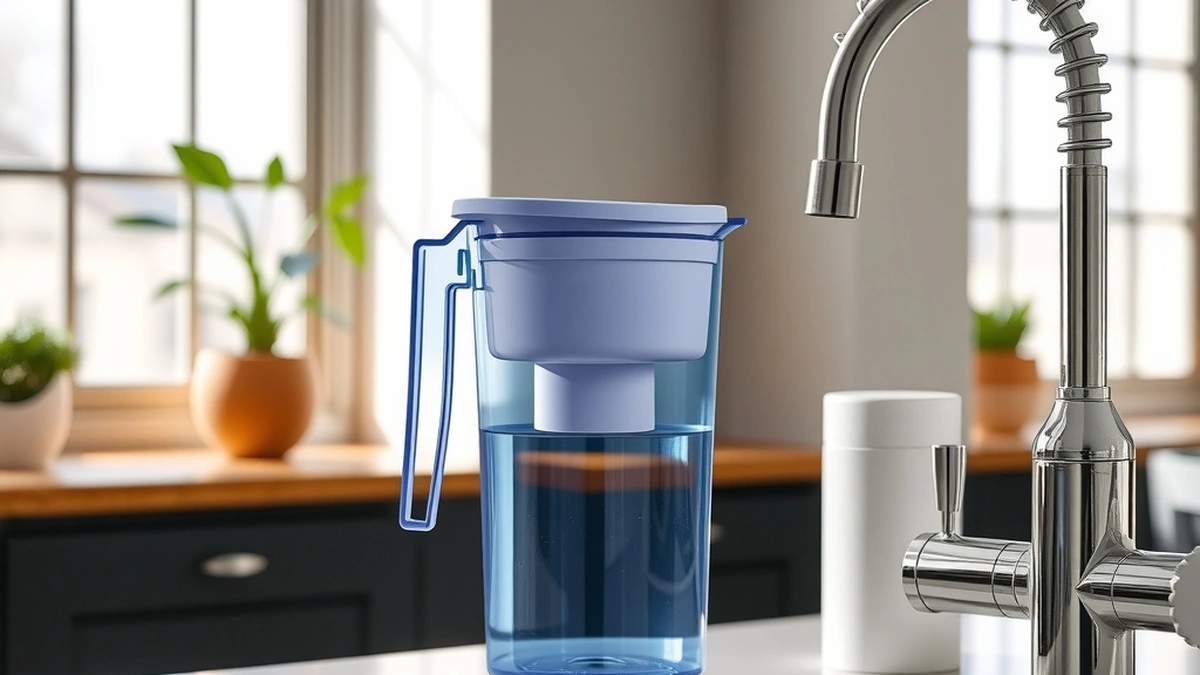
PUR water filters are carbon pitchers and faucet mounts, often with ion exchange media for lead and mercury reduction. Pitchers cost $25 to $45 and cartridges $8 to $20, filtering about 40 gallons at roughly $0.20 to $0.40 per gallon.
- Pitcher cost
- $25 - $45
- Faucet mount
- $30 - $60
- Cartridge
- $8 - $20
- Cartridge volume
- About 40 gallons
- Cost per gallon
- $0.20 - $0.40
Some links on this page are affiliate links.If you buy through them we may earn a commission at no extra cost to you. We do not accept payment for rankings. Read the full disclosure.
PUR makes carbon water filters for pitchers and faucets, with ion exchange media added on many models for lead and mercury reduction. Pitchers cost $25 to $45, faucet mounts $30 to $60, and cartridges run $8 to $20 for about 40 gallons. The format is familiar; the certification is what varies.
The Formats
Pitchers and dispensers. A reservoir, a cartridge, and a dispenser. Capacity runs 6 to 11 cups. The most common format and the cheapest entry point.
Faucet mounts. A housing on the aerator with a switch between filtered and unfiltered flow. No counter space used, but the fixture is visible and the cartridge life is short.
Dispensers. Larger reservoirs for fridge storage, useful for a family.
| Format | Cost | Cartridge | Volume |
|---|---|---|---|
| Pitcher | $25 - $45 | $8 - $15 | 40 gallons |
| Dispenser | $35 - $55 | $10 - $18 | 40 gallons |
| Faucet mount | $30 - $60 | $12 - $20 | 100 gallons |
What It Removes
The carbon handles chlorine and taste. The ion exchange media, where present, targets lead, mercury, and some other metals.
| Contaminant | Standard model | Certified models |
|---|---|---|
| Chlorine | Yes | Yes |
| Taste and odour | Yes | Yes |
| Sediment | Yes, nominal | Yes |
| Lead | No | Yes, NSF 53 |
| Mercury | No | Yes, NSF 53 |
| Nitrate | No | No |
| Hardness | No | No |
| Bacteria | No | No |
The nitrate and hardness rows do not change with the model. A pitcher is not a nitrate treatment and not a softener, and no PUR cartridge changes that.
The lead row is where the models diverge. A household with a lead service line or older interior plumbing should buy the certified model, not the cheapest one on the shelf.
Certification also has a volume limit. A cartridge certified for lead reduction is certified for a stated number of gallons, and effectiveness declines as the media exhausts. Stretching a cartridge past its rating means the lead reduction stops before the cartridge stops passing water, which is the failure mode nobody notices.
Cost per Gallon
A $10 cartridge rated for 40 gallons is $0.25 per gallon. A $20 faucet cartridge rated for 100 gallons is $0.20 per gallon.
Add the pitcher amortized over five years, roughly $7 per year, which barely moves the number.
For a household using 300 gallons a year, cartridges cost $60 to $75. At 730 gallons, which is 2 gallons a day, the cost is $146 to $180.
That is still well below bottled water at $730 or more for the same volume, and above an under-sink carbon filter at $0.02 to $0.08 per gallon.
The comparison that matters is against the format you would otherwise use. A household already buying bottled water saves money immediately. A household with an under-sink filter would be paying more per gallon for less capacity by switching to a pitcher.
Where It Fits
It fits a small household with a chlorine taste complaint and treated municipal water. It fits a renter who cannot install plumbing. It fits a fridge or a desk where a glass of water is wanted without a walk to the kitchen.
It does not fit a family of four drinking 2 gallons a day, because the refills become constant. It does not fit a home with hardness above 7 GPG, because the water stays hard. It does not fit a well with nitrate or bacteria.
The refill math is worth doing before buying. A 10-cup pitcher holds 0.6 gallons, so 2 gallons a day is more than three full cycles. Each cycle takes several minutes to filter, which means the pitcher is either empty or being filled for a good part of the day.
Five Steps to Choose
- Read the water report and list the contaminants.
- Check the certification for the exact model, not the brand.
- Calculate cost per gallon from cartridge price and rated volume.
- Count daily refills for your household.
- Compare with an under-sink filter if volume is high.
Maintenance
Change on the gallon rating or when flow slows. The indicator light is a timer, not a sensor.
Rinse the reservoir weekly. A pitcher in the fridge door that is never washed grows biofilm, and the cartridge downstream cannot fix a dirty reservoir.
If the flow slows before the rating, the water carries more sediment than expected. A sediment pre-filter at the sink, or a whole-house sediment stage, extends cartridge life.
Store cartridges sealed until use. An open cartridge left in a humid cabinet can grow mould in the carbon before it ever sees water, and the first sign is a musty taste that flushing will not fix.
PUR vs Brita
The two brands compete in the same formats at similar prices. The differences are model-level, not brand-level. Both sell basic and certified versions of the same pitcher, and the basic version is often the one on the endcap.
That is the trap in this category. The cheap cartridge on the shelf looks like a deal until you read the box and find it claims only chlorine reduction, while the model it fits was designed for lead.
| Feature | PUR | Brita |
|---|---|---|
| Pitcher price | $25 - $45 | $25 - $50 |
| Cartridge | $8 - $20 | $6 - $20 |
| Lead certification | Common on many models | Model-specific |
| Faucet mount | Yes | Yes |
| Cost per gallon | $0.20 - $0.40 | $0.15 - $0.30 |
Buy on certification and cost per gallon, not on the logo. A certified PUR model and a certified Brita model with the same claims are interchangeable in practice.
For the Brita side, see Brita water filter and water filter pitcher reviews. If the complaint is scale rather than taste, hard water filter covers what actually addresses it, and bottled water versus a filter works the long-run comparison.
Frequently asked questions
What does a PUR water filter remove?
Chlorine taste and odour, sediment, and on many models lead and mercury, through a combination of carbon and ion exchange media certified to NSF/ANSI 42 and 53.
How much does a PUR filter cost?
Pitchers run $25 to $45 and faucet mounts $30 to $60, with cartridges at $8 to $20 treating about 40 gallons each.
Is PUR better than Brita?
The formats and prices are similar; the meaningful difference is which contaminants each model is certified for, so compare the certification listings rather than the brands.
Do PUR filters remove lead?
Many PUR models carry NSF/ANSI 53 certification for lead reduction, but the listing is model-specific, so check the exact product rather than the brand.
How often should a PUR cartridge be changed?
About every 40 gallons or two months for a pitcher, and every 100 gallons or three months for a faucet mount, or sooner if flow slows.
Can a PUR filter soften hard water?
No. The ion exchange media is present in small amounts for trace metals, not for the calcium and magnesium load that makes water hard.
Sources
Some links are affiliate links.If you buy through them we may earn a commission at no extra cost to you. We do not accept payment for rankings. Read the full disclosure.


