
Strong acid cation resin: what the spec means
Strong acid cation resin is the gel bead inside a softener. See what the spec sheet numbers mean, how long the bed lasts, and how it fails.
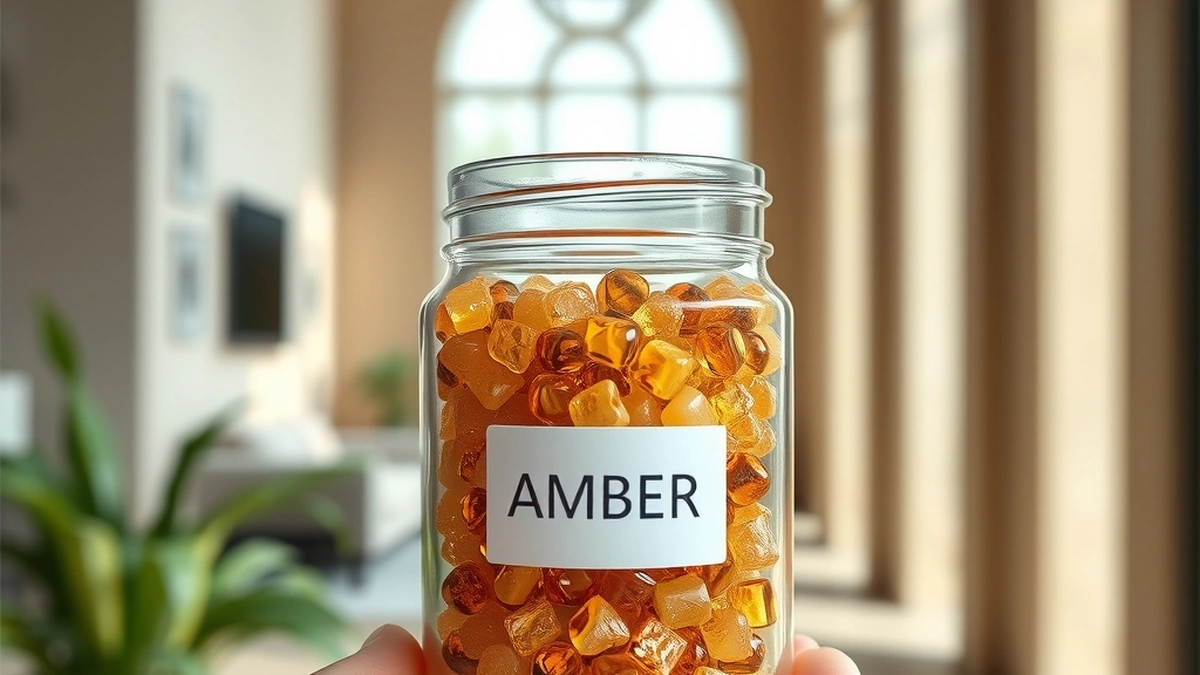
Strong acid cation resin is a sulfonated polystyrene bead that exchanges calcium and magnesium for sodium across the full pH range. A cubic foot holds roughly 30,000 grains of theoretical capacity, lasts 8 to 12 years, and fails from iron fouling or chlorine attack.
- Resin life
- 8 - 12 years
- Rebed cost
- $300 - $600
- Resin per tank
- 0.75 - 2.0 cubic feet
- Capacity guide
- About 30,000 grains per cubic foot
- Common failure
- Iron fouling or chlorine oxidation
Some links on this page are affiliate links.If you buy through them we may earn a commission at no extra cost to you. We do not accept payment for rankings. Read the full disclosure.
Strong acid cation resin is the amber bead that does the actual work in a softener. It is a sulfonated polystyrene-divinylbenzene copolymer, and its sulfonic acid groups carry sodium ions that swap for calcium and magnesium as hard water passes. The spec sheet numbers describe how much of that exchange the bed can do and how long it survives.
What “Strong Acid Cation” Actually Means
Ion exchange resins are classified by the strength of their exchange sites. Strong acid cation resin has sulfonic acid groups, which remain ionized across the entire pH range from about 0 to 14. That is why it is the default for softening: household water pH varies, and the resin does not care.
Weak acid cation resin works only at higher pH and is used for dealkalization rather than softening. Anion resin handles negatively charged ions and is used for nitrate, tannins, and demineralization. If a softener is doing its job, the material inside is strong acid cation.
The polymer matrix matters as much as the site chemistry. Divinylbenzene cross-linking gives the bead its structure: more cross-linking means a tighter, stronger bead with less swelling, and less cross-linking means faster kinetics and more capacity.
Reading the Spec Sheet
Manufacturers publish a handful of numbers, and only some of them matter to a homeowner.
| Spec | Typical value | What it tells you |
|---|---|---|
| Total capacity | 2.0 eq/L or more | Maximum exchange sites |
| Moisture content | 45 - 50 percent | Hydration and porosity |
| Cross-link | 8 - 10 percent DVB | Bead strength and kinetics |
| Particle size | 0.3 - 1.2 mm | Pressure drop and backwash |
| Uniformity coefficient | 1.1 - 1.6 | Evenness of bead size |
| pH range | 0 - 14 | Full-range operation |
| Maximum temperature | 250 F | Hot water tolerance |
The one that translates to household terms is total capacity. One cubic foot of resin holds roughly 30,000 grains of theoretical capacity. A 48,000 grain softener therefore contains about 1.5 cubic feet of resin, a 32,000 grain unit about 1.0 cubic foot, and a 24,000 grain unit about 0.75 cubic foot.
Real systems never use the full theoretical number. They are set to regenerate at 70 to 80 percent of capacity because running a bed to exhaustion requires a disproportionate amount of salt to restore it. That trade is the subject of salt dose and efficiency.
Gel vs Macroporous
Two bead structures dominate the residential market.
Gel resin has a homogeneous internal structure with no permanent pores. Water diffuses through the polymer itself. It offers higher capacity per cubic foot and is cheaper, which is why most residential softeners use it. Its weakness is fouling: large organic molecules and oxidized iron can become trapped inside the matrix where regeneration cannot reach them.
Macroporous resin has a permanent pore network in addition to the gel phase. Capacity is somewhat lower, but the pores allow larger molecules to move in and out, which makes the bed more tolerant of iron, organics, and chlorine. It is common on industrial and well-water applications where fouling risk is high.
For a municipal supply with low iron and no chlorine residual problem, gel is the sensible choice. For a well with 3 ppm iron and visible colour, macroporous lasts longer, though the real fix is removing the iron before it reaches the bed.
How the Bed Fails
| Failure mode | Cause | Sign |
|---|---|---|
| Iron fouling | Raw iron above 2 - 3 ppm | Orange or black beads, lost capacity |
| Chlorine oxidation | Chlorinated supply, no carbon stage | Beads soften, swell, fragment |
| Organic fouling | Tannins and humic matter | Dark beads, poor regeneration |
| Physical loss | Excessive backwash, broken distributor | Resin in drain, low bed level |
| Attrition | Normal wear over years | Fines in the water, pressure drop |
Iron fouling is the most common in well households, and it is entirely preventable. A softener is rated for roughly 2 to 3 ppm iron. Above that, an iron filter belongs ahead of it. A $300 to $600 rebed every four years because iron keeps killing the resin costs more than the $800 to $2,500 iron filter that would have solved it once.
Chlorine oxidation is the municipal-water equivalent. Chlorine attacks the polymer backbone, and the bead gradually loses strength, swells, and breaks. A carbon pre-filter ahead of the softener removes the chlorine and extends resin life toward the 8 to 12 year upper end. On city water, that carbon stage is cheap insurance: $80 to $300 per year in cartridges against a $450 rebed every few years.
Testing the Bed Yourself
A simple field check: take a clear glass, add a tablespoon of resin from the top of the tank, and cover it with water. Healthy resin settles quickly into distinct amber beads. Fouled resin looks dark, clumps, or floats, and the water above it may be discoloured.
Another check is bed level. Shine a light into the tank after removing the valve head. The bed should sit at its designed depth. A bed that has dropped several inches has lost resin through the drain, usually because the backwash flow is too high for the tank diameter.
Five Steps When Resin Is the Suspect
- Confirm hardness at the tap with a titration kit, and compare to the incoming water.
- Check salt and brine draw first. Resin is the last suspect, not the first; see softener stopped softening.
- Look at the bed through the tank opening for colour, clumping, and level.
- Test incoming iron and chlorine. Both shorten resin life and both have upstream fixes.
- Rebed if the bed is fouled and the unit is sound. Professional rebed runs $300 to $600; a full replacement runs $1,200 to $4,500 installed.
Resin Life and the Money Question
Resin is rated for 8 to 12 years, and equipment life runs 10 to 15. That means most softeners need one rebed before replacement. The arithmetic on rebedding: $450 for a rebed against $1,200 to $4,500 for a new installed system, so a rebed is the obvious choice while the valve and tank are healthy.
If the valve is failing at year twelve and the bed is also fouled, replacement wins. The decision rule is whether the combined repair is more than about a third of a replacement quote on a unit past year ten. If you are comparing resin products on the shelf, softener salt types covers the consumable side, and water softener resin replacement walks through the swap itself.
Frequently asked questions
What does strong acid cation mean in a softener?
It describes a resin with sulfonic acid exchange sites that work across the entire pH range, which is why it is the standard material for residential water softening.
How much capacity does one cubic foot of resin have?
Roughly 30,000 grains of theoretical capacity per cubic foot, though real settings use less so that regeneration remains efficient.
How long does softener resin last?
Eight to twelve years is typical, shorter if the water carries chlorine or high iron, and longer on clean, iron-free municipal supply.
What is the difference between gel and macroporous resin?
Gel resin has a uniform internal structure and higher capacity, while macroporous resin has larger pores that resist fouling better, at some cost in capacity.
Does chlorine damage softener resin?
Yes. Chlorine oxidizes the polymer backbone and the exchange sites, so municipal chlorine shortens resin life and a carbon pre-filter is worth considering.
When should I rebed instead of replacing the softener?
If the valve and tank are sound and the unit is under about ten years old, a $300 to $600 rebed restores capacity for less than a new system.
Sources
Some links are affiliate links.If you buy through them we may earn a commission at no extra cost to you. We do not accept payment for rankings. Read the full disclosure.


