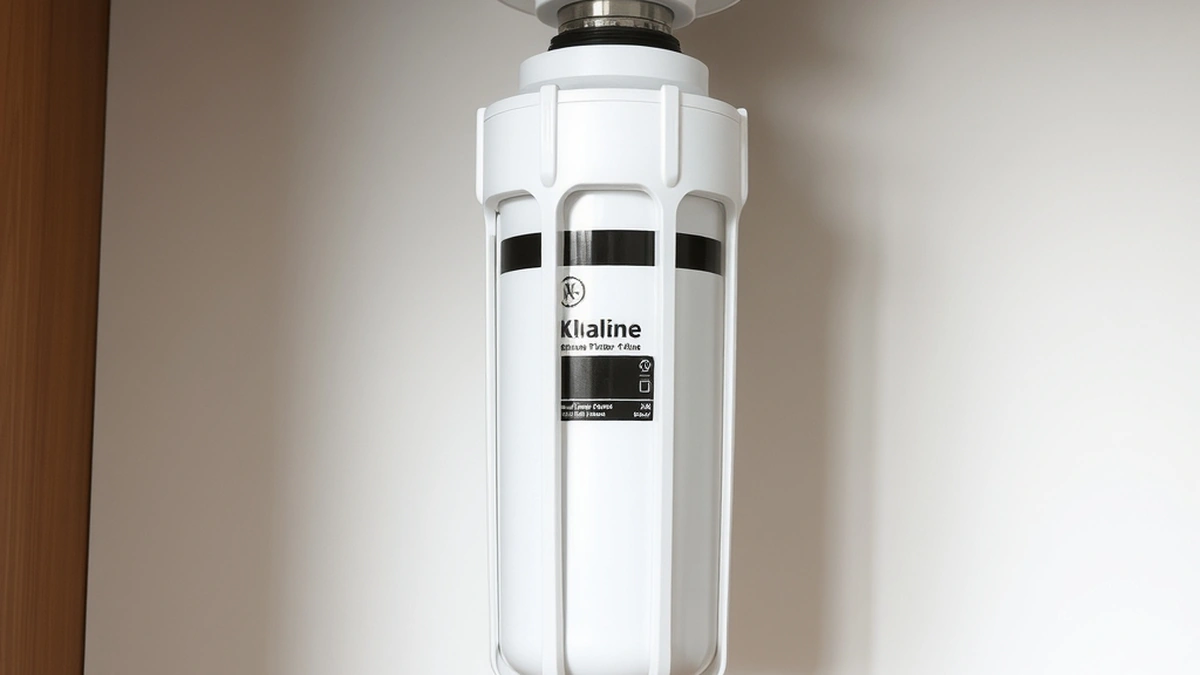
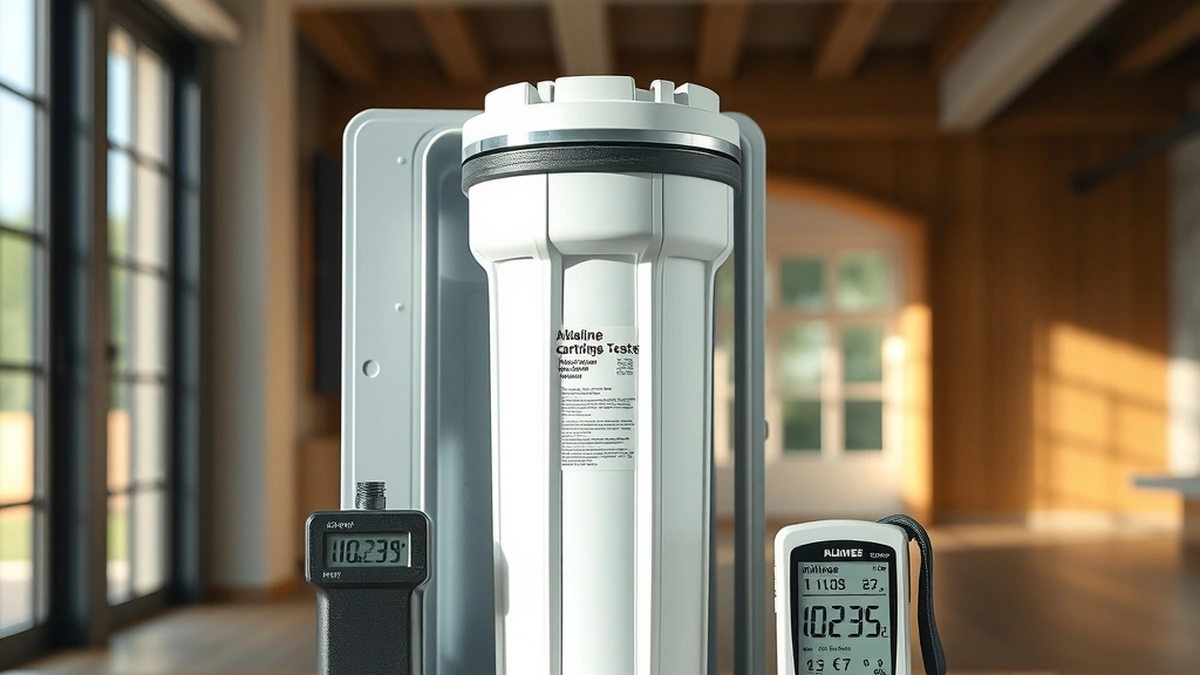
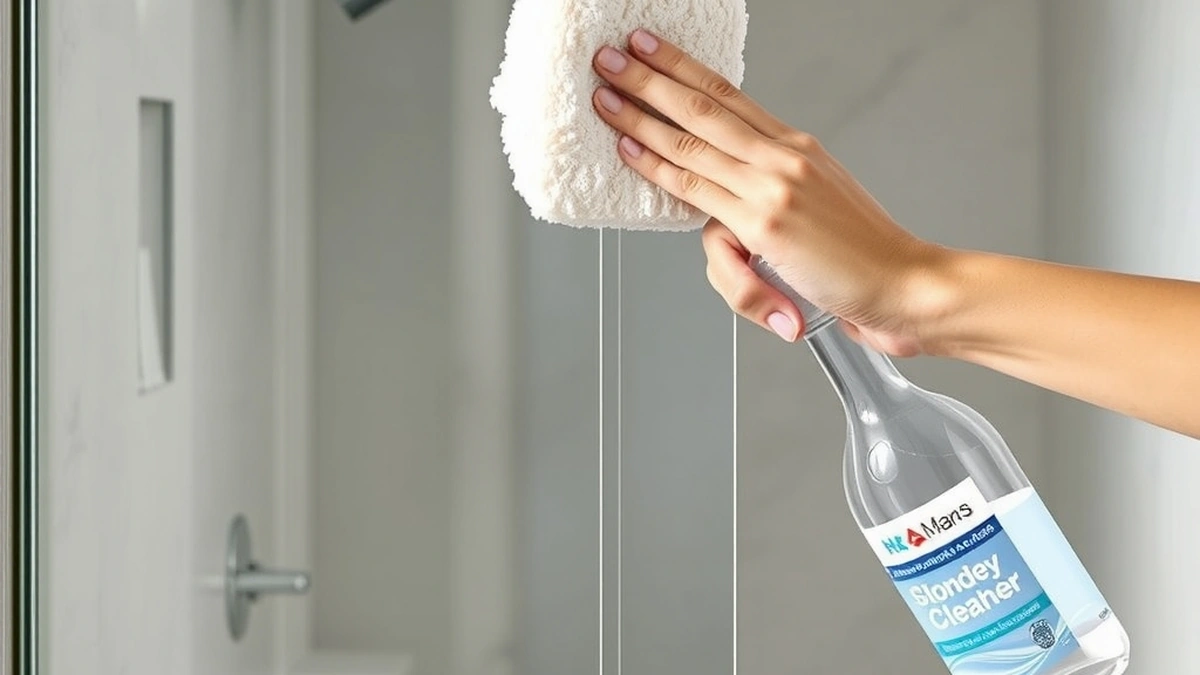
salt-free water softener troubleshooting
Salt-free conditioner not reducing scale? Check flow, media age, and installation first. See the real limits and what to do when results disappoint.
Most salt-free softener complaints trace to three things: the device does not remove hardness at all, the flow exceeds its rating, or the media is exhausted after 3-5 years. Check flow and media age before replacing anything.
- Media life
- 3 - 5 years
- Media cost
- $150 - $400
- Flow rating
- 8 - 15 GPM
- Hardness removed
- None
- Typical service call
- $100 - $200
Some links on this page are affiliate links.If you buy through them we may earn a commission at no extra cost to you. We do not accept payment for rankings. Read the full disclosure.
Most salt-free softener complaints trace to three causes: the device does not remove hardness by design, the flow exceeds its rating, or the media is spent after three to five years. Check flow and media age before spending money. Replacing a working conditioner rarely fixes a scale complaint.
The expectation problem comes first
A salt-free water softener is a conditioner. It changes how calcium and magnesium crystallize so scale is less likely to adhere. It does not remove those minerals.
That means a hardness test before and after reads the same grains per gallon. If the complaint is “the water is still hard,” the device is behaving as designed and the category was the wrong purchase.
Spotted glass, stiff laundry, and soap that will not lather are hardness symptoms. A conditioner does not fix any of them.
What the symptoms mean
| Symptom | Likely cause | Action |
|---|---|---|
| Hardness test unchanged | Normal operation | None; this is expected |
| Scale still on glass | Flow too high or media spent | Check flow, then media age |
| Flow dropped at fixtures | Sediment in the media bed | Backflush or replace media |
| Water tastes different | Upstream change, not the conditioner | Test the raw water |
| Leak at the head | O-ring or cracked head | Replace O-ring or unit |
The first row is the one that generates most service calls. A homeowner tests hardness after installation, sees 12 grains, and concludes the unit failed. It did not; it conditioned.
Diagnose in this order
- Test hardness and confirm the number matches the pre-install reading.
- Measure flow at a fixture with a bucket and a timer.
- Compare that flow with the unit’s rating, typically 8-15 GPM.
- Note the media install date and the household’s water use.
- Check for sediment in the media bed by opening the head.
- Inspect the bypass valves for a partially open position.
A bypass valve left half open is the most common installation fault. It sends untreated water past the unit while the unit still looks connected.
Measuring flow honestly
Fill a 5-gallon bucket at the bathtub and time it. Thirty seconds means 10 GPM; 45 seconds means 6.7 GPM.
Do this with two fixtures running to approximate peak demand. A unit rated at 8 GPM serving a house that peaks at 12 is undersized, and no media change fixes that.
The media question
Media life is three to five years. There is no test for exhaustion, so the calendar and the symptoms are the evidence.
Sediment is the visible sign. A bed that has collected grit from an unfiltered well loses contact efficiency, and a pre-filter would have prevented it.
Replacement runs $150-$400 for media, or more for a sealed tank. A 1.5-cubic-foot tank takes about an hour to service.
Do not top off spent media with fresh. The bed stratifies and the old material fouls the new.
Fixes that work
Correcting flow is the highest-value fix. A flow restrictor or a larger tank solves an undersized installation.
Cleaning or replacing a bypass valve solves the “nothing changed” complaint when the valve is passing water.
Replacing media solves the slow decline at year four or five.
Adding a sediment pre-filter at $40-$150 prevents the next media bed from loading with grit.
Fixes that do not work
Adding salt does nothing. These units have no brine tank and no regeneration cycle.
Increasing the media volume beyond the unit’s design does not increase contact time enough to matter, and it may void the warranty.
Switching brands rarely helps if the flow and hardness numbers are unchanged. The category has a ceiling, and a different label does not raise it.
When to change category
If the goal is genuinely soft water, a salt-based softener at $1,200-$4,500 installed is the honest answer. It removes hardness and a test will prove it.
If the goal is scale reduction with no salt and no drain, the conditioner is the right tool and the results are what they are.
If the goal is protecting a tankless heater, a conditioner is a reasonable attempt. It is not a guarantee, and the heater’s own descaling routine still applies.
What a service visit can and cannot prove
A technician can measure flow, inspect the media, and check the bypass. Those three checks cover most of the diagnosis.
What a technician cannot do is prove the conditioner reduced scale, because there is no field test for that. Any claim of a measured improvement should come with a method, and most do not.
Ask for flow and pressure numbers instead of a verdict. A unit receiving 12 GPM when it is rated for 8 is a fact, and it explains the complaint without blaming the media.
If the visit consists of a sales pitch for a softener, that is a different conversation. It may be the correct recommendation, but it is not a diagnosis. Conditioner versus softener lays out the difference.
Preventing the next complaint
Set expectations before purchase, not after. Write down what the device does and does not do.
Add a pre-filter on any well or older main. Sediment is the main cause of premature media failure.
Test hardness annually so you know the water has not changed. A rising number means upstream conditions changed, not that the conditioner broke.
Record the media install date on the tank. Salt-free water softener maintenance covers the schedule, and salt-based versus salt-free softener explains what each category can promise. “”
Frequently asked questions
Why is my salt-free softener not removing hardness?
It never did. These devices condition water so scale adheres less, but they do not remove calcium or magnesium, so a hardness test reads the same after installation.
Why is scale still forming on my fixtures?
Either the flow exceeds the unit's rating, the media is exhausted, or the water is hard enough that conditioning cannot keep up. Check flow first, then media age.
How do I know when the media is spent?
Scale returns, flow drops, and the unit is three to five years old. There is no test for media exhaustion; the calendar and the symptoms are the evidence.
Does a salt-free softener need backwashing?
A media tank does not. It has no regeneration cycle and no drain. Cartridge units are replaced, and electronic units have no media.
Can I test whether the conditioner is working?
Not with a hardness test. A visual check on shower glass and a kettle over three months is the practical measure, and results vary by water chemistry.
Should I replace the media or the whole unit?
Replace the media if the tank and head are sound and the unit is under ten years old. Replace the unit if the head is cracked or the tank has been frozen.
Sources
Some links are affiliate links.If you buy through them we may earn a commission at no extra cost to you. We do not accept payment for rankings. Read the full disclosure.