
Salt free water softener
Salt-free conditioners change how scale forms but do not remove hardness. See what they do, what they cost, and when they are the wrong purchase.
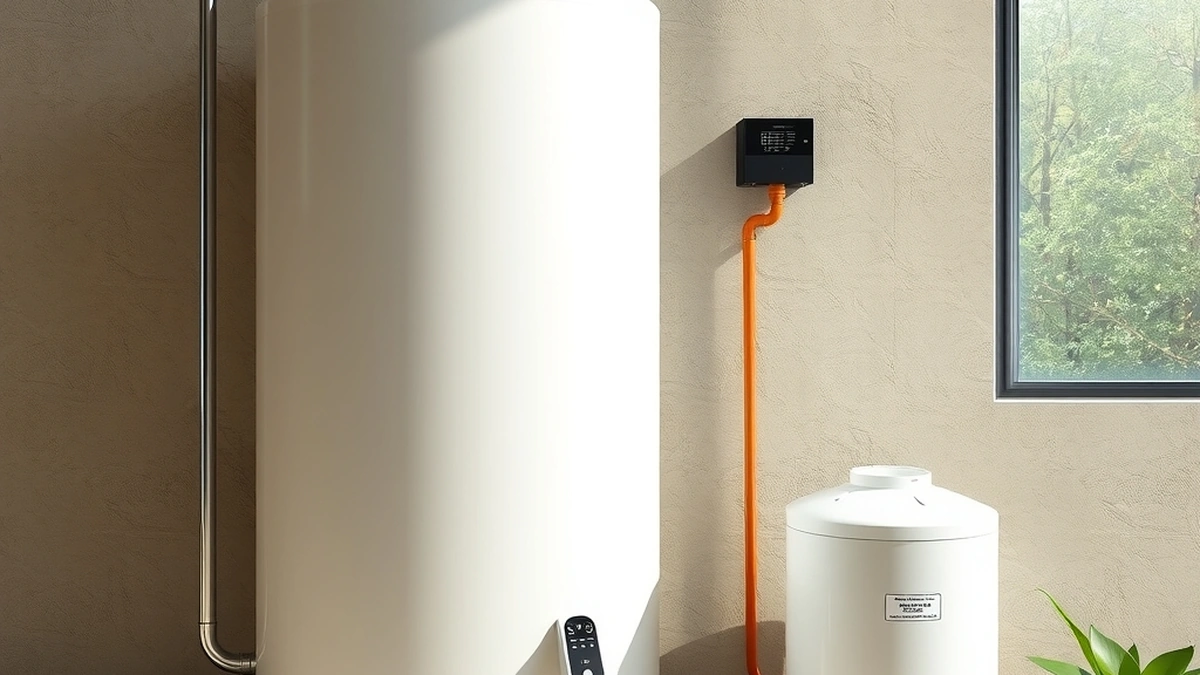
A salt-free water softener is a conditioner that alters how calcium and magnesium crystallize so scale adheres less. It does not remove hardness, does not produce soft water, and costs $500 to $1,800 installed versus $1,200 to $4,500 for a true softener.
- Installed cost
- $500 - $1,800
- Removes hardness
- No
- Salt required
- None
- True softener
- $1,200 - $4,500 installed
- Main media life
- 3 - 10 years by type
Some links on this page are affiliate links.If you buy through them we may earn a commission at no extra cost to you. We do not accept payment for rankings. Read the full disclosure.
A salt-free water softener does not soften water. It is a conditioner: it changes how calcium and magnesium crystallize so that scale is less likely to stick to pipes and heating surfaces. The minerals stay in the water, a hardness test still reads the same number, and soap still reacts with them.
What “Salt-Free” Actually Means
The marketing term covers several technologies.
Template assisted crystallization. Polymer beads provide nucleation sites where hardness minerals form microscopic crystals that stay suspended rather than depositing on surfaces.
Electromagnetic or magnetic conditioning. A coil or magnet around the pipe alters the water as it passes. Evidence for lasting effect is limited and the treatment is not certifiable for scale reduction.
Media-based conditioners. A tank of catalytic or ceramic media that changes crystal habit as water passes.
None of them remove hardness. That is the defining difference from ion exchange, which removes calcium and magnesium by swapping them for sodium.
| Property | Salt-free conditioner | Salt-based softener |
|---|---|---|
| Removes hardness | No | Yes |
| Hardness test result | Unchanged | Near zero |
| Soap scum | Still forms | Largely eliminated |
| Scale adhesion | Reduced | Prevented |
| Salt required | None | 8 - 12 lb per regeneration |
| Brine discharge | None | Yes |
| Installed cost | $500 - $1,800 | $1,200 - $4,500 |
| Annual cost | Media every 3 - 10 years | Salt $120 - $400 |
What It Does Well
Scale adhesion is a real problem, and reducing it has value. A conditioner can keep a water heater, a dishwasher, and a showerhead cleaner than untreated hard water would, without salt, without brine, and without a drain connection.
That makes it a reasonable choice for three situations:
- A household that cannot discharge brine, such as a condo or an HOA with restrictions
- A household on a septic system that wants to avoid salt load
- A household with moderate hardness that wants to reduce spotting without a full softener
For those cases it is a legitimate product, not a scam. It is simply a different product from what the name implies.
What It Does Not Do
It does not produce soft water. That means:
- Soap and shampoo still form scum, so the waxy hair problem in hard water and hair persists
- Dishes may still spot, because the minerals remain
- A water heater still accumulates scale, though it may adhere less
- A tankless heat exchanger still needs descaling
- An RO membrane still sees hardness and still scales
That last point matters. If you install a conditioner ahead of an RO system thinking it protects the membrane, it does not. Only a true softener removes the calcium that precipitates on the membrane.
Cost Arithmetic
Installed cost runs $500 to $1,800. There is no salt, so the annual operating cost is near zero until media replacement.
A true softener at $2,000 installed plus $250 per year in salt is $2,000 + ($250 × 10) = $4,500 over ten years, plus a rebed at $450, for $4,950.
A conditioner at $1,200 installed plus one media replacement at $300 in year eight is $1,500 over ten years.
The conditioner is cheaper by roughly $3,450 over a decade. The question is whether it delivers what you wanted. If the goal was soft water, it does not, and the savings buy a product that does not solve the problem. If the goal was less scale adhesion without salt, it does.
The Septic Question
Salt-based softeners send brine to the drain, and a septic system receives it. The concern is chloride and sodium load on the drain field and the groundwater.
The practical answer is that a properly sized, efficiently set softener is generally manageable on a septic system, and many households run both. The variables are regeneration frequency, salt dose, and the size of the drain field. A softener regenerating twice a week sends far more brine than one regenerating weekly with an efficient salt setting.
If avoiding that load is the priority, a conditioner is the straightforward choice. If soft water is the priority, a softener with efficient settings is the better answer. The trade is covered in water softener and septic system.
Five Steps to Decide
- Test hardness. A number below 7 GPG may not justify either product.
- Decide what you want. Soft water and reduced scale are different goals.
- Check the drain rules. HOA or local restrictions may rule out brine.
- Compare ten-year cost, not installed price.
- Verify the claim. Look for third-party scale-reduction testing rather than a manufacturer’s own chart.
Who Should Buy Which
Buy a conditioner if you have moderate hardness, no drain for brine, a septic system you want to protect, or an HOA that restricts discharge, and you accept that the water will still test hard.
Buy a softener if you want soft water, if hardness is above 10 GPG, if you have a tankless heater or an RO system to protect, or if soap scum and spotting are the complaints you are trying to solve.
Do not buy a conditioner expecting softener results. That is the entire confusion in this category, and it is worth reading salt-based versus salt-free softener before spending anything. For the saltless terminology, see saltless water softener.
A final note on how to interpret a test after installation. If a salesperson demonstrates a conditioner by testing hardness before and after and showing a lower reading, the test is either measuring something else or the sample was treated. Hardness is removed only by ion exchange, reverse osmosis, or distillation. A conditioner cannot lower the number, and any demonstration that appears to is not a hardness test.
Frequently asked questions
Does a salt-free water softener actually soften water?
No. It conditions the water by altering scale crystallization, but the calcium and magnesium remain, so tests still show the same hardness and soap still forms scum.
What is the difference between salt-free and salt-based?
Salt-based systems use ion exchange to remove hardness minerals, while salt-free systems leave the minerals in place and aim to prevent them from adhering as scale.
How much does a salt-free softener cost?
Installed costs run $500 to $1,800, with no salt purchase and media replacement every three to ten years depending on the technology.
Is salt-free better for a septic system?
It avoids brine discharge, which is why some households choose it, but a salt-based softener can also be managed on a septic system with attention to settings.
Will a salt-free unit stop white spots on dishes?
It may reduce them, but it does not eliminate the minerals that cause spotting, so results vary and many households still see film.
Can I use salt-free water for a tankless heater?
Yes, and it may reduce scale adhesion, but descaling is still required because the minerals are present and can still deposit under high heat.
Sources
Some links are affiliate links.If you buy through them we may earn a commission at no extra cost to you. We do not accept payment for rankings. Read the full disclosure.


