
Saltless water softener
Saltless and salt-free mean the same thing: conditioning, not softening. See the terminology, the technologies, and how to avoid buying the wrong one.
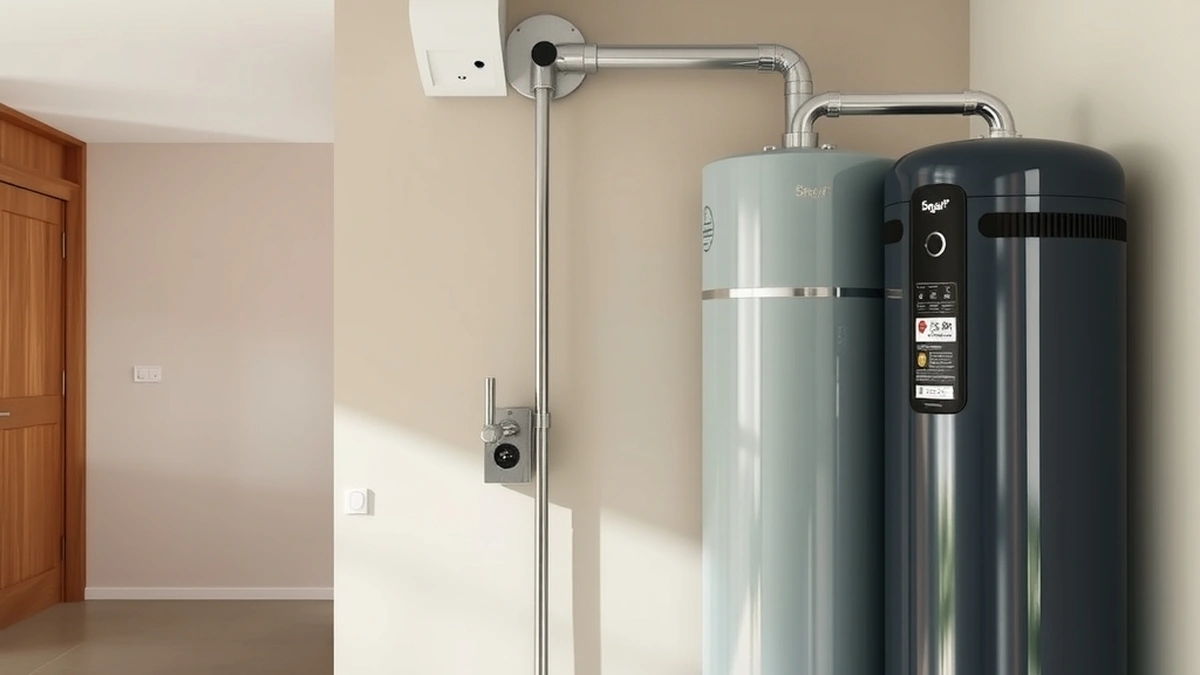
Saltless water softeners are conditioners that alter scale formation without removing hardness minerals. They use no salt and discharge no brine, but they do not produce soft water, so a hardness test reads unchanged and soap scum still forms.
- Installed cost
- $500 - $1,800
- Removes hardness
- No
- Brine discharge
- None
- Salt cost
- Zero
- Media life
- 3 - 10 years
Some links on this page are affiliate links.If you buy through them we may earn a commission at no extra cost to you. We do not accept payment for rankings. Read the full disclosure.
Saltless water softener is another name for a salt-free conditioner. It uses no salt, discharges no brine, and does not remove calcium or magnesium. What it does is change how those minerals crystallize, so scale is less likely to adhere to pipes and heating surfaces. That is a real effect and a different product from softening.
The Terminology Problem
Three terms get used interchangeably, and they should not be.
Softener. Ion exchange. Removes hardness. Uses salt. Produces soft water.
Conditioner. Alters scale behaviour. Does not remove hardness. May use no salt. Produces water that still tests hard.
Descaler. Removes existing scale, usually with acid. Does not prevent future scale.
A product sold as a “saltless water softener” is a conditioner. A product sold as a “descaler” is a cleaning treatment. Neither is a softener, and the confusion is the single biggest source of buyer disappointment in this category.
| Product | Removes hardness | Uses salt | Prevents new scale | Removes existing scale |
|---|---|---|---|---|
| Salt-based softener | Yes | Yes | Yes | No |
| Saltless conditioner | No | No | Reduces adhesion | No |
| Chemical descaler | No | No | No | Yes |
| Magnetic device | No | No | Disputed | No |
The Main Technologies
Template assisted crystallization runs water past polymer beads that provide sites for hardness minerals to form tiny crystals. Those crystals stay suspended and pass through rather than plating onto surfaces.
Media-based conditioners use catalytic or ceramic media in a tank. The mechanism is similar: alter crystal habit so scale does not adhere.
Electronic and magnetic devices wrap a coil or magnet around the pipe. The claimed effect is a change in crystal structure as water passes. Independent evidence for a lasting effect inside a house is limited.
Of the three, template assisted crystallization has the most third-party testing behind it. That does not make it a softener. It makes it a conditioner with measurable scale-reduction claims.
What Changes and What Does Not
What changes: scale may adhere less to heat exchangers, showerheads, and dishes. Existing scale may soften and flake off over time. Water feel may improve slightly because the crystals do not coat the skin the same way.
What does not change: hardness in grains per gallon. A test before and after reads the same number. Soap still forms scum with the calcium and magnesium in the water. A reverse osmosis membrane still sees hardness and still scales. A tankless heat exchanger still needs descaling.
That last point is where money gets wasted. A homeowner installs a conditioner to protect an RO membrane, the membrane fails on schedule, and the conditioner gets blamed. The conditioner did what it does; it was never going to protect the membrane.
Cost Comparison
| Item | Saltless conditioner | Salt-based softener |
|---|---|---|
| Installed | $500 - $1,800 | $1,200 - $4,500 |
| Salt per year | $0 | $120 - $400 |
| Media or resin | $300 - $600 every 3 - 10 years | $300 - $600 rebed every 8 - 12 years |
| Drain required | No | Yes |
| Power | Usually none | Low voltage |
Ten-year arithmetic for a conditioner at $1,200 installed with one $350 media change: $1,550. For a softener at $2,000 installed with $250 per year salt and a $450 rebed: $2,000 + $2,500 + $450 = $4,950.
The conditioner is about $3,400 cheaper over a decade. Whether that is a saving or a waste depends entirely on whether you needed soft water.
When Saltless Makes Sense
It makes sense when brine discharge is impossible or undesirable. A condo with no drain, an HOA that restricts discharge, or a septic system where the owner wants to minimize salt load are all legitimate cases.
It also makes sense at moderate hardness where the complaint is spotting rather than soap scum, and the household accepts that the water will still test hard.
There is a practical middle path as well. A household with 5 GPG hardness and no drain can run a conditioner for scale control and a point-of-use reverse osmosis unit for drinking water, which addresses the two complaints separately at a fraction of the cost of a softener plus new plumbing. That combination is more honest than pretending the conditioner softened anything.
It does not make sense when hardness is above 10 GPG, when a tankless heater or RO system needs protection, when soap scum is the complaint, or when someone in the house expects soft water because the product name says softener.
What the Warranty Usually Says
Read the warranty before the brochure. Most conditioner warranties cover the tank and the media, not a performance claim. Some explicitly state that the unit is not a softener and does not reduce hardness, which is the manufacturer protecting itself against exactly the misunderstanding this article is about.
A warranty that promises a specific scale reduction is worth more than one that promises the unit will not leak. Ask which it is.
Five Steps Before Buying
- Test hardness and write the number down.
- Decide the goal in one sentence: soft water, less scale, or no brine.
- Ask for third-party test data on scale reduction, not a manufacturer chart.
- Confirm the return policy and whether installation is refundable.
- Compare ten-year cost against a softener, including salt.
If the goal is soft water, stop and buy a softener. Salt free water softener covers the technology in more depth, and salt-based versus salt-free softener is the direct comparison. If the goal is protecting a heater, scale in a tankless heater explains what actually prevents the problem.
Frequently asked questions
Are saltless and salt-free water softeners the same thing?
Yes in practice; both describe conditioners that do not use ion exchange and do not remove hardness, though manufacturers use the terms differently in marketing.
Do saltless softeners really work?
They can reduce scale adhesion on surfaces, which is a real effect, but they do not soften water, so claims about soft water or lower hardness readings are not accurate.
What is the difference between a descaler and a saltless softener?
A descaler is usually a chemical or electronic device aimed at existing scale, while a saltless conditioner treats water as it passes; neither removes hardness minerals.
How much does a saltless water softener cost?
Installed costs run $500 to $1,800, with no salt purchase and media replacement every three to ten years depending on the technology.
Will a saltless softener help my water heater?
It may reduce scale adhesion on heating surfaces, but the minerals remain and can still deposit under high heat, so descaling is still needed.
Can I return a saltless softener if I do not like it?
That depends on the seller; check the return window and whether installation costs are refundable before buying, since installed equipment is harder to return.
Sources
Some links are affiliate links.If you buy through them we may earn a commission at no extra cost to you. We do not accept payment for rankings. Read the full disclosure.


