
Truly Hard Sparkling Water: Hard Water and Carbonation
Hard sparkling water means two different things. See how carbonation behaves in hard tap water and what to feed a soda maker for clean, clear results.
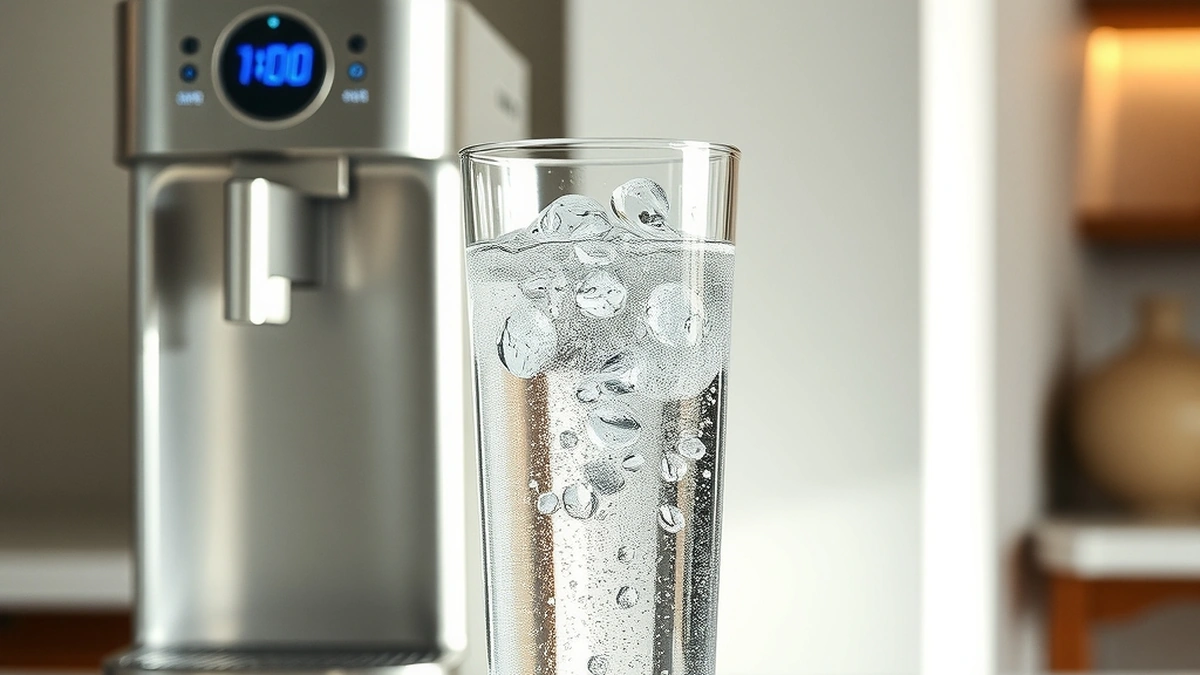
In beverages, hard sparkling water means an alcoholic seltzer; in water treatment, hard means calcium and magnesium. Carbonating hard tap water works, but it can taste flat or chalky and leaves scale in the machine, so filtered or softened water is the better feed.
- Hardness, soft
- 0 - 3 GPG
- Hardness, hard
- 7 - 10 GPG
- Soda maker cost
- $60 - $200
- Under-sink RO
- $300 - $900 installed
- Softener installed
- $1,200 - $4,500
Some links on this page are affiliate links.If you buy through them we may earn a commission at no extra cost to you. We do not accept payment for rankings. Read the full disclosure.
Truly hard sparkling water is two different phrases in one. In the beverage aisle, “hard” means alcoholic, and hard seltzer is a flavored alcoholic drink made with carbonated water. In water treatment, “hard” means dissolved calcium and magnesium. The two meanings collide, and the water chemistry questions behind them are worth separating.
Two Meanings of Hard
A hard seltzer is a fermented beverage, typically 4 - 6 percent alcohol, made by blending a spirit base with carbonated water and flavoring. The “hard” refers to alcohol, the same way hard cider and hard lemonade do.
Hard water is water with a high concentration of calcium and magnesium, measured in grains per gallon. The bands run 0 - 3 GPG soft, 3 - 7 moderately hard, 7 - 10 hard, and 10+ very hard.
A hard seltzer can be made with hard water, soft water, or reverse osmosis water. The label does not tell you which, and the alcohol content has nothing to do with the mineral content. That is the first thing to untangle when the search results mix beverage pages with water treatment pages.
What Carbonation Does to Hard Water
Carbonating water dissolves carbon dioxide under pressure. The CO2 forms carbonic acid, which lowers pH slightly and gives sparkling water its tart edge.
Carbonic acid can dissolve a small amount of calcium carbonate scale, which is why carbonated water sometimes tastes smoother than the same water still. It does not remove hardness. The calcium and magnesium are still in the glass, just at a slightly different equilibrium.
At high hardness, the effect is noticeable in the mouth. Very hard water carbonated can taste chalky or flat, because the mineral load masks the acidity that makes sparkling water taste crisp. Soft or low-mineral water produces a sharper, cleaner fizz.
Choosing Feed Water for a Soda Maker
| Feed water | Hardness | Fizz quality | Scale risk |
|---|---|---|---|
| Raw hard tap | 7+ GPG | Flat, chalky at high levels | High |
| Softened | Under 1 GPG | Clean, may taste flat | Low |
| Reverse osmosis | Near 0 GPG | Very clean, crisp | Very low |
| Filtered tap | Unchanged | Moderate | Unchanged |
Reverse osmosis is the usual recommendation for soda makers because it removes the minerals that mute the fizz and the minerals that scale the machine. An under-sink RO costs $300 - $900 installed, and running costs are $60 - $150 a year.
Softened water works too. It has sodium instead of calcium and magnesium, so it does not scale, but some drinkers find it flat because it lacks the minerals that give water body. A blend of RO and tap water is a common compromise: 50/50 gives some mineral character without heavy scale.
Filtered tap is the minimum. A carbon filter removes chlorine, which is the most obvious off-flavor in municipal water, but it leaves hardness unchanged.
The Scale Problem Inside the Machine
A soda maker has a pressurized bottle, a valve, and a nozzle. Hard water leaves mineral deposits on all three. The bottle clouds over time, the valve can stick, and the nozzle can spray unevenly.
Descale the bottle monthly with a 1:1 white vinegar and water soak, then rinse thoroughly. Vinegar dissolves calcium carbonate, and it is the same chemistry used on coffee makers and shower heads.
The machine itself should not be submerged. Wipe the nozzle and valve with a vinegar-damp cloth, and run a cycle with filtered water afterward. Follow the manufacturer’s cleaning instructions, because some bottles have coatings that harsh cleaners can damage.
What Sparkling Water Costs
A countertop soda maker runs $60 - $200. CO2 cylinders cost $15 - $30 per exchange and carbonate roughly 60 liters, so a household drinking 2 liters a day spends about $180 - $360 a year on gas.
Bottled sparkling water at $1 - $2 per liter for the same 730 liters a year costs $730 - $1,460. The soda maker plus gas is $240 - $560 in year one, which is the arithmetic that sells the machine.
Add the water treatment. An under-sink RO at $600 installed plus $100 a year in filters adds $100 per year over five years. Total cost stays well below bottled, and the water quality is consistent.
Setting Up Clean Fizz
- Test the tap water for hardness and chlorine so you know what you are carbonating.
- If hardness is above 7 GPG, install a softener or an under-sink RO before the soda maker.
- Fill the carbonating bottle with cold water; cold water holds CO2 better than warm.
- Carbonate to the machine’s recommended level and taste before adding flavor.
- Descale the bottle monthly with vinegar and rinse the valve.
- Replace RO filters every 6 - 12 months and the membrane every 2 - 3 years.
Alcohol and the Word Hard
If the search that brought you here was about hard seltzer, the water chemistry is still relevant. Brewers treat water to control mineral content because calcium and magnesium affect fermentation and mouthfeel. A seltzer made with very hard water can taste minerally, which is why producers often use RO water and add back a controlled mineral profile.
That is a production decision, not a home treatment one. For a household, the practical questions are simpler: what is the hardness, does it scale the machine, and does it taste right in the glass. A $40 - $150 lab test answers the first, and a $1 vinegar soak answers the second.
For the treatment options, see how to treat hard water and reverse osmosis system cost. For the machine-side comparison, see tankless RO vs tank RO.
Frequently asked questions
Can you carbonate hard water?
Yes. Carbon dioxide dissolves under pressure regardless of hardness. The result may taste flatter or chalkier, and the minerals can leave scale in the machine over time.
Does carbonation remove hardness?
No. Carbon dioxide forms weak carbonic acid, which can dissolve a small amount of scale, but it does not remove calcium and magnesium from the water.
What water should I use in a soda maker?
Filtered or reverse osmosis water gives the cleanest, most consistent fizz. Softened water also works, though it can taste flat to some drinkers.
Is hard seltzer the same as hard water?
No. Hard seltzer is an alcoholic beverage. Hard water is water with dissolved calcium and magnesium. The word hard means different things in the two contexts.
Will hard water damage a soda maker?
Minerals can build up in the carbonating bottle and valve over time. Regular descaling and filtered feed water reduce the buildup and keep the machine working.
Does sparkling water hydrate less than still water?
It hydrates the same. Carbonation changes the mouthfeel and acidity, not the water content, though it can feel filling during a meal.
Sources
Some links are affiliate links.If you buy through them we may earn a commission at no extra cost to you. We do not accept payment for rankings. Read the full disclosure.


