under sink water filter troubleshooting
Slow flow, leaks, or bad taste from an under sink filter? Check the supply valve, O-ring, and cartridge seating first. See the diagnostic steps.
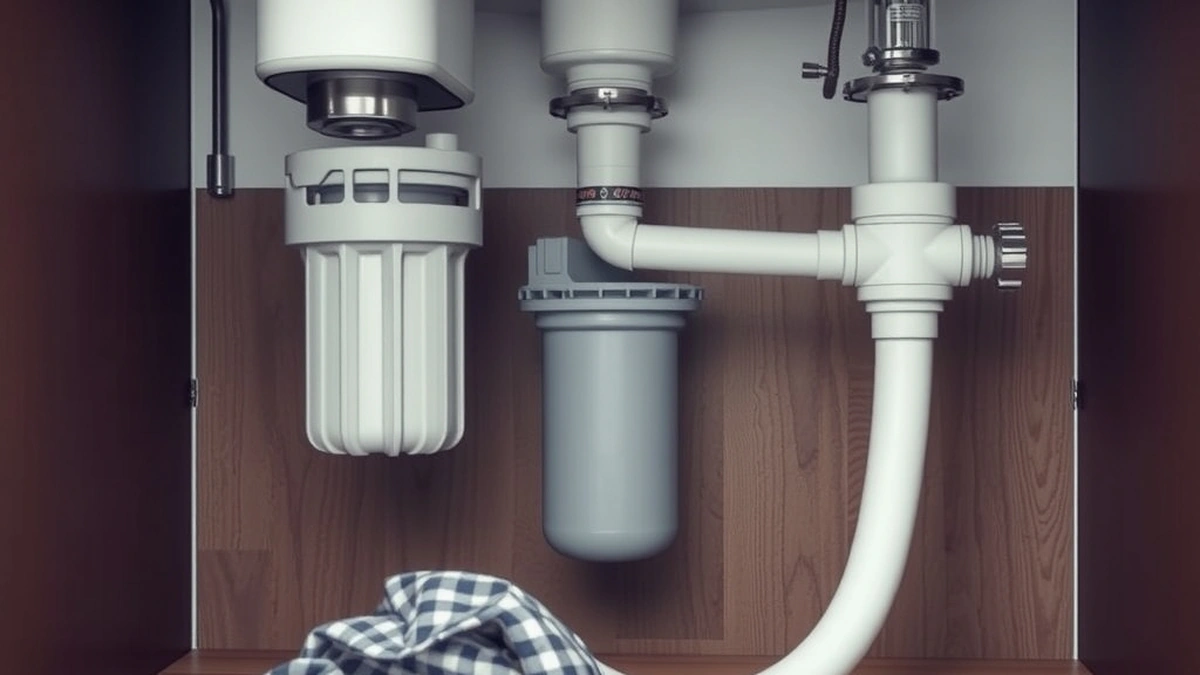
Under sink filter problems usually come from a half-closed supply valve, a pinched O-ring, an unseated cartridge, or a kinked tube. Check those four before replacing the housing or calling a plumber.
- O-ring
- $3 - $10
- Housing
- $40 - $80
- Faucet
- $25 - $120
- Typical repair
- $10 - $120
- Flow rate
- 0.5 - 1.5 GPM
Some links on this page are affiliate links.If you buy through them we may earn a commission at no extra cost to you. We do not accept payment for rankings. Read the full disclosure.
Under sink filter problems usually come from four things: a half-closed supply valve, a pinched O-ring, an unseated cartridge, or a kinked tube. All four are visible within a minute of opening the cabinet, and none requires a plumber.
Slow flow, in order of likelihood
Slow flow is the most common complaint and the easiest to misdiagnose. The filter gets blamed for a valve that is two turns from open.
Check the supply valve first. A quarter-turn valve that is at 45 degrees delivers a fraction of full flow, and it looks open.
Check the tubing next. A 1/4-inch line routed around a disposal and behind a drawer can kink, and a kink acts like a clamp.
Check the inlet screen on the faucet or the housing. A screen clogged with sediment cuts flow without affecting pressure elsewhere.
Check the cartridge last. A loaded carbon block slows flow as it fills, and that is the intended signal to change it.
Leaks and where they start
| Leak location | Cause | Fix |
|---|---|---|
| Sump threads | O-ring pinched or dry | Lubricate or replace ring |
| Sump body | Overtightened or cracked | Replace housing |
| Push-fit fitting | Tube not fully seated | Push in until it stops |
| Faucet shank | Loose nut | Tighten under counter |
| Supply tee | Missing washer | Add washer |
A leak that appears only when the faucet runs is on the outlet side. A leak that appears constantly is on the supply side or at the housing.
Diagnose in this order
- Put a towel down and open the cabinet.
- Confirm the supply valve is fully open.
- Trace the tubing for kinks or sharp bends.
- Dry every joint, then run the faucet and watch.
- Check the sump for weeping at the threads.
- Check the faucet base under the counter.
Drying the joints first is important. A cabinet with old drips tells you nothing about where the current leak is.
Reseating an O-ring
Close the valve, open the faucet to release pressure, then unscrew the sump.
Lift the O-ring out with a fingernail, inspect it for flattening or cracks, and coat it lightly with silicone grease. Seat it in its groove, not on the threads.
Thread the sump on by hand until it stops, then a quarter turn. If it weeps, remove it and start again rather than tightening further.
Taste and odor problems
A taste that returns before the cartridge is due usually means the cartridge is exhausted early, or biofilm has formed in the housing or spout.
Change the cartridge and clean the housing with one part vinegar to three parts water. Rinse thoroughly.
Clean the faucet spout and aerator. That is the part closest to the glass and the part most often missed.
If the taste is metallic, test for iron and pH. A filter does not remove dissolved iron, and low pH corrodes the faucet itself.
When the unit needs replacing
A cracked sump, a stripped thread, or a failed diverter are replacement cases. At $40-$120 for parts, repair rarely makes sense.
A housing more than 10 years old has brittle plastic. Replace it before it fails under pressure rather than after.
A faucet with a broken handle or a leaking body is a $25-$120 replacement.
Cost of the common repairs
An O-ring is $3-$10. A sump is $20-$50. A complete housing is $40-$80. A faucet is $25-$120.
A plumber visit for a leak runs $100-$250, which is why the O-ring check is worth doing first.
A new two-stage system is $150-$400 if the old one is beyond repair, and that is often cheaper than a second service call.
Prevention
Lubricate the O-ring at every cartridge change. It takes ten seconds and prevents most leaks.
Do not overtighten. A cracked sump is the most common self-inflicted failure in this category.
Write the change date on the housing. A filter changed late is a filter that tastes bad and flows slowly.
Check the cabinet for dampness every few months. A slow weep behind a disposal is easy to miss until the cabinet floor softens. Put a paper towel under the housing and check it a week later; a dry towel is worth more than a visual inspection.
Finally, keep the manual with the unit. Filter housings vary in sump thread and O-ring size, and matching a part at a store without the model number is guesswork. Under sink water filter maintenance covers the schedule, and under sink water filter installation covers the fitting types. “”
When the diagnosis is the water, not the filter
A filter that seems to fail repeatedly may be doing its job against a load it cannot handle.
If the cartridge loads in weeks, the water carries sediment, iron, or manganese. A sediment pre-stage at $10-$25 extends the carbon stage, and upstream treatment solves it permanently.
If the water tastes metallic after a cartridge change, test for iron and pH. A carbon block does not remove dissolved iron, and low pH corrodes the faucet.
If the water is hard, scale will blind the carbon block faster than chlorine exhausts it. A softener ahead of the filter is the fix, and whole house versus under sink filter explains when the treatment belongs at the main line instead.
Frequently asked questions
Why is my under sink filter flow so slow?
A half-closed supply valve, a kinked tube, a clogged inlet screen, or a loaded cartridge. Check the valve first, then the tubing route, then the cartridge.
Why is my under sink filter leaking?
A pinched or dry O-ring, a cross-threaded sump, or a push-fit fitting that is not fully seated. Reseat the ring with silicone grease and push the tube in until it stops.
Why does my filtered water taste bad?
The cartridge is exhausted, or biofilm has formed in the housing or faucet spout. Change the cartridge and clean the housing with a mild vinegar solution.
Can I overtighten a filter housing?
Yes, and it is the most common cause of cracked sumps. Hand-tight plus a quarter turn is enough; a wrench past that damages plastic threads.
Why is water coming out of both the faucet and the spout?
A failed diverter, on units that share the main faucet. The diverter is usually not serviceable, so the unit is a replacement.
How do I reset a filter indicator?
Most units have a button or a battery tab; hold it for three seconds. If there is no indicator, write the date on the housing with a marker.
Sources
Some links are affiliate links.If you buy through them we may earn a commission at no extra cost to you. We do not accept payment for rankings. Read the full disclosure.