
Water filter for sink
Faucet-mount, under-sink, and countertop filters all attach to a sink but treat different volumes. Compare flow, cost, and what each removes.
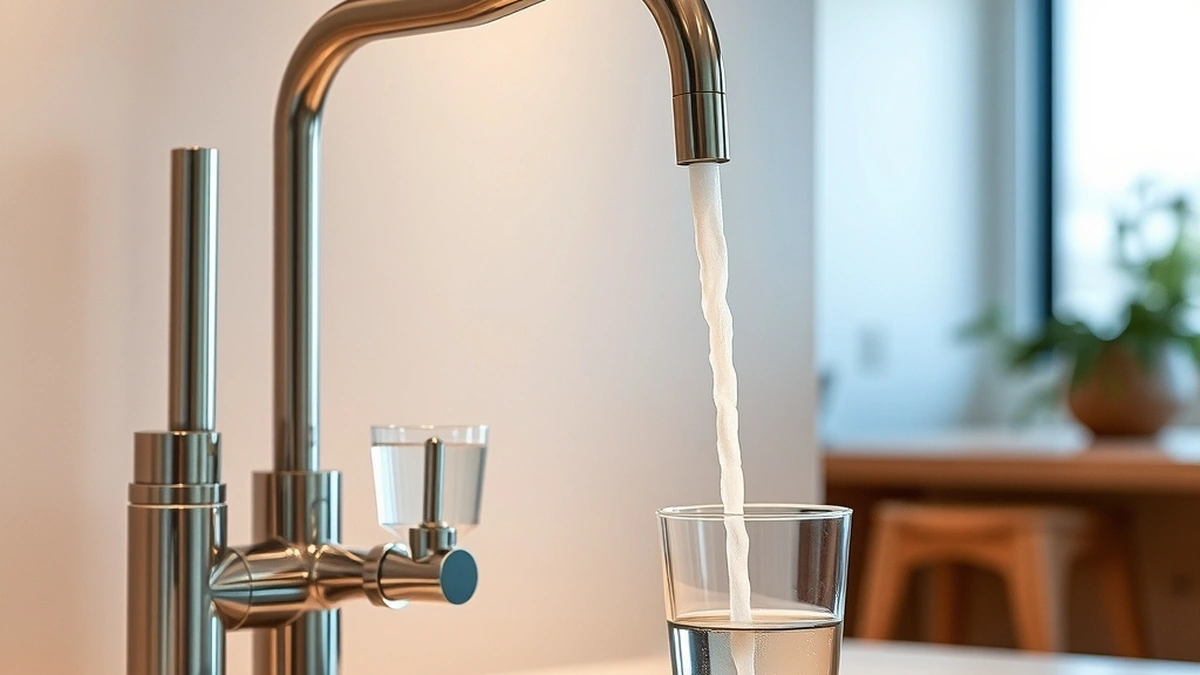
A sink water filter is either faucet-mount at $25 to $80, under-sink at $150 to $500, or countertop at $100 to $400. Faucet-mount units are cheapest and slowest to change; under-sink units treat more water and cost less per gallon.
- Faucet mount
- $25 - $80
- Under-sink
- $150 - $500
- Countertop
- $100 - $400
- Faucet mount flow
- 0.5 - 1 gpm
- Under-sink flow
- 1 - 2 gpm
Some links on this page are affiliate links.If you buy through them we may earn a commission at no extra cost to you. We do not accept payment for rankings. Read the full disclosure.
A sink water filter comes in three formats: faucet-mount, under-sink, and countertop. They all treat water at the kitchen sink and they differ in flow, capacity, and cost per gallon. The right choice depends on how much water you use at that tap and whether you want a fixture bolted to the counter.
The Three Formats
Faucet-mount. A small housing that screws onto the aerator and switches between filtered and unfiltered flow. Cheapest, easiest to install, and the slowest.
Under-sink. A housing or two inside the cabinet, feeding a dedicated faucet or the existing tap through an adapter. More media, more flow, and the best cost per gallon.
Countertop. A standalone unit that sits beside the sink and connects to the faucet with a diverter. Useful for renters who cannot modify plumbing.
| Format | Cost | Flow | Cartridge | Install |
|---|---|---|---|---|
| Faucet mount | $25 - $80 | 0.5 - 1 gpm | 2 - 3 months | Minutes |
| Under sink | $150 - $500 | 1 - 2 gpm | 6 - 12 months | 1 - 3 hours |
| Countertop | $100 - $400 | 0.5 - 1 gpm | 3 - 6 months | Minutes |
What Each Removes
All three are carbon-based unless you choose a reverse osmosis unit, so the removal profile is similar.
| Contaminant | Faucet mount | Under sink carbon | Countertop |
|---|---|---|---|
| Chlorine | Yes | Yes | Yes |
| Taste and odour | Yes | Yes | Yes |
| Sediment | Nominal | Yes | Nominal |
| Lead | Some certified | Some certified | Some certified |
| Nitrate | No | No | No |
| Hardness | No | No | No |
| Bacteria | No | No | No |
The pattern is that format changes capacity and flow, not chemistry. A faucet mount and an under-sink unit with the same carbon media remove the same things; the under-sink unit just does it for longer between changes.
Flow and Daily Use
Faucet-mount flow of 0.5 to 1 gpm is fine for a glass of water and annoying for a stockpot. Two gallons at 0.75 gpm takes nearly three minutes.
Under-sink flow of 1 to 2 gpm fills a pot in about a minute. That difference is the main reason households upgrade.
| Use | Faucet mount | Under sink |
|---|---|---|
| Glass of water | Fine | Fine |
| Coffee pot | Fine | Fine |
| Stockpot, 2 gallons | 2 - 4 minutes | 1 - 2 minutes |
| Cooking for four | Manageable | Comfortable |
Cost per Gallon
A faucet-mount cartridge at $20 rated for 100 gallons is $0.20 per gallon. An under-sink carbon cartridge at $40 rated for 1,000 gallons is $0.04 per gallon.
That five-fold difference is where the under-sink format earns its installation cost. A household using 300 gallons a year spends $60 on faucet-mount cartridges or $12 on under-sink cartridges.
Add the hardware: $50 for a faucet mount, $250 for an under-sink install. The under-sink system pays back the difference in about four years at that usage, and faster at higher use. A household using 500 gallons a year breaks even in roughly two.
Five Steps to Choose
- Measure your daily sink use in gallons; most households underestimate.
- Check the water report for what must be removed.
- Confirm the faucet thread if considering a mount; some need an adapter.
- Measure cabinet space for an under-sink housing.
- Price a year of cartridges, not just the hardware.
Installation Notes
A faucet mount installs in minutes and requires no tools beyond the adapter that comes in the box. The main risk is a cross-threaded connection that leaks at the aerator.
An under-sink carbon unit needs a supply connection, usually a saddle valve or a tee, and a faucet. A dedicated faucet requires a counter hole; feeding the existing tap requires an adapter that splits flow, which some households find awkward.
A countertop unit needs only the diverter and a length of tubing. It is the renter’s option, and it moves with you.
There is one installation detail that decides whether a faucet mount survives. The aerator threads are fine and often plastic, and overtightening cracks them. Hand-tight plus a quarter turn is enough, and a wrap of thread tape helps if the fit is metal on metal. A cracked aerator thread is not repairable; it means a new faucet.
What These Filters Cannot Do
None of the three softens water. None removes nitrate. None disinfects.
That matters because sink filters are often sold as if they were general-purpose treatment. A carbon cartridge at the sink reduces chlorine and improves taste, and that is the whole job. If the lab report shows hardness at 14 GPG, the sink filter changes the taste of the water and nothing about the scale in the kettle.
The same applies to iron. A carbon cartridge will load with iron and blind in weeks, which makes it an expensive way to discover the water has iron in it. Test first, then choose the format that matches the finding. A $40 to $150 lab panel is cheaper than two years of premature cartridge changes, and it tells you whether the sink is even the right place to treat.
Maintenance
Change on the rated gallons or when flow slows. Write the date on the cartridge.
Faucet mounts need changing more often because they hold less media. A household that ignores the interval ends up with a filter that has stopped removing chlorine but still passes water, which is the worst combination: it looks like it is working.
For the under-sink format in detail, see under sink water filter. For the faucet-mount alternatives in a rental, water filter for apartment covers the constraints, and reverse osmosis versus carbon explains when carbon is not enough.
Frequently asked questions
What is the best water filter for a kitchen sink?
An under-sink carbon filter is the best balance for most homes, offering 1 to 2 gallons per minute and lower cost per gallon than a faucet mount.
How much does a sink water filter cost?
Faucet-mount units run $25 to $80, under-sink carbon $150 to $500 installed, and countertop units $100 to $400, with cartridges at $20 to $100 per year.
Do faucet-mount filters slow the water flow?
Yes, typically to around 0.5 to 1 gallon per minute, which is noticeable when filling a pot but adequate for drinking and cooking.
Can a sink filter remove hardness?
No. Carbon filters at the sink do not remove calcium and magnesium; hardness needs a softener, and reverse osmosis removes it only at that tap.
How often do sink filter cartridges need changing?
Every 2 to 6 months for faucet mounts and 6 to 12 months for under-sink carbon, depending on the rated gallons and the chlorine level.
Do I need a dedicated faucet for an under-sink filter?
No, some units feed the existing faucet through an adapter, but a dedicated faucet gives unfiltered water for washing and filtered water for drinking.
Sources
Some links are affiliate links.If you buy through them we may earn a commission at no extra cost to you. We do not accept payment for rankings. Read the full disclosure.


