What to do with spent filter cartridges
Most cartridges are plastic and media that cannot be recycled kerbside. See what each type contains, what can be recycled, and how to cut waste.
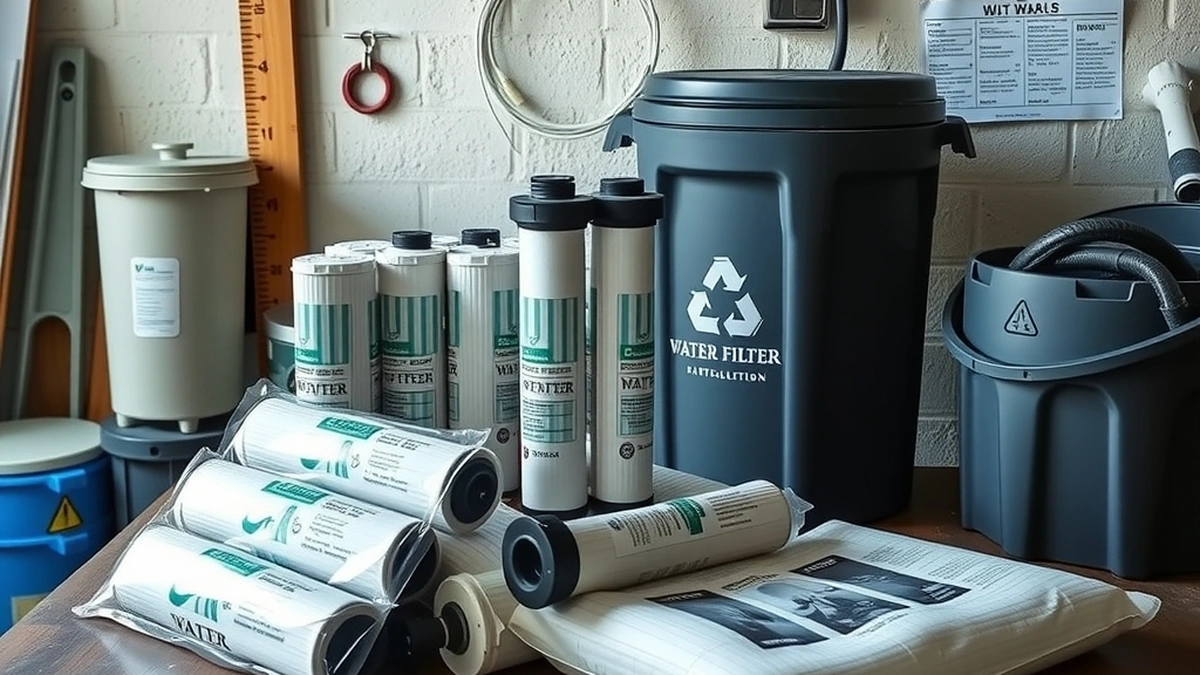
Most spent cartridges go in the trash because they mix plastic, carbon, and captured contaminants in one sealed unit. Some manufacturers run take-back programs, and the plastic housings on pitcher filters can often be recycled where rigid plastic is accepted.
- Typical cartridge life
- 3 - 12 months
- Curbside recycling
- Rarely accepted
- Take-back programs
- Some brands offer them
- Annual cartridges
- 2 - 8 per household
- Cost per year
- $80 - $300
Some links on this page are affiliate links.If you buy through them we may earn a commission at no extra cost to you. We do not accept payment for rankings. Read the full disclosure.
Most spent filter cartridges go in the trash. They are a sealed composite of plastic housing, carbon or membrane media, and whatever the filter captured, and municipal recycling programs are not set up to separate those layers. That is an unsatisfying answer, and it is the accurate one for the majority of cartridges sold in the US.
What Is Inside a Cartridge
A typical carbon block cartridge is a polypropylene shell around an extruded carbon core, with end caps and a gasket. A sediment cartridge is pleated polyester or polypropylene around a core tube. An RO membrane is a spiral-wound sheet of polyamide and support mesh inside a fiberglass or plastic wrap.
| Type | Main materials | Recyclable at curb? |
|---|---|---|
| Sediment pleated | Polypropylene, polyester | No |
| Carbon block | Polypropylene, carbon | No |
| Granular carbon | Plastic shell, loose carbon | No |
| RO membrane | Polyamide, mesh, plastic | No |
| Pitcher filter | Plastic, carbon, ion resin | Sometimes the outer plastic |
| Refrigerator filter | Plastic, carbon | No |
The reason is not that the materials are unrecyclable in principle. It is that they are bonded together, contaminated with what they filtered out, and produced in small volumes compared with bottles and packaging. A recycling facility sorts by material and shape, and a cartridge is neither.
Why Contamination Matters
A cartridge that has been filtering municipal water holds concentrated sediment, rust, and sometimes metals. A cartridge from a well with iron bacteria holds biological material. Neither is hazardous waste in the regulatory sense for a household, but both are unpleasant to handle.
Practical handling: drain the cartridge over a sink or a bucket for a few minutes, bag it, and put it in the trash. Wear gloves if it came from a well with iron or sulfur, and wash your hands afterward.
Do not compost it, do not burn it, and do not put it in a garden bed. The plastic does not break down and the captured metals do not improve the soil.
The Take-Back Option
A minority of manufacturers run take-back or mail-in programs. These usually accept their own cartridges, separate the media from the housing, and either recycle the plastic or send it for energy recovery. The programs are worth using when they exist because they solve the separation problem that curbside recycling cannot.
Check the brand’s website for a “recycle” or “take-back” page before you buy, not after. A brand that publishes a program is also a brand that expects to be around to honor it.
Some retailers accept cartridges for recycling in-store. Those programs are usually limited to the brands the store sells and to specific cartridge families.
The Reduction Options
The strongest environmental lever is not recycling; it is using fewer cartridges.
Larger housings. A 4.5 by 20 inch cartridge holds more media and lasts longer than a 2.5 by 10 inch cartridge for the same flow, so the same volume of water produces fewer spent units.
Longer intervals where safe. Sediment cartridges at 3 to 6 months and carbon at 6 to 12 months are the standard. Stretching them beyond that risks bypass and pressure loss, so the interval is a floor, not a target.
Washable pre-filters. A spin-down or screen filter ahead of a cartridge catches the coarse sediment and can be rinsed and reused, which extends cartridge life substantially on well water.
Whole-house versus point-of-use. A single whole-house carbon system may replace a dozen pitcher cartridges a year. The trade is a larger volume of media in one housing, which is usually the better ratio.
| Approach | Cartridges per year | Waste volume |
|---|---|---|
| Pitcher, 2 month changes | 6 | Low per unit, high count |
| Under-sink RO | 3 - 4 plus membrane every 2 - 3 years | Moderate |
| Whole-house big blue | 2 - 3 | Higher per unit, low count |
| Spin-down plus cartridge | 1 - 2 | Lowest |
Cartridge cost per year runs $80 to $300 across these approaches, and the waste volume roughly tracks the cost. That is a useful sanity check: if you are spending $300 a year on cartridges, you are also generating the most spent units, and a larger housing is likely to improve both numbers.
Five Steps for Disposal
- Identify the cartridge type from the label or the housing size.
- Drain it over a sink for a few minutes.
- Check the brand’s take-back page and your municipality’s rules for filter media.
- Bag and trash if no program exists, wearing gloves for well-water units.
- Record the change date so the next one happens on schedule rather than late.
The Wider Point
Filter waste is a real but small environmental cost compared with bottled water. A household using 2 gallons a day of bottled water generates roughly 730 plastic bottles a year. The same household using an under-sink RO generates three or four cartridges and a membrane every few years.
That comparison is the honest framing. The cartridge going to landfill is not ideal, and it is a fraction of the waste stream that the filter replaces. Choosing a filter over bottles is the larger decision; recycling the cartridge is the smaller refinement.
For the maintenance schedule that keeps cartridge counts predictable, see reverse osmosis maintenance and whole house filter change. If you are choosing between cartridge formats, the 10-inch cartridge standard explains why the bigger housing usually means fewer changes.
One practical note on timing: change cartridges before they are exhausted, not after. A carbon block that has been in service a month too long may already have let chlorine through to a membrane, and a sediment cartridge that has loaded up is costing pressure every day. The date on the housing label is the cheapest maintenance record you will ever keep.
Frequently asked questions
Can water filter cartridges be recycled?
Rarely at the curb, because they combine plastic housing with carbon media and captured contaminants; some manufacturers accept them back for separation or energy recovery.
How should I dispose of a carbon filter cartridge?
Drain it, bag it, and put it in household trash unless your municipality or the manufacturer offers a specific program for spent filter media.
Are spent filters hazardous waste?
Generally no for residential units treating municipal water, though a filter from a well with high iron or bacteria should be handled with gloves and bagged.
Can I compost a filter cartridge?
No. The housing is plastic and the media is not compostable, and the cartridge may hold concentrated metals or sediment.
What do I do with a spent RO membrane?
Trash it in most cases; membranes are spiral-wound plastic and are not recyclable kerbside, though a few suppliers run take-back schemes.
How can I reduce cartridge waste?
Use larger housings with longer service intervals, choose washable pre-filters where suitable, and buy from brands that publish a take-back program.
Sources
Some links are affiliate links.If you buy through them we may earn a commission at no extra cost to you. We do not accept payment for rankings. Read the full disclosure.