
Water softeners
How water softeners work, what they cost to buy and run, what they remove, and the maintenance that keeps them softening for a decade or more.
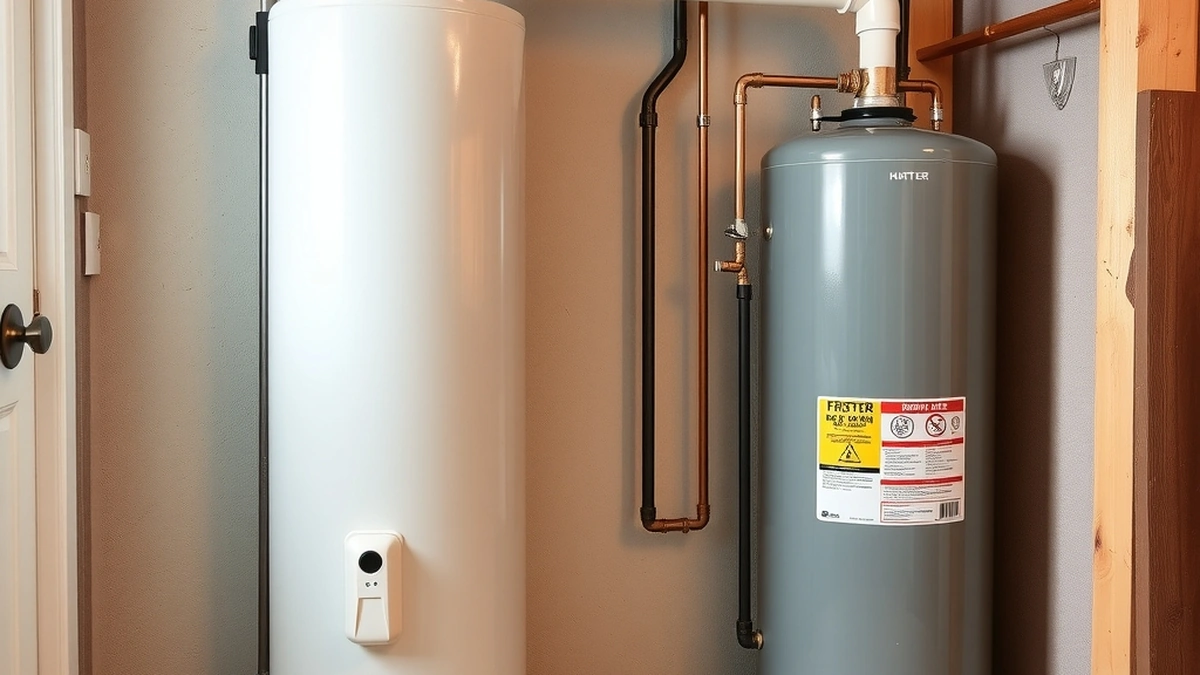
Water softeners remove calcium and magnesium through ion exchange, replacing them with sodium. Equipment runs $600 to $2,500, installation $500 to $1,500, salt $120 to $400 a year, and the unit lasts 10 to 15 years with one resin rebed.
- Installed cost
- $1,200 - $4,500
- Salt per year
- $120 - $400
- Resin life
- 8 - 12 years
- Equipment life
- 10 - 15 years
- Hardness target
- Under 3 GPG
Some links on this page are affiliate links.If you buy through them we may earn a commission at no extra cost to you. We do not accept payment for rankings. Read the full disclosure.
Water softeners remove the calcium and magnesium that make water hard, using a bed of resin that swaps those minerals for sodium. The result is water that lathers freely, leaves no scale, and tests under 3 grains per gallon. Everything else about the appliance is packaging around that exchange.
The Exchange
Hard water carries dissolved calcium and magnesium bicarbonates. The softener tank holds strong acid cation resin, a polystyrene bead with sulfonic acid exchange sites charged with sodium.
As water passes, calcium and magnesium bind to the sites and sodium is released. The water leaves softened and slightly higher in sodium. When the sites are full, the valve runs a regeneration cycle: backwash, brine draw, rinse, and brine refill. The concentrated brine strips the hardness minerals off the resin and sends them to drain.
| Stage | What happens | Duration |
|---|---|---|
| Service | Hardness exchanged for sodium | Continuous |
| Backwash | Bed lifted and cleaned | 5 - 15 minutes |
| Brine draw | Brine pulls hardness off resin | 10 - 20 minutes |
| Rinse | Residual brine flushed | 5 - 15 minutes |
| Refill | Brine tank refilled | 5 - 10 minutes |
What It Removes and What It Does Not
| Contaminant | Removed? |
|---|---|
| Calcium and magnesium | Yes |
| Iron, up to 2 - 3 ppm | Partly |
| Manganese, trace | Partly |
| Nitrate | No |
| Bacteria | No |
| Chlorine | No |
| Sediment | No |
| Sodium | Adds it |
The iron limit is the one that matters most on well water. Above 2 to 3 ppm, iron fouls the resin and regeneration cannot strip it, so capacity falls permanently. An iron filter goes ahead of the softener in that case.
Hardness Bands and Sizing
Hardness is reported in grains per gallon. The bands are 0 to 3 GPG soft, 3 to 7 moderate, 7 to 10 hard, above 10 very hard.
Sizing uses three multiplications: people × gallons per person per day × hardness. Four people at 75 gallons and 10 GPG is 3,000 grains per day. A 32,000 grain unit at 75 percent usable capacity gives 24,000 grains, or eight days between regenerations.
Residential units run 24,000 to 64,000 grains. The sizing method covers reserve capacity and salt efficiency, and the family-of-four case is worked in what size softener a family of four needs.
Cost to Buy and Run
Equipment runs $600 to $2,500 and installation $500 to $1,500, for an installed total of $1,200 to $4,500. Salt runs $120 to $400 per year at 8 to 12 pounds per regeneration.
Ten-year arithmetic for a mid-range unit at $2,000 installed: $2,000 + ($250 × 10) = $4,500, plus one rebed at $450 in year nine, for $4,950, or about $495 per year.
Add the water used in regeneration, roughly 40 to 80 gallons per cycle, and the sewer charge that comes with it. At 40 cycles a year and 60 gallons each, that is 2,400 gallons, a modest addition.
What Goes Wrong
Softeners are simple machines and they fail in predictable ways.
Salt bridge or mush. The tank looks full but no brine forms. Break the bridge or empty the tank.
Brine draw failure. A clogged injector screen or a stuck float stops brine from reaching the resin. Clean the screen first.
Resin fouling. Iron, chlorine, or organics coat the bed and capacity drops. A rebed at $300 to $600 restores it.
Valve failure. The motor, piston, or seals wear. A rebuild runs $40 to $120 in parts.
Bypass left open. The unit works perfectly and the house gets raw water. Check this before diagnosing anything else.
The diagnostic order is in softener stopped softening, and the maintenance routine is in water softener maintenance.
There is a predictable pattern to these failures. Salt and brine problems show up first, usually within the first few years, and they are cheap to fix. Valve wear shows up around year eight to twelve and is moderate. Resin failure shows up last and is the most expensive, which is why it should be the last thing suspected rather than the first.
Choosing Salt
Salt comes as pellets, coarse crystals, block, and potassium chloride. Pellets dissolve cleanly and leave little residue, which makes them the default for most homes. Rock salt is cheaper and dirtier. Potassium chloride is the alternative for households watching sodium intake, at roughly two to three times the price per bag.
| Salt type | Purity | Cost | Best for |
|---|---|---|---|
| Evaporated pellets | High | Moderate | Most homes |
| Solar coarse | High | Moderate | Most homes |
| Rock salt | Lower | Low | Budget, with more cleaning |
| Potassium chloride | High | High | Sodium-restricted households |
The full comparison is in softener salt types.
Five Steps to Buy One
- Test hardness and iron. A $40 to $150 lab panel gives both.
- Calculate daily grains and pick capacity with margin.
- Check peak flow so the valve and tank size match the house.
- Confirm drain and power before signing an install quote.
- Set the hardness and capacity correctly, then verify with a test at the tap.
Softener or Conditioner
A salt-free conditioner does not remove hardness. It alters scale crystallization, which can reduce adhesion, but a hardness test still reads the same number and soap still forms scum.
If the goal is soft water, a softener is the only option. If the goal is less scale with no brine discharge, a conditioner is legitimate. The comparison is in salt-based versus salt-free softener.
Do not expect a softener to fix taste, nitrate, or bacteria. Those need carbon, reverse osmosis, or UV respectively, and the full chain is described in well water system layout.
Frequently asked questions
How does a water softener work?
Water passes through a bed of cation resin charged with sodium; calcium and magnesium bind to the resin and sodium is released, and brine regeneration resets the bed.
How much does a water softener cost?
Equipment runs $600 to $2,500 and installation $500 to $1,500, so the installed total is $1,200 to $4,500, with salt at $120 to $400 per year.
What does a softener remove?
It removes calcium and magnesium, and it can remove small amounts of iron and manganese up to about 2 to 3 ppm; it does not remove nitrate, bacteria, or most other contaminants.
How often does a softener regenerate?
Metered units regenerate when a set volume of water has passed, typically every 7 to 10 days for a household, using 8 to 12 pounds of salt per cycle.
Do water softeners waste water?
Regeneration uses water for backwash and rinse, typically 40 to 80 gallons per cycle, which is a modest addition to household use.
How long do water softeners last?
Ten to fifteen years for the equipment, with the resin bed lasting eight to twelve years before a rebed costing $300 to $600.
Sources
Some links are affiliate links.If you buy through them we may earn a commission at no extra cost to you. We do not accept payment for rankings. Read the full disclosure.


