water test kit troubleshooting
Readings that do not make sense, strips that all look the same, or a meter that will not calibrate? See the causes and how to get usable numbers.
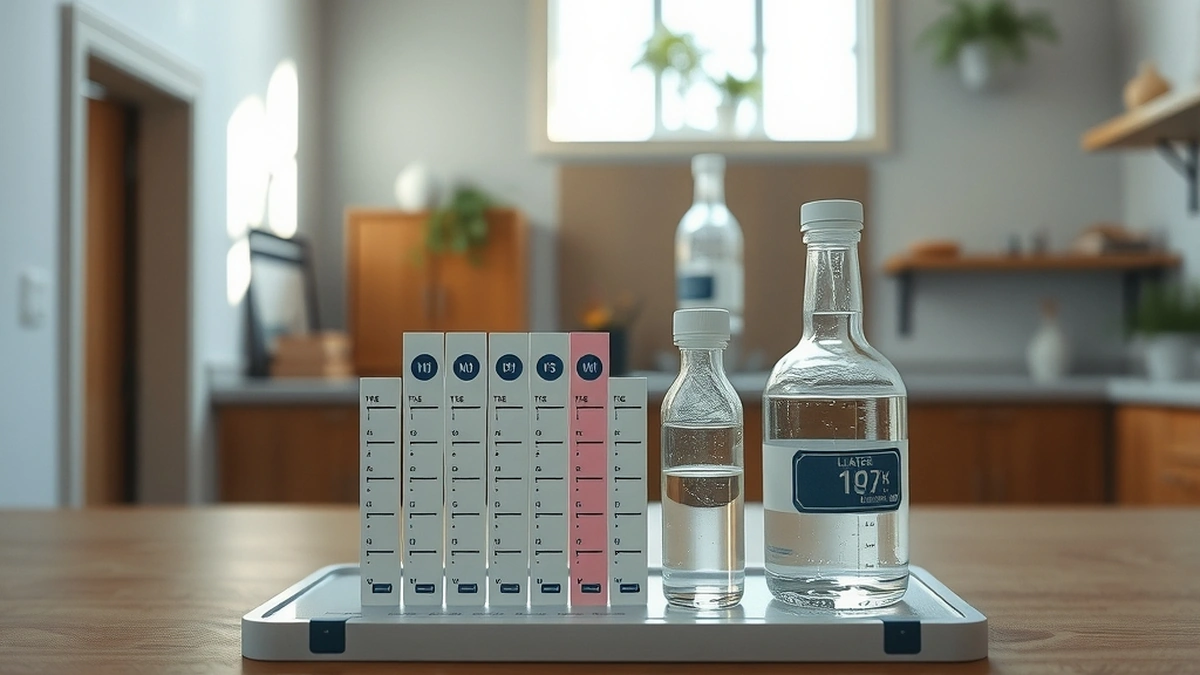
Bad readings usually come from expired strips, a dry or uncalibrated meter, contaminated sample bottles, or a sample that sat too long. Fix the kit and the sampling routine before buying treatment equipment.
- Strip life
- About 1 year
- Calibration
- Every 3 months
- Sample volume
- 250 - 500 mL
- Lab test
- $40 - $150
- Typical fix
- $0 - $40
Some links on this page are affiliate links.If you buy through them we may earn a commission at no extra cost to you. We do not accept payment for rankings. Read the full disclosure.
Bad readings usually come from expired strips, a dry or uncalibrated meter, contaminated bottles, or a sample that sat too long. Fix the kit and the sampling routine before buying treatment equipment. A wrong number is more expensive than a wrong filter.
The kit fails quietly
A test kit does not announce that it has drifted. A strip that has absorbed humidity reads low, a meter that needs calibration reads 0.4 high, and a sample that sat overnight reads something that is neither the tap nor the well.
That silence is what makes kit maintenance important. The result looks like a number, and numbers are persuasive even when they are wrong.
The fix is routine: check dates, calibrate meters, store strips dry, and sample the same way every time.
The symptom table
| Symptom | Likely cause | Fix |
|---|---|---|
| All strips look identical | Expired or humid strips | $15 - $40 |
| Meter will not calibrate | Dry electrode or stale buffer | $5 - $60 |
| Readings vary between samples | Temperature or dirty probe | $0 |
| Hardness reads low | Strip band or expired reagent | $15 - $40 |
| Bacteria test always positive | Sampling error | $0 |
| Results contradict the lab | Kit precision | $40 - $150 |
The last row is the honest one. Home kits screen; labs measure. When the two disagree, the lab is right.
Diagnose in this order
- Check the expiry date on strips and reagents.
- Inspect the strip container seal and desiccant.
- Calibrate the meter with fresh buffer.
- Rinse the probe or vial with distilled water.
- Take a fresh sample with the correct flush and hold time.
- Compare with a lab result if the decision is expensive.
That sequence separates kit error from water change, which is the only question that matters.
Calibrating a pH meter
Let the buffer and the meter reach room temperature. Rinse the electrode, blot it dry, and dip into pH 7 buffer. Adjust to 7.00, then rinse and check against pH 4 or 10.
If the meter will not hold a two-point calibration, the electrode is failing. Replacements run $30-$60 on most handheld meters.
Store the electrode wet in storage solution. A dry electrode drifts for hours after rehydration and ages quickly.
Sampling errors
The sample is where most mystery results originate. A first-draw sample and a flushed sample are different waters, and both are valid, but only if you know which one you took.
Bacteria samples have a hold time. A bottle that sat in a warm truck for a day will culture something, and the result will describe the truck.
Sample bottles should be the ones the lab supplies. A rinsed jam jar is not sterile and not appropriate for a bacteria test.
When the kit is the wrong tool
A TDS meter measures conductivity. It is not hardness, not iron, and not nitrate, and using it for those decisions produces confident nonsense.
Strips are for screening. A strip that reads “hard” covers 7 to 14 grains per gallon, which is the entire range that decides softener size.
For any purchase over $500, use a lab panel at $40-$150. That is the cheapest part of the project and the one that prevents the wrong system.
When to replace the kit
Replace strips annually whether or not they are used up. The pad chemistry ages in the container, and a two-year-old strip can read a full band low.
Replace buffer solutions every six months after opening. A buffer that has absorbed carbon dioxide reads low, and a meter calibrated against it inherits the error.
Replace a pH electrode every two to three years, or when calibration drifts within days.
Replace a drop-count kit’s reagents when the color change happens at the wrong drop count. That is contamination, not a water change.
Cross-checking two methods
When a reading matters, measure it twice with different methods. A strip and a drop-count kit take five minutes together and catch most kit errors.
If both agree, the number is probably real. If they disagree by more than one band, one of them is compromised.
A TDS meter and a lab panel are not comparable for hardness, because TDS measures conductivity rather than calcium and magnesium. They can both be correct and still disagree, which confuses people who expect one number. Do not cross-check across parameters.
For bacteria, there is no home cross-check. The lab culture is the method, and a second lab sample is the only confirmation.
Write both results down with the method. A year later, the method is what tells you whether a change came from the water or from the kit. How to choose a water test kit covers precision by kit type, and water testing cost covers lab pricing.
Prevention
Store the kit in a dry cupboard, not a bathroom. Humidity is the main killer of strips.
Write the opening date on every bottle and the calibration date on the meter.
Take samples the same way every time and record the method alongside the number.
Keep a log. Three results over a year tell you more than one perfect measurement, and the log is what an installer will ask for when you describe a problem. Water test kit maintenance covers the routine, and how to read a water test report explains what the numbers mean once they are trustworthy. “”
Frequently asked questions
Why do my test strips all read the same color?
The strips are expired, have absorbed humidity, or the pads were touched. Replace them and store the new container sealed and dry.
Why will my pH meter not calibrate?
A dry or coated electrode, stale buffer solution, or a meter at end of life. Store the electrode wet, use fresh buffer, and replace the electrode if it still drifts.
Why does my TDS meter give different readings on the same water?
Temperature differences, a dirty probe, or insufficient rinsing between samples. Rinse with distilled water and let the sample reach room temperature.
How long can I keep a water sample before testing?
Bacteria samples usually need to reach the lab within 24-30 hours. Chemical samples are more forgiving but should be kept cold and tested within a day or two.
Can I trust a strip for hardness?
For a rough idea only. Strip bands are often 25-50 ppm wide, which is not enough to choose between a 32,000 and 48,000 grain softener.
What should I do if two tests disagree?
Send a sample to a certified lab. A lab result settles the question, and it costs $40-$150, which is less than a wrong equipment purchase.
Sources
Some links are affiliate links.If you buy through them we may earn a commission at no extra cost to you. We do not accept payment for rankings. Read the full disclosure.