Whole House Water Softener for Hard Water: Sizing Guide
A whole-house softener is sized by grains per gallon times daily gallons. See capacity math, flow requirements, and installed costs before you buy.
A whole-house water softener removes calcium and magnesium from every tap by ion exchange. Size it by multiplying hardness in grains per gallon by daily gallons, then choosing a capacity above the daily load, at $1,200 - $4,500 installed.
- Capacity range
- 24,000 - 64,000 grains
- Installed cost
- $1,200 - $4,500
- Salt per year
- $120 - $400
- Salt per regeneration
- 8 - 12 lb
- Equipment life
- 10 - 15 years
Some links on this page are affiliate links.If you buy through them we may earn a commission at no extra cost to you. We do not accept payment for rankings. Read the full disclosure.
A whole-house water softener removes calcium and magnesium from every tap through ion exchange. Sizing is arithmetic, not guesswork: hardness in grains per gallon times daily gallons gives the daily load, and capacity is chosen above that load. Installed cost runs $1,200 - $4,500.
The Sizing Arithmetic
Start with two numbers: hardness in grains per gallon and household water use in gallons per day. Multiply them and you have the daily grain load.
A family of four uses roughly 250 gallons a day. At 10 GPG, that is 2,500 grains daily. Over a week, 17,500 grains. A 24,000-grain unit regenerating weekly covers that with a 6,500-grain reserve.
At 18 GPG, the same household carries 4,500 grains daily and 31,500 weekly. Now a 32,000-grain unit is marginal and a 48,000-grain unit is comfortable. This is why the same house size can justify different equipment.
| Household | Gallons per day | At 8 GPG | At 15 GPG | Suggested capacity |
|---|---|---|---|---|
| 2 people | 150 | 1,200/day | 2,250/day | 24,000 grains |
| 3 people | 200 | 1,600/day | 3,000/day | 32,000 grains |
| 4 people | 250 | 2,000/day | 3,750/day | 32,000 - 48,000 |
| 5 people | 300 | 2,400/day | 4,500/day | 48,000 - 64,000 |
The published capacity range is 24,000 - 64,000 grains, and most homes land at 32,000 or 48,000. Oversizing wastes salt on regeneration; undersizing leaves hard water at the tap during heavy use.
Flow Rate Matters as Much as Capacity
Capacity is how much hardness the resin can remove between regenerations. Flow rate is how fast water can pass through the bed without losing pressure or softening performance.
A softener is rated for service flow, typically 8 - 15 GPM depending on the tank size. A house with two showers, a dishwasher, and a washing machine can draw 12 - 15 GPM at once. A unit rated below that will cause a pressure drop and may let hard water slip through.
Check both numbers on the spec sheet. A 48,000-grain unit with a 7 GPM service flow is the wrong choice for a family that runs everything at once, even though the capacity looks generous.
What the System Includes
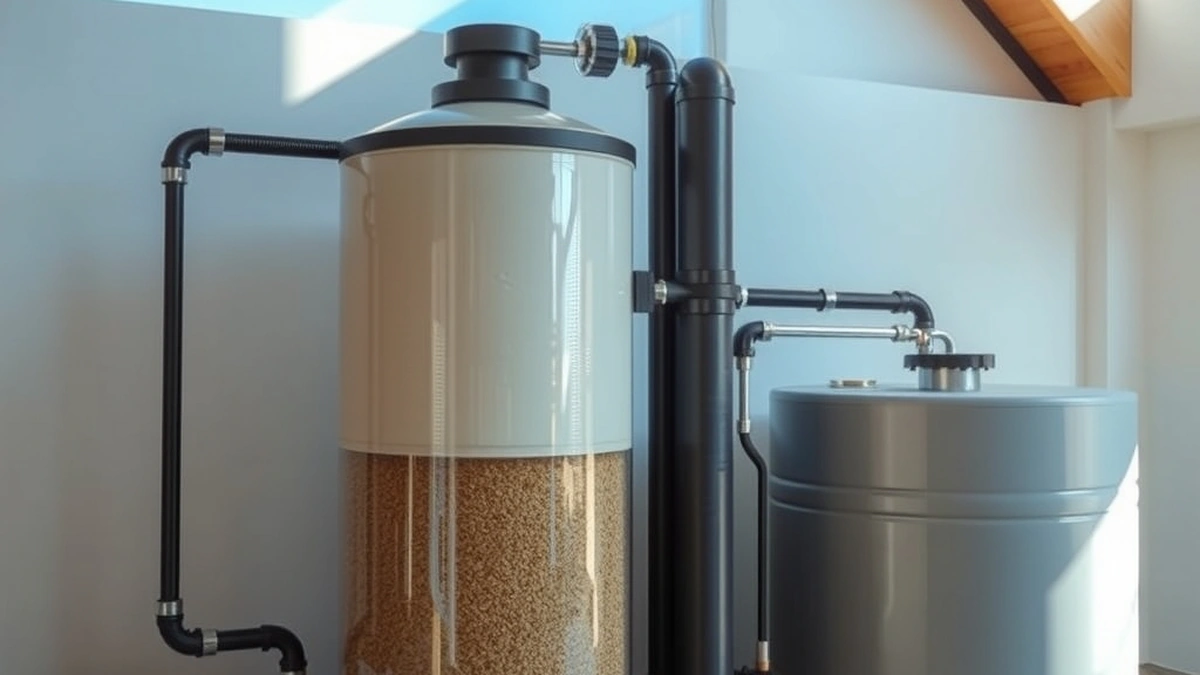
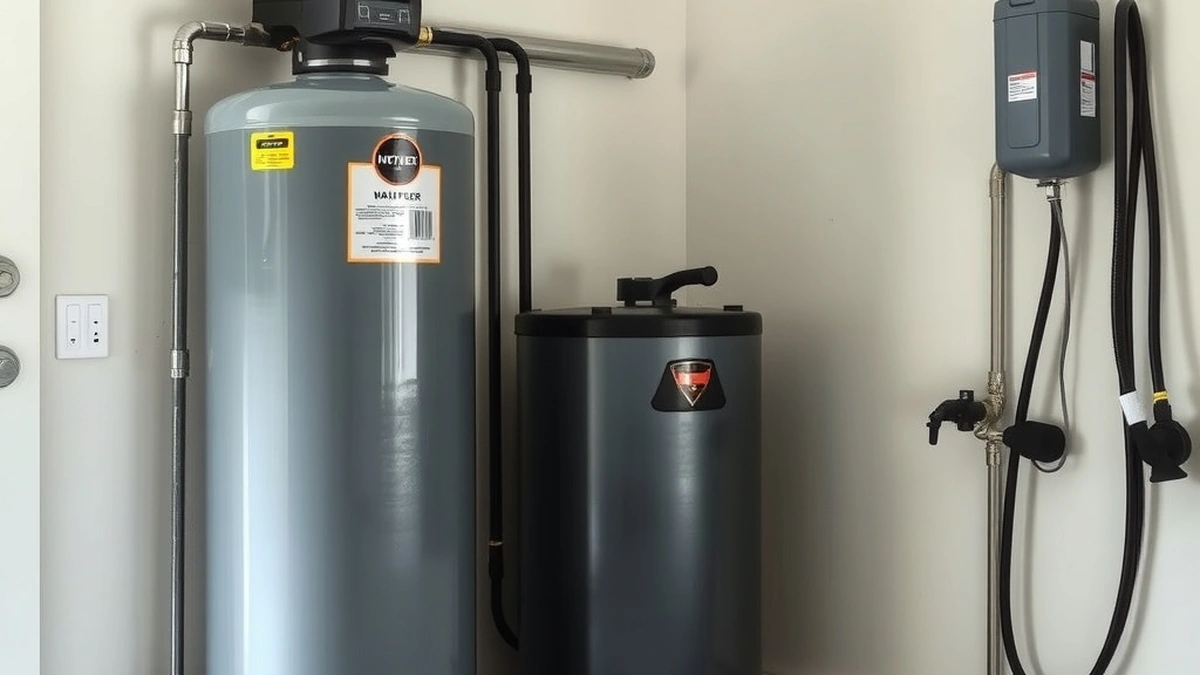
A whole-house softener has a resin tank, a brine tank, a control valve, and a bypass. Water enters the resin tank, passes through the bed, and exits softened. The brine tank holds salt and water for regeneration.
The control valve is the part that decides efficiency. A timer valve regenerates on a fixed schedule regardless of use. A metered valve counts gallons and regenerates when the capacity is used, which saves salt in households with variable demand.
Regeneration draws 8 - 12 pounds of salt and sends a brine solution through the resin, exchanging the captured calcium and magnesium for sodium. The backwash and rinse cycles follow, and the unit returns to service.
Installed Cost
| Item | Cost |
|---|---|
| Softener equipment | $600 - $2,500 |
| Installation | $500 - $1,500 |
| Total installed | $1,200 - $4,500 |
| Salt per year | $120 - $400 |
| Resin rebed | $300 - $600 at 8 - 12 years |
A 32,000-grain metered unit with a 10 GPM service flow typically sells for $900 - $1,600, and installation adds $600 - $1,000 when a pre-plumbed loop and drain are available. Without a loop, the plumbing work pushes the total toward the top of the range.
Salt is the recurring cost. At 10 pounds per regeneration and about 50 regenerations a year, that is 500 pounds, or 12.5 bags. At $9 per bag, $112. A larger household at higher hardness can triple it, which is why $120 - $400 covers the realistic range.
Installation Requirements
- Choose a location with a drain, a power outlet, and space for two tanks.
- Install a bypass valve so the house can run during service.
- Provide a grounded outlet for the control valve; use a GFCI near water.
- Route the drain line to a standpipe or floor drain with an air gap.
- Set hardness and capacity in the valve, then run a manual regeneration to commission.
- Test the water after commissioning at a cold tap downstream of the unit.
The air gap on the drain is a code requirement in most jurisdictions and a practical one everywhere. Without it, a backed-up drain can siphon wastewater into the softener.
Plan the electrical and drain before you shop. A unit that needs a new outlet and a new drain line can add $300 - $800 to the install, and a basement without a floor drain may need a condensate pump or a standpipe run to a laundry sink. Those are the costs that turn a $1,200 quote into a $2,000 one.
Maintenance Over the Life of the Unit
Check the salt level monthly and refill before it drops below the brine line. Break up crusts, and clean the brine tank once a year. A salt bridge makes the unit regenerate with weak brine and is the most common cause of “the softener stopped working.”
Resin lasts 8 - 12 years. A rebed costs $300 - $600 and restores capacity when the beads are depleted or fouled. The valve and tank usually last 10 - 15 years, which is the planning horizon for replacement.
For the sizing math in more detail, see water softener sizing and water softener grain capacity. For the alternative, see salt free water softeners. For pricing, see water softener cost and water softener installation cost.
Frequently asked questions
What size softener do I need for a family of four?
A family of four at 10 GPG using 250 gallons a day carries 2,500 grains daily. A 32,000-grain unit regenerating weekly covers that load with reserve.
How do I calculate softener capacity?
Multiply hardness in grains per gallon by daily gallons, then multiply by seven for a weekly regeneration. Add a reserve for unusual days.
Does a whole-house softener need electricity?
A metered or timer valve needs a standard outlet. Some units use a mechanical valve with no power, but electronic metering is far more salt-efficient.
What flow rate does a softener need to handle?
Match the unit's service flow to peak household demand, typically 10-15 GPM. An undersized unit causes pressure drop when several fixtures run.
How much does a whole-house softener cost installed?
Equipment runs $600-$2,500, installation adds $500-$1,500, and the total is typically $1,200-$4,500 before any filtration.
Can I install a softener myself?
A homeowner with plumbing experience can install a pre-plumbed loop unit in a few hours. Soldering, drain routing, and electrical work make professional install the safer default.
Sources
Some links are affiliate links.If you buy through them we may earn a commission at no extra cost to you. We do not accept payment for rankings. Read the full disclosure.