
Culligan Reverse Osmosis System: What You Get
Culligan under-sink RO systems are dealer-installed with proprietary filters. See typical installed pricing, running costs, and how it compares to retail RO.
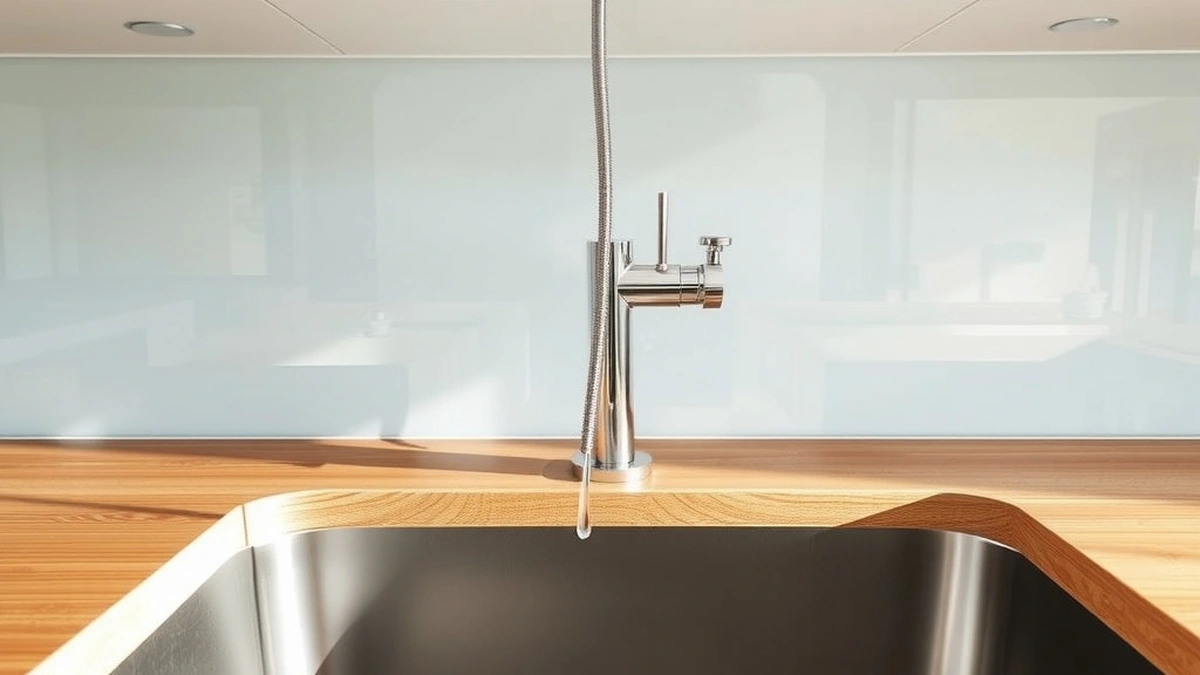
A Culligan reverse osmosis system is a dealer-installed under-sink unit using proprietary cartridges, typically quoted at $1,000 - $2,500 installed. It performs like any 4- or 5-stage RO system; the premium buys installation, service, and a local warranty not better water.
- Typical installed quote
- $1,000 - $2,500
- Retail under-sink RO
- $300 - $900 installed
- Annual filter cost
- $100 - $250
- Membrane life
- 2 - 3 years
- Waste ratio
- 3 - 4 gallons per gallon
Some links on this page are affiliate links.If you buy through them we may earn a commission at no extra cost to you. We do not accept payment for rankings. Read the full disclosure.
A Culligan reverse osmosis system is a dealer-installed under-sink unit built around proprietary cartridges and a storage tank. Dealer quotes typically run $1,000 - $2,500 installed, against $300 - $900 for a retail system. The water quality is comparable; the premium buys installation, scheduled service, and local warranty support.
What the System Includes
A Culligan RO system is a multi-stage point-of-use filter installed under the kitchen sink, with a dedicated faucet on the counter and a drain connection for reject water. The stages follow the standard RO sequence: sediment prefilter, carbon prefilter, reverse osmosis membrane, and carbon postfilter, sometimes with a remineralization stage.
Culligan’s residential line includes the AC30 and Aqua-Cleer families, sold through regional dealers. Exact stage counts and tank sizes vary by model and market, and the dealer configures the system for your water test. That configuration is part of what the price includes.
The membrane is the core. It rejects 80 - 95 percent of dissolved solids, along with most of the contaminants that pass through a carbon filter. A storage tank holds treated water at pressure so the faucet delivers a steady flow instead of a trickle.
Dealer Pricing vs Retail Pricing
Culligan does not publish national pricing, because each dealer sets its own. The practical range from published dealer quotes is $1,000 - $2,500 installed. The same job with a retail system costs $300 - $900 installed.
| Item | Culligan dealer | Retail RO |
|---|---|---|
| Equipment | Proprietary, dealer-supplied | Open-market, brand varies |
| Installed price | $1,000 - $2,500 | $300 - $900 |
| Filter cost per year | $100 - $250 | $60 - $150 |
| Installation | Included | DIY or plumber |
| Service | Scheduled visits available | Owner-managed |
| Warranty | Dealer-backed, local | Manufacturer only |
The gap is $700 - $1,600 on day one. That money buys a licensed installer, a local phone number, and a service relationship. It does not buy a different membrane technology. RO is RO; the physics do not change with the badge on the housing.
That does not make the dealer price irrational. A homeowner who does not want to cut a drain line, drill a countertop, and manage filter inventory is paying for labor and convenience. The question is whether those are worth $700 - $1,600 to you.
Running Costs Over Five Years
Filters and membranes are the recurring cost. Sediment and carbon stages typically change every 6 - 12 months, and the membrane every 2 - 3 years.
Year one: installation plus a filter change at the end of the year, roughly $1,150 - $2,750 all in on the dealer path. Years two through five: $100 - $250 annually for filters, plus one membrane replacement at $80 - $150 around year three. Five-year total lands near $1,500 - $3,600.
The retail path runs $300 - $900 installed, then $60 - $150 a year in filters and $80 - $150 for a membrane. Five-year total is roughly $600 - $1,500. The difference is the installation and service layer, not the water.
Water waste belongs in the arithmetic too. RO systems send 3 - 4 gallons of reject water to the drain for every gallon treated. A household drinking 2 gallons a day sends 6 - 8 gallons to the drain daily, or about 2,200 - 2,900 gallons a year. On a municipal bill at $4 per 1,000 gallons, that is $9 - $12. Small, but real.
What RO Does and Does Not Remove
RO is a broad-spectrum filter. It removes dissolved minerals, sodium, most heavy metals, nitrate, and a wide range of organic compounds. It also removes fluoride, which surprises some buyers. It does not reliably remove dissolved gases, and it needs a carbon prefilter to protect the membrane from chlorine.
If the concern is hardness alone, RO is the wrong whole-house answer because it treats one tap. A softener at $1,200 - $4,500 installed addresses every fixture. If the concern is drinking water quality at the kitchen tap, RO is the right scale of device.
Whole-house RO exists at $3,000 - $8,000 installed, and it is a different product with different maintenance. Culligan sells those too, through the same dealer channel.
Questions to Ask Before Signing
- Ask for the model number and the stage count in writing, not just the brand name.
- Ask whether the quote includes the faucet, the drain connection, and the storage tank.
- Get the filter part numbers and prices for the next three years, so the running cost is explicit.
- Ask whether a service plan is required, and what happens to the warranty if you decline it.
- Confirm the waste ratio and whether the dealer will install a permeate pump to reduce it.
- Get two competing quotes, including one from an independent plumber using a retail system.
The filter price is where dealer systems diverge most. Proprietary cartridges can cost two to three times the generic equivalent, and a $100 - $250 annual filter bill is normal on the dealer path. Ask for the part numbers and price them before you commit.
Service, Warranty, and Resale
Dealer-installed systems usually carry a local warranty and a service relationship. That has real value when a fitting leaks under a cabinet at 9 pm, and it has real cost when the service plan is bundled into the price without a line-item breakdown.
Read the warranty terms for exclusions. Membrane coverage is often prorated, and freeze damage is commonly excluded. If the system sits in an unheated cabin, ask specifically.
For the underlying process, see how reverse osmosis works. For retail system pricing, see reverse osmosis system cost. For the maintenance schedule on any brand, see reverse osmosis maintenance. If you are comparing countertop units instead, best countertop reverse osmosis covers the plug-in category.
Frequently asked questions
How much does a Culligan RO system cost?
Dealer quotes commonly land between $1,000 and $2,500 installed, depending on the model, market, and whether the price includes a service plan.
Does Culligan RO remove minerals from water?
Yes. Reverse osmosis removes most dissolved minerals along with other contaminants, typically rejecting 80-95 percent of dissolved solids depending on the membrane and water conditions.
How often do Culligan RO filters need changing?
Sediment and carbon stages usually change every 6-12 months, and the membrane every 2-3 years. Dealer service plans often schedule the visits for you.
Can I install a Culligan RO system myself?
Culligan sells through dealers rather than retail, and proprietary fittings make self-installation impractical. Retail RO systems are the DIY path.
Is Culligan RO water better than bottled water?
Both are treated water. An RO system gives you unlimited supply at the tap for a fraction of the per-gallon cost of bottled water, without the packaging.
Does a Culligan system need a drain line?
Yes. RO produces reject water that must go to a drain or storage tank, typically 3-4 gallons of waste for every gallon treated.
Sources
Some links are affiliate links.If you buy through them we may earn a commission at no extra cost to you. We do not accept payment for rankings. Read the full disclosure.


