
Home water softener
What a home softener does, how to size it to your household, what it costs installed, and the maintenance it needs to keep working for 10 to 15 years.
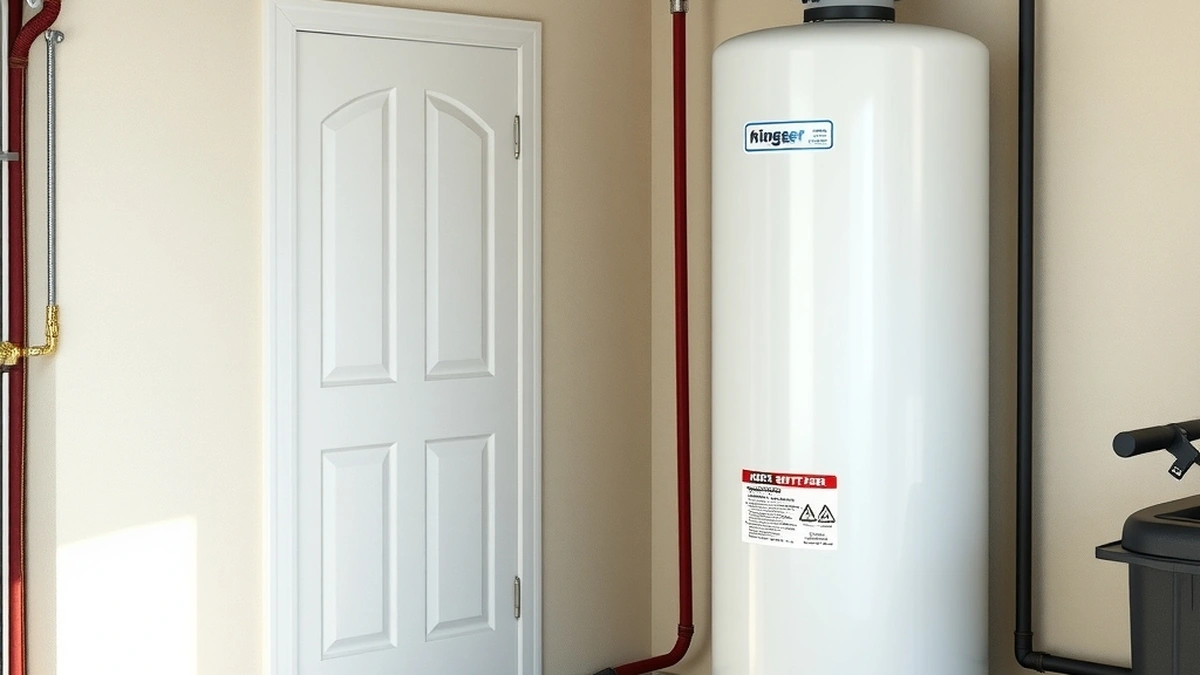
A home water softener removes calcium and magnesium through ion exchange, costs $1,200 to $4,500 installed, and runs $120 to $400 a year in salt. Size it from tested hardness, household size, and peak flow, not from the price tag.
- Installed cost
- $1,200 - $4,500
- Salt per year
- $120 - $400
- Capacity range
- 24,000 - 64,000 grains
- Equipment life
- 10 - 15 years
- Resin life
- 8 - 12 years
Some links on this page are affiliate links.If you buy through them we may earn a commission at no extra cost to you. We do not accept payment for rankings. Read the full disclosure.
A home water softener removes the calcium and magnesium that make water hard, using a resin bed that swaps them for sodium. It costs $1,200 to $4,500 installed and $120 to $400 a year in salt. Everything about choosing one follows from a hardness number and a household count.
Is Your Water Actually Hard?
Hardness is measured in grains per gallon. The bands are 0 to 3 GPG soft, 3 to 7 moderate, 7 to 10 hard, and above 10 very hard.
The symptoms are familiar: soap that will not lather, white film on shower glass, spots on dishes, stiff laundry, and scale in the kettle. Those symptoms appear around 7 GPG. Below 5 GPG, many households do not notice.
A lab test at $40 to $150 gives the number. A titration kit gives a close reading for less. Do not buy a softener without one, because the two most common purchase errors are buying a unit for water that is not hard and buying one too small for water that is.
Sizing the Unit
Three multiplications set capacity:
People × gallons per person per day × hardness in GPG = grains per day.
Four people at 75 gallons and 10 GPG is 3,000 grains per day. Reserving 25 percent for regeneration margin, a 32,000 grain unit covers about eight days between cycles.
Seventy-five gallons per person per day is a planning figure, not a measurement. Check the water bill: monthly gallons divided by 30 and by the number of people gives your actual use. A household with irrigation, a pool, or a home laundry business can be double the planning figure, and a household that travels half the year can be well under it.
| Household | At 10 GPG | At 15 GPG | At 20 GPG |
|---|---|---|---|
| 2 people | 24,000 | 32,000 | 48,000 |
| 3 people | 32,000 | 32,000 | 48,000 |
| 4 people | 32,000 - 48,000 | 48,000 | 64,000 |
| 5 people | 48,000 | 64,000 | 64,000 |
Flow is the second limit. A four-bathroom house can draw 10 to 12 gallons per minute at peak, which needs a 1 inch valve and a tank wide enough to keep velocity down. A big tank with a small valve still chokes the showers. See capacity versus flow rate.
What It Costs
Equipment runs $600 to $2,500. Installation runs $500 to $1,500, higher if a new drain or electrical outlet is needed.
A mid-range 48,000 grain unit at $1,300 equipment plus $700 labor is $2,000 installed. Salt at $250 per year for ten years is $2,500. One rebed at $450 in year nine. Total $4,950, or about $495 per year.
That is an estimate from published ranges. Local labor, pipe material, and drain conditions move it.
What It Removes
| Contaminant | Softener effect |
|---|---|
| Calcium and magnesium | Removed |
| Iron up to 2 - 3 ppm | Partly removed |
| Manganese, trace | Partly removed |
| Nitrate | No effect |
| Bacteria | No effect |
| Chlorine | No effect |
| Sediment | No effect |
The iron limit is the important one. Above 2 to 3 ppm, iron fouls the resin and cannot be regenerated off, so capacity falls permanently. An iron filter goes first, and the softener follows.
Installation Essentials
The unit goes after the meter or pressure tank and before the water heater. Softener resin tolerates only about 100 to 120 F continuously, so hot water must not pass through it.
It needs a bypass for service, a drain within about 30 feet with an air gap, and a grounded outlet. Those details are covered in water softener installation and drain requirements for a softener.
Placement is worth more thought than it usually gets. A unit in a finished basement closet is quiet and invisible, but salt loading is awkward and a leak goes unnoticed. A unit in an unfinished utility area is less tidy and far easier to maintain. The best spot is usually within sight of the water heater, on a slab or a pan, with a floor drain nearby.
Maintenance That Matters
- Check salt monthly and refill before the tank empties.
- Break any bridge with a broom handle if the salt crusts.
- Clean the brine tank annually to remove sludge and sediment.
- Test hardness quarterly at the kitchen tap.
- Replace the resin at 8 to 12 years, or sooner if iron fouling is suspected.
Most softener failures are salt and brine problems, not resin problems. The diagnostic order in softener stopped softening starts there for that reason.
Softener or Something Else
A softener is the only residential device that removes hardness. A salt-free conditioner alters scale behaviour without removing minerals, so a hardness test still reads the same. If soft water is the goal, the softener is the answer.
If the complaint is taste or chlorine, carbon is the right purchase. If it is nitrate or dissolved solids, reverse osmosis at the tap. If it is iron or sulfur, a dedicated filter. The staging is in well water system layout, and the broader market comparison is in water softeners.
One practical test before buying: wash your hands with a bar of soap in the untreated water, then rinse. Hard water leaves a slick, filmy feel that takes longer to rinse. Softened water rinses clean quickly and feels slippery in a different way, which some people mistake for leftover soap. That difference is the product you are buying, and it is worth confirming you want it before spending $2,000.
Frequently asked questions
How much does a home water softener cost?
Equipment runs $600 to $2,500 and installation $500 to $1,500, for an installed total of $1,200 to $4,500, plus salt at $120 to $400 per year.
What size softener does my home need?
Size from people, daily gallons per person, and hardness in GPG; four people at 75 gallons and 10 GPG need about 3,000 grains per day, which suits a 32,000 to 48,000 grain unit.
How often does a home softener regenerate?
A metered unit regenerates when a set volume of water has passed, typically every 7 to 10 days for a household, using 8 to 12 pounds of salt.
Where should a home softener be installed?
After the meter or pressure tank and before the water heater, with a bypass, a drain within about 30 feet, and a grounded outlet nearby.
Does a home softener remove iron?
It handles small amounts up to about 2 to 3 ppm; above that, an iron filter belongs ahead of the softener or the resin will foul.
How long does a home water softener last?
Ten to fifteen years for the equipment, with the resin bed lasting eight to twelve years before a rebed at $300 to $600.
Sources
Some links are affiliate links.If you buy through them we may earn a commission at no extra cost to you. We do not accept payment for rankings. Read the full disclosure.


