
How Long Does a Water Softener Last?
Typical water softener lifespan, resin bed replacement timing, and cost breakdowns for equipment, salt, and rebeds.
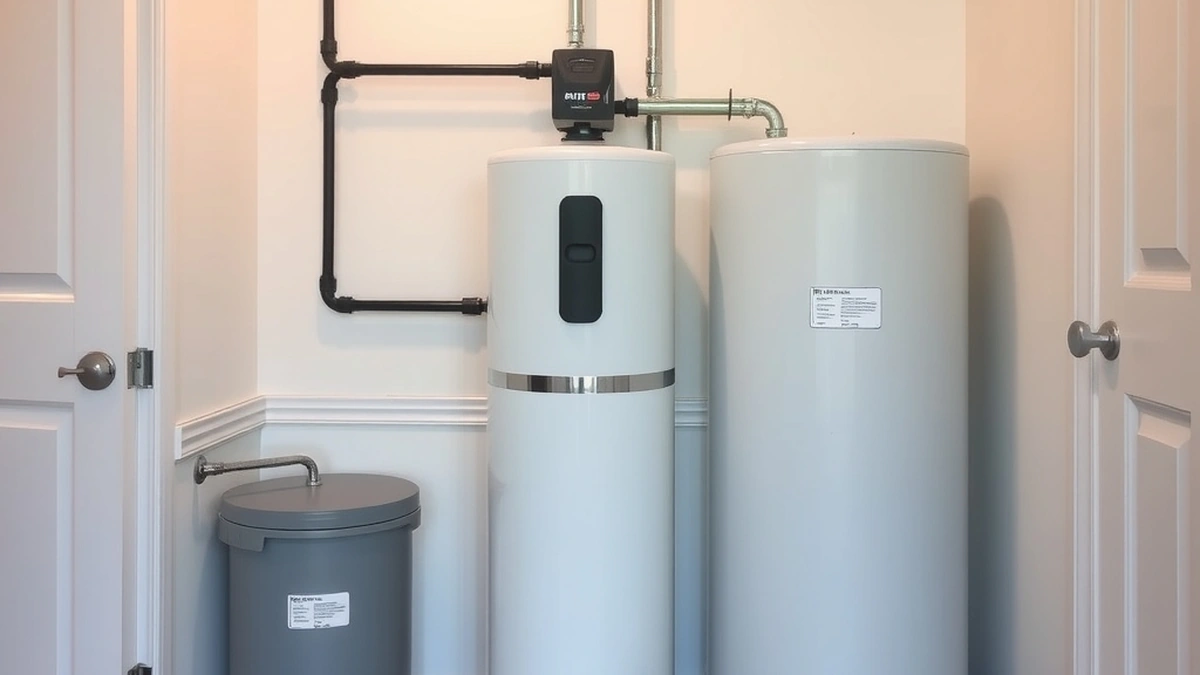
Most water softeners last 10 to 15 years. Resin beds typically need replacement after 8 to 12 years, depending on water quality and maintenance.
- Equipment lifespan
- 10-15 years
- Resin bed lifespan
- 8-12 years
- Installed cost
- $1,200-$4,500
- Salt per year
- $120-$400
- Resin rebed
- $300-$600
Some links on this page are affiliate links.If you buy through them we may earn a commission at no extra cost to you. We do not accept payment for rankings. Read the full disclosure.
Most water softeners last 10 to 15 years. The resin bed inside the tank usually wears out sooner, typically after 8 to 12 years, while the control valve and tank may last longer with routine maintenance. Actual lifespan depends on water hardness, iron content, salt usage, and whether the system is sized correctly for the home.
What Determines Softener Lifespan
A water softener exchanges hardness minerals for sodium using resin beads. Over time, those beads lose capacity, and the control valve that triggers regeneration wears out. The main factors that shorten or extend service life are:
- Hardness level: Higher grains per gallon (GPG) mean more frequent regeneration and more wear on resin.
- Iron content: Iron above 2-3 ppm can foul resin and reduce effective lifespan unless the system is rated for it or paired with pretreatment.
- Maintenance: Regular salt replenishment and occasional brine tank cleaning prevent salt bridges and mushing that stress the valve.
- Unit sizing: A system with too little grain capacity for the household runs more cycles and wears faster.
Water hardness categories help set expectations:
| Hardness level | Grains per gallon (GPG) |
|---|---|
| Soft | 0-3 |
| Moderate | 3-7 |
| Hard | 7-10 |
| Very hard | 10+ |
If your water tests in the hard or very hard range, a properly sized softener will regenerate more often. That does not mean it will fail sooner automatically, but it does mean the resin sees more exposure to brine and flow cycles.
Equipment and Installed Costs
Equipment alone ranges from $600 to $2,500. Installation adds $500 to $1,500, bringing the total installed cost to $1,200 to $4,500. These are estimates; actual prices depend on unit capacity, plumbing access, and local labor rates.
Grain capacity for residential softeners typically spans 24,000 to 64,000 grains. To size a system, estimate daily softening load:
Household of four using 75 gallons per person per day equals 300 gallons daily. At 10 GPG hardness, that is 3,000 grains per day. A 32,000-grain softener would theoretically handle about 10 days between regenerations, though most valves regenerate based on actual usage and reserve settings rather than a fixed calendar.
For more on equipment pricing, see how much does a water softener cost. For labor and plumbing details, see water softener installation cost.
Resin Bed Replacement
Resin typically lasts 8 to 12 years. When capacity drops, the softener runs more frequently but delivers softer water for shorter periods. A resin rebed costs $300 to $600 and can restore performance without replacing the valve or tank.
Whether a rebed makes sense depends on the age of the rest of the system. If the control valve is already 12 years old, spending $300 to $600 on resin may only buy a few more years before valve failure. If the valve is newer, a rebed is usually the cheaper path compared to a full replacement at $1,200 to $4,500 installed.
Salt and Ongoing Costs
Salt costs $120 to $400 per year for a typical household. Usage depends on regeneration frequency and salt dose per cycle, which ranges from 8 to 12 pounds per regeneration.
Example arithmetic:
A family of four with 10 GPG hardness produces roughly 3,000 grains of demand per day. A 32,000-grain system regenerating at 80 percent capacity uses about 25,600 grains per cycle, or roughly 8.5 days of demand. That is about 43 regenerations per year. At 10 pounds of salt per regeneration, annual salt use is about 430 pounds. At $0.50 per pound, that is $215 per year, which falls inside the $120 to $400 estimate.
Salt is a recurring cost for the entire life of the system. Over 15 years, salt alone can total $1,800 to $6,000, which is a significant share of ownership cost.
For detail on salt pricing and types, see water softener salt cost.
When to Replace Versus Repair
Replace the full unit when:
- The tank leaks or is cracked.
- The control valve fails repeatedly and repair costs approach half the price of a new installed system.
- The system is 10 to 15 years old and efficiency has dropped enough that salt and water use have risen noticeably.
Repair or rebed when:
- The tank and valve are sound but softening performance has declined.
- Resin is 8 to 12 years old and the rest of the system is under 10 years old.
- Iron or sediment fouling can be addressed with a cleaner or pretreatment rather than replacement.
If iron is present above 2-3 ppm, a standard softener may struggle. In those cases, an iron filter may be needed before or alongside softening. See iron filter cost for pricing context.
Alternatives and Whole-House Context
Salt-free conditioners cost $500 to $1,800 installed and do not use resin or salt, but they do not remove hardness minerals in the same way a softener does. Carbon filters cost $500 to $1,800 installed with cartridges at $80 to $300 per year and replacement every 6 to 12 months. Sediment cartridges typically need replacement every 3 to 6 months.
For homes with broader water quality issues, whole-house filtration runs $500 to $1,800 installed for standard systems, while whole-house reverse osmosis runs $3,000 to $8,000 installed. Under-sink RO costs $300 to $900 installed with $60 to $150 per year in running costs and membrane replacement every 2 to 3 years. These systems serve different purposes than softeners and are often paired with them rather than replacing them.
See whole house water filter cost and reverse osmosis system cost for comparison.
Bottom Line
Expect a water softener to last 10 to 15 years and the resin bed to last 8 to 12 years. Installed cost is $1,200 to $4,500, salt runs $120 to $400 per year, and a resin rebed costs $300 to $600. Start with a lab water test ($40 to $150) to confirm hardness and iron before selecting equipment or budgeting for replacement.
Frequently asked questions
How long does a water softener last?
Most water softeners last 10 to 15 years before the control valve or tank requires replacement.
How long does resin last in a water softener?
Resin beds typically last 8 to 12 years before capacity drops enough to warrant a rebed.
How much does a water softener cost installed?
Installed costs range from $1,200 to $4,500 depending on unit size and labor.
How much does water softener salt cost per year?
Expect to spend $120 to $400 per year on salt for a typical household.
How much does a resin rebed cost?
A resin rebed costs $300 to $600, which can extend system life without replacing the full unit.
Should I test water before buying a softener?
Yes. A lab water test costs $40 to $150 and confirms hardness and iron levels before equipment selection.
Sources
Some links are affiliate links.If you buy through them we may earn a commission at no extra cost to you. We do not accept payment for rankings. Read the full disclosure.


