
How to Reduce Water Hardness Without Replacing the Water
You can lower hardness by softening, blending, or treating one tap. See how much each method reduces, what it costs, and what does not work at all.
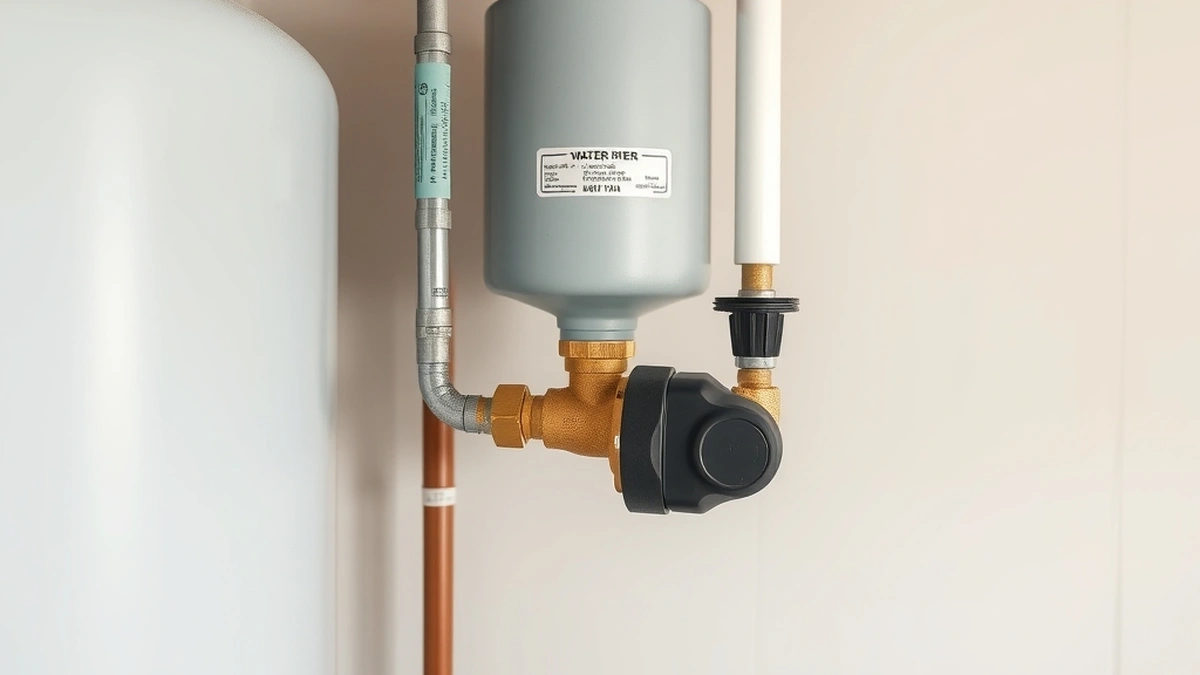
Reduce water hardness by ion exchange softening, blending softened water with raw water, or treating a single tap with reverse osmosis. Boiling and magnetic devices do not reduce hardness, and salt-free conditioners leave the grains per gallon unchanged.
- Soft range
- 0 - 3 GPG
- Hard range
- 7 - 10 GPG
- Softener installed
- $1,200 - $4,500
- Under-sink RO
- $300 - $900
- Lab test
- $40 - $150
Some links on this page are affiliate links.If you buy through them we may earn a commission at no extra cost to you. We do not accept payment for rankings. Read the full disclosure.
Water hardness can be reduced three ways: remove the minerals with ion exchange, blend treated water with raw water, or treat one tap with reverse osmosis. Everything else either changes the minerals’ behavior or does nothing measurable. The method you choose depends on how low you want the number and how much of the house you want to treat.
Method One: Ion Exchange
A softener passes water through resin beads that swap calcium and magnesium for sodium. The reading drops to near zero, and the resin regenerates with brine when capacity is spent.
Equipment costs $600 - $2,500, installation adds $500 - $1,500, and the installed range is $1,200 - $4,500. Salt runs $120 - $400 a year, and resin lasts 8 - 12 years with a rebed at $300 - $600.
This is the only method that reduces hardness at every tap to a predictable number. It is also the only one that adds sodium and produces a regeneration discharge.
Method Two: Blending
A blending valve mixes a portion of raw water back into the softened stream. Instead of 0 GPG, you get a target like 3 - 5 GPG, which keeps some mineral character, reduces sodium, and saves salt.
Blending valves cost $100 - $300 and install with the softener. They are common on whole-house systems where perfectly soft water feels slippery or where the household wants to reduce sodium without giving up scale control.
The arithmetic is straightforward. If raw water is 16 GPG and you blend 25 percent raw with 75 percent softened, the result is roughly 4 GPG. Adjust the valve until a test reads the target.
Method Three: Point-of-Use RO
Reverse osmosis removes 80 - 95 percent of dissolved solids at the tap where it is installed. An under-sink unit costs $300 - $900 installed and treats drinking and cooking water only.
That is a reduction, not a whole-house solution. The shower, laundry, and water heater still see hard water. It suits households that mainly care about the water they drink and want to avoid a softener.
What Does Not Reduce Hardness
| Method | Effect on GPG | Verdict |
|---|---|---|
| Boiling | Slight, deposits scale in the kettle | Not a treatment |
| Magnetic descaler | No measurable change | Claims unproven |
| Electronic descaler | No measurable change | Claims unproven |
| Salt-free conditioner | No change | Reduces scale adhesion only |
| Carbon filter | No change | Removes chlorine, not minerals |
| Pitcher filter | No change | Removes some metals, not hardness |
Boiling is the most common misconception. It precipitates calcium carbonate as scale inside the kettle or the water heater, which is why the element crusts, but the remaining water still contains hardness minerals.
Salt-free conditioners are the second. They may reduce visible scale, and they do not lower the number. If a seller claims a lower GPG reading, ask for the before-and-after lab result.
Choosing a Target
Soft water is 0 - 3 GPG. Most households are satisfied in that band, and a softener set to regenerate efficiently will hold it there.
Some people prefer 3 - 5 GPG because fully soft water feels slippery. A blending valve gets there without a second piece of equipment.
Below 1 GPG is useful for spot-free glass and for steam appliances, but it costs more salt and is rarely necessary for general household use.
Installation and Setup
- Test the raw water and record hardness, iron, and manganese.
- Calculate the daily grain load and choose a capacity with reserve.
- Decide on full softening or blending, and specify the target GPG.
- Install the softener with a bypass, drain, and grounded outlet.
- Set the hardness and capacity in the valve, then run a manual regeneration.
- Test the treated water and adjust the blend valve if installed.
- Retest quarterly and after any change in the supply.
Costs and Tradeoffs
A full softener at $2,000 installed plus $250 a year in salt costs $4,500 over ten years, plus a rebed near year ten.
A blended system costs the same equipment plus $150 for the valve, and saves perhaps 20 - 30 percent of the salt, which is $50 - $120 a year.
An under-sink RO at $600 installed plus $100 a year costs $1,600 over ten years and treats one tap. It is cheaper and narrower.
Verifying the Reduction
The only way to know a method worked is to test before and after. A strip is adequate for a quick check, and a lab panel is better for a baseline. Sample the raw water at a cold tap, then sample downstream of the treatment.
A softener should bring the reading to 0 - 2 GPG. A blend valve should hold the target you set, within a grain or two. An RO unit should cut the reading by 80 - 95 percent at the treated tap.
If the numbers do not move, the unit is bypassed, the valve is misprogrammed, or the resin is exhausted. Those are three different fixes, and the test tells you which one to investigate first.
Retest quarterly for the first year after installation. Hardness can drift when a utility changes its blend or when a well’s water table moves, and a setting that was right in spring may be wrong by fall.
Lowering hardness reduces scale and improves lather. It does not remove iron, sulfur, nitrate, arsenic, lead, or bacteria, and it does not make unsafe water safe.
A household with hardness and nitrate needs a softener plus point-of-use RO. A household with hardness and bacteria needs disinfection plus UV. Treating the hardness and stopping there is the most common incomplete installation.
Read the lab report line by line. Each parameter above its limit needs a named stage, and the softener covers exactly one of them.
For the treatment decision, see how to treat hard water. For the equipment, see how does a water softener work. For blending and valve settings, see salt dose and efficiency. For costs, see water softener cost.
Frequently asked questions
How can I lower water hardness at home?
Install an ion-exchange softener, blend softened water with untreated water, or use reverse osmosis at a single tap. Only those methods actually lower the calcium and magnesium content.
Does boiling water reduce hardness?
No. Boiling precipitates some calcium carbonate as scale but leaves the rest dissolved. The hardness reading drops only slightly and the deposit moves to the kettle.
Can I blend hard and soft water to reduce hardness?
Yes. A blending valve mixes a portion of raw water with softened water, which lowers the overall hardness while keeping some mineral character and reducing sodium.
Do salt-free conditioners reduce hardness?
No. They change how minerals crystallize but leave the grains per gallon unchanged. A test on conditioned water still reads hard.
How much hardness reduction is enough?
Most households notice a difference below 3 GPG. Some prefer 1-2 GPG for spot-free glass, and a blending valve can hold a target in that range.
Is reduced hardness water safe to drink?
Yes. Softened water meets drinking water standards. Households watching sodium often keep an unsoftened tap or use reverse osmosis for drinking water.
Sources
Some links are affiliate links.If you buy through them we may earn a commission at no extra cost to you. We do not accept payment for rankings. Read the full disclosure.


