
No Salt Water Softener Systems: What They Really Do
Salt-free systems condition water instead of softening it. See the technologies, the claims, the costs, and the tests that prove whether they work.
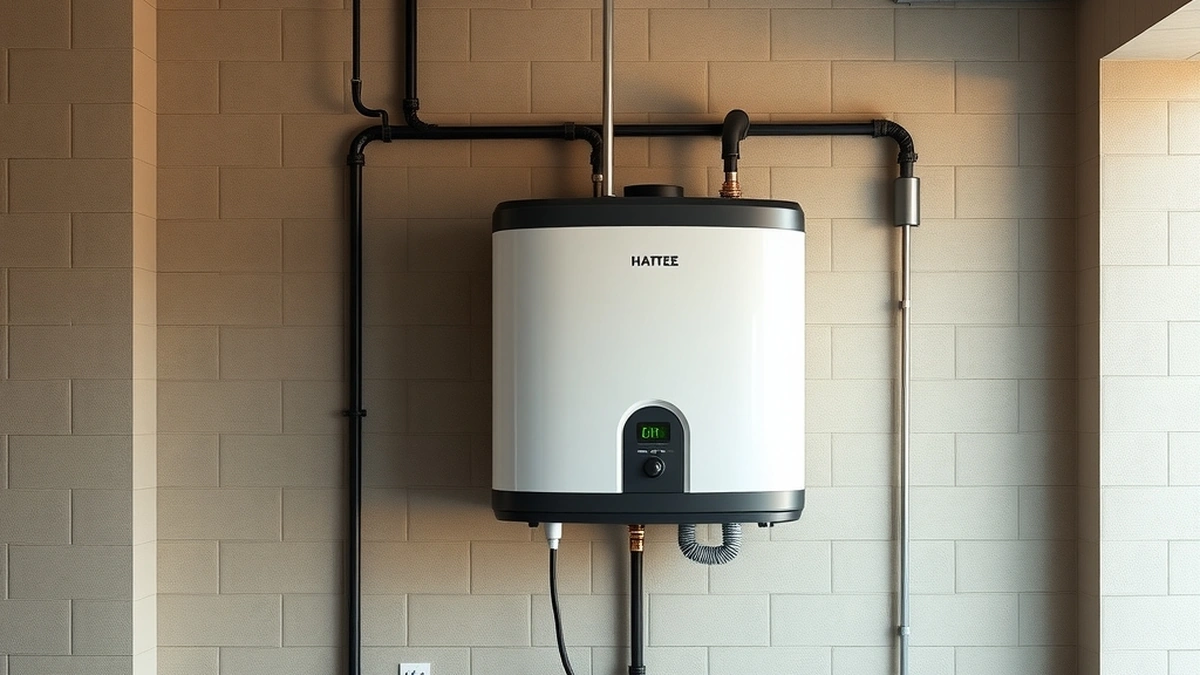
No salt water softener systems condition water rather than soften it, using media that change how calcium and magnesium crystallize. They cost $500 - $1,800 installed and do not lower the grains per gallon reading, so scale may decrease while the water stays hard.
- Installed cost
- $500 - $1,800
- Removes hardness
- No
- Salt use
- None
- Wastewater
- None
- Media life
- 3 - 10 years
Some links on this page are affiliate links.If you buy through them we may earn a commission at no extra cost to you. We do not accept payment for rankings. Read the full disclosure.
No salt water softener systems condition water instead of softening it. They change how calcium and magnesium crystallize so scale adheres less to pipes and heaters, but the minerals stay in the water. Installed cost is $500 - $1,800, with no salt, no drain, and no electricity on most units.
The Technologies
Template assisted crystallization, or TAC, is the dominant approach. Water passes through a bed of polymer beads that provide nucleation sites, and hardness minerals crystallize onto those sites as microscopic particles.
The particles stay suspended and flow through the plumbing. Because they have already crystallized, they do not readily anchor to pipe walls or heating elements, which is the mechanism behind the reduced scaling claim.
Other systems use catalytic media, chelating media, or a combination. Some cartridge devices use a food-grade polyphosphate that sequesters minerals temporarily. Each claims scale control, and each works differently.
What They Do Not Do
They do not remove hardness. The calcium and magnesium remain dissolved or suspended, and a lab test still reports the same grains per gallon.
They do not soften water in the sense that a softener does. Soap lather is closer to hard water than soft, towels feel the same, and glass still spots.
They do not remove iron, manganese, nitrate, arsenic, lead, or bacteria. A system sold as a complete water solution that contains only conditioning media is missing most of the treatment train.
Salt-Free vs Salt-Based
| Feature | No salt system | Ion-exchange softener |
|---|---|---|
| Removes hardness | No | Yes |
| Lowers GPG reading | No | Yes |
| Salt use | None | $120 - $400 per year |
| Wastewater | None | 20 - 60 gallons per regeneration |
| Electricity | Usually none | Needed for the valve |
| Installed cost | $500 - $1,800 | $1,200 - $4,500 |
| Media life | 3 - 10 years | Resin 8 - 12 years |
| Sodium added | None | Small amount |
The price gap is real but narrows over time. A $900 conditioner with $300 media every five years costs $1,500 over ten years. A $2,000 softener with $250 a year in salt costs $4,500.
What the extra money buys with a softener is actual soft water. What the conditioner buys is less scale with the same hardness, which is a different product for a different goal.
Where They Fit
A no salt system fits a household that wants less scale in a water heater or a tankless coil without adding sodium or a regeneration drain.
It fits a home on a septic system where the extra brine discharge is unwelcome, and it fits irrigation, where softened water’s sodium is a soil concern.
It fits poorly when the complaint is soap scum, spotting, or stiff laundry. Those are hardness symptoms, and conditioning does not address them. It also fits poorly on well water with iron, because iron fouls the media.
Verifying the Claim
Ask for a test showing scale reduction, not a hardness reduction. Those are different claims, and a legitimate seller will know the difference.
Look for third-party data on the specific media. Some media have published studies; many do not. A product with no data is a product with a marketing claim.
Ask for the media replacement cost and interval in writing. A $400 media change every four years is a running cost that belongs in the comparison.
Installation and Maintenance
- Test the water for hardness, iron, and pH before choosing a system.
- Mount the tank on a level surface with a bypass valve.
- Connect the inlet and outlet in the direction marked on the head.
- Flush the media for several minutes before returning the house to service.
- Record the install date and the media replacement interval.
- Retest hardness annually to confirm nothing has changed.
There is no drain, no salt, and usually no power, so installation is simpler than a softener and often cheaper in labor.
Media replacement is the main service event, every three to ten years depending on the system. The cost should be quoted before purchase, because a cheap unit with expensive media is not cheap over its life.
The Honest Summary
A no salt system is a scale-management device. It is not a softener, and the word “softener” in the product name is marketing rather than chemistry.
Buy it for scale control where salt is unwanted. Buy an ion-exchange softener for soft water. Those are the two products, and the test result tells you which problem you have.
Reading the Warranty and the Media Claim
A warranty that covers the tank for ten years but the media for one tells you where the manufacturer expects the cost to land. Read both lines before comparing prices.
Ask whether the media is proprietary. A branded media sold only by the original dealer gives that dealer pricing power for a decade, and the replacement cost is the real ownership cost.
Check whether the warranty is prorated. A prorated tank warranty sounds generous until year eight, when it pays a fraction of the replacement.
Finally, ask for the installation requirements. A unit installed without a bypass or on the wrong side of a pressure tank may void coverage, and the dealer who installed it may not mention that until a claim is filed.
One more test is worth running before you buy: fill a glass with treated water, let it evaporate on a dark plate, and look at the ring. A conditioner leaves a visible mineral ring because the minerals are still there. That is the simplest demonstration of what the product does and does not do.
For the direct comparison, see salt based vs salt free softener and salt free water softeners. For pricing, see salt free water softener cost. For the decision path, see how to treat hard water.
Frequently asked questions
Do no salt softeners really work?
They can reduce scale adhesion on pipes and heaters, but they do not remove hardness. A test on treated water still reads the same grains per gallon.
What technology do salt-free systems use?
Template assisted crystallization is the most common, using polymer beads that give hardness minerals a surface to crystallize on so they do not stick to plumbing.
How much do no salt systems cost?
Installed prices run $500-$1,800, with no salt and no drain required. Media replacement every 3-10 years is the main running cost.
Will a no salt system stop spots on dishes?
It may reduce them, but it will not eliminate spotting in hard water. Dishwashers often still need rinse aid or a softened feed.
Are magnetic descalers the same thing?
No. Magnetic and electronic devices claim to alter minerals with a field, and independent testing has not shown consistent results. TAC systems use a physical media bed.
Can I use a no salt system with a septic tank?
Yes, and that is one of its advantages. There is no brine discharge, so there is no additional load on the septic system.
Sources
Some links are affiliate links.If you buy through them we may earn a commission at no extra cost to you. We do not accept payment for rankings. Read the full disclosure.


