RV water filter troubleshooting
Slow flow, leaks, or bad taste at the campsite? Check the cartridge, washer, and regulator. See causes and $1-$45 fixes for RV water filters.
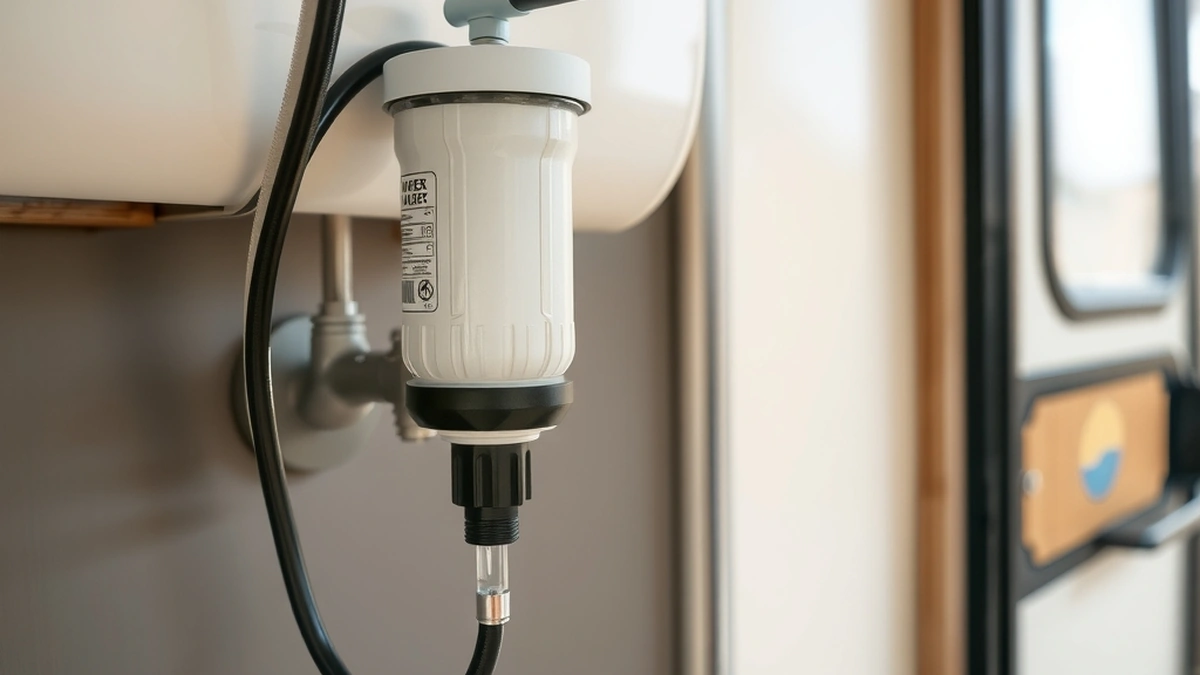
RV filter problems are usually a clogged cartridge, a missing washer, an over-restrictive regulator, or sediment from a park line. Check the cartridge and washers first; most fixes cost under $45.
- Cartridge
- $15 - $45
- Washer
- $1 - $3
- Regulator
- $12 - $30
- Hose
- $20 - $45
- Typical fix
- $1 - $45
Some links on this page are affiliate links.If you buy through them we may earn a commission at no extra cost to you. We do not accept payment for rankings. Read the full disclosure.
RV filter problems are usually a clogged cartridge, a missing washer, an over-restrictive regulator, or sediment from a park line. Check the cartridge and washers first. Most fixes cost under $45 and take five minutes at the picnic table.
The park is part of the system
An RV water system is only as good as the spigot it connects to. Park pressure varies from 30 to over 100 psi, and water quality varies just as widely.
That means a filter that worked at one park can clog at the next, and a regulator that was fine on a municipal supply can be the restriction on a low-pressure well.
Diagnose at the spigot first: pressure, flow, and clarity. Then work toward the rig.
The symptom table
| Symptom | Likely cause | Fix |
|---|---|---|
| Slow flow | Clogged cartridge or low park pressure | $15 - $45 |
| Leak at spigot | Missing washer | $1 - $3 |
| Leak at housing | Cross-thread or crack | $1 - $45 |
| Bad taste | Exhausted cartridge or garden hose | $15 - $45 |
| Pressure too high | No regulator | $12 - $30 |
| Water looks brown | Park line sediment | $0 - $45 |
Brown water on arrival is common at parks that flush their lines in spring. Run the spigot for a minute before connecting anything.
Diagnose in this order
- Run the spigot for 15 seconds into a clear glass.
- Check the regulator setting and the gauge if it has one.
- Disconnect the filter and test flow through the hose alone.
- Inspect the cartridge for sediment and age.
- Check every washer and connection.
- Confirm the hose is rated for drinking water.
Testing flow without the filter isolates the filter from the park and the hose in one step.
Reading the glass
Clear water with normal pressure points at the filter or the hose.
Brown or cloudy water points at the park line. Flush and retest before connecting.
Water with a strong chlorine smell points at a heavily treated municipal supply. A carbon cartridge handles it, but it will exhaust faster.
Cartridge problems
A cartridge that clogs in a week at one park and lasts months at another is telling you about the water, not the filter.
Carry a coarse inline sediment filter for parks on wells. It costs $15-$25 and protects the more expensive canister cartridge.
Replace cartridges every 3-6 months of use, or when flow drops noticeably.
Leaks and washers
Every connection needs a washer, and washers flatten. A missing washer produces a leak that looks like a cracked housing.
Carry a bag of spares. They cost pennies and solve the most common campsite problem in the category.
Do not overtighten. Plastic threads strip, and a stripped housing is a replacement. Hand-tight plus a quarter turn is the whole specification, and a wrench on a plastic collar is how housings die.
Pressure problems
Campground pressure above 60 psi stresses the rig’s plumbing and the filter housing. A regulator at $12-$30 set to 45-55 psi protects both.
A regulator that is set too low makes the shower weak, and people blame the filter. Check the gauge.
An adjustable regulator at $30-$60 is worth the extra if the rig’s fixtures need 50-55 psi to perform, and a gauge on the regulator removes the guesswork entirely.
Winterizing failures
A housing left full of water over the winter cracks. That is the most common cause of a spring leak.
Remove the cartridge, drain the housing, and store it with the cap loose.
A cartridge left wet in a closed housing grows biofilm, and the smell does not rinse out in spring.
When the water is not safe
A filter does not disinfect, and no cartridge changes that. If a park is on a boil-water notice, filtration is not the answer, and boiling for a full minute is the instruction that applies.
If the water smells of sulfur or stains fixtures, the park is on a well with iron or sulfur, and no cartridge fixes that for long.
Carry bottled water for drinking in those cases, and use the filter for washing.
Water quality problems that are not the filter
Some complaints cannot be fixed with a cartridge, and recognizing them saves money and argument.
A sulfur smell means the park is on a well with hydrogen sulfide. A carbon cartridge exhausts in days and the smell returns.
Iron staining in the sink or shower means dissolved iron. A cartridge catches particles but not the dissolved load, and the staining continues.
Hard-water spots are hardness, and no RV filter removes it. A portable softener is a separate device at $200-$400.
If the park has a boil-water notice, none of this matters. Filtration is not disinfection, and the answer is bottled water until the notice lifts.
Prevention
Carry a spare cartridge, spare washers, and a drinking-water hose. A $30 spares kit covers every failure in this article except a frozen housing.
Flush the spigot before connecting. Store the housing dry.
Write the install date on the cartridge body. A sharpie and a date prevent the “it can’t be more than a year old” conversation with yourself. RV water filter maintenance covers the seasonal routine, RV water filter cost covers the price bands, RV water filter installation covers the hookup order, and how to choose a RV water filter covers format selection. “”
Frequently asked questions
Why is my RV water flow slow?
A clogged cartridge, a regulator set too low, a kinked hose, or a park with low pressure. Check the cartridge and the hose route before blaming the park.
Why is my RV water filter leaking?
A missing or flattened washer, a cross-threaded connection, or a cracked housing from freezing. Reseat with a fresh washer; replace a cracked housing.
Why does campground water taste bad even with a filter?
The cartridge is exhausted, the park water is heavily chlorinated, or the hose is a garden hose leaching plasticizers. Use a drinking-water hose and a fresh cartridge.
Should I use a pressure regulator before or after the filter?
Before it. The regulator protects the filter housing as well as the rig's plumbing, and campground pressure can exceed 100 psi.
Why did my filter housing crack?
Freezing, over-tightening, or a pressure spike from an unregulated spigot. Empty and dry the housing before storage.
How often should I change an RV filter?
Every 3-6 months of use, or about 1,000-2,000 gallons. Full-timers change more often than weekenders.
Sources
Some links are affiliate links.If you buy through them we may earn a commission at no extra cost to you. We do not accept payment for rankings. Read the full disclosure.