
Salt Based Water Softener System: Components and Cost
A salt-based softener is a resin tank, brine tank, and control valve. See how the components work together, how to size them, and what installation requires.
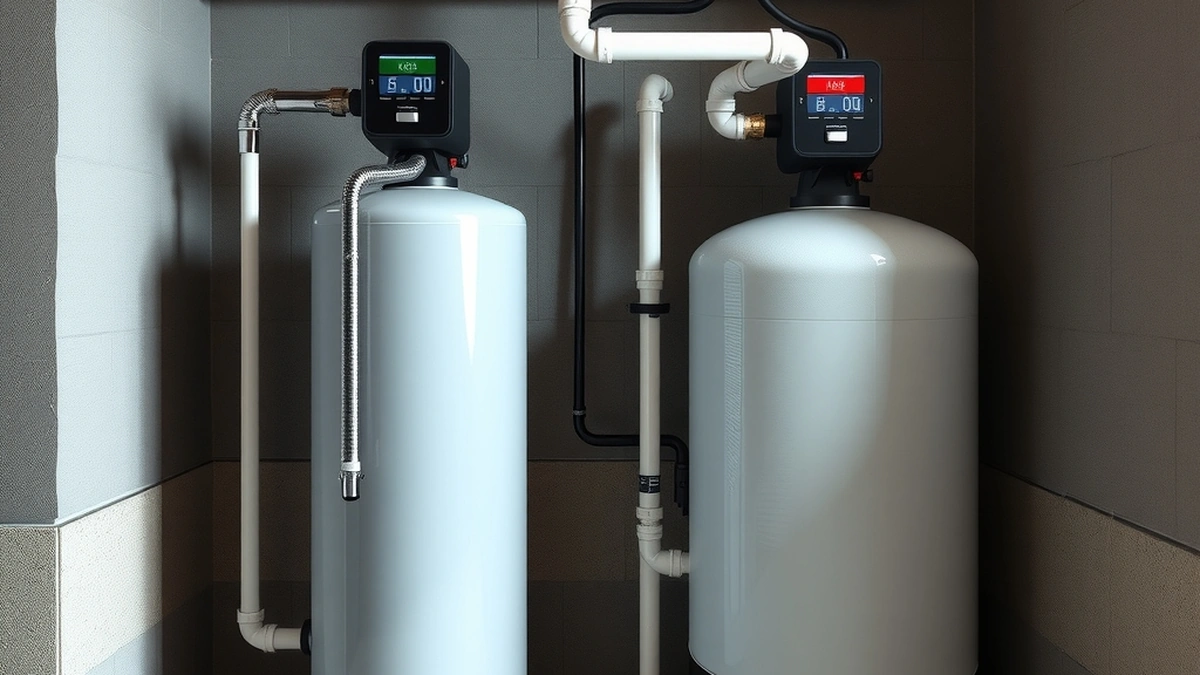
A salt-based water softener system uses a resin tank, a brine tank, and a control valve to swap calcium and magnesium for sodium. Equipment costs $600 - $2,500, installation adds $500 - $1,500, and salt runs $120 - $400 a year.
- Equipment
- $600 - $2,500
- Installed
- $1,200 - $4,500
- Capacity
- 24,000 - 64,000 grains
- Salt per regeneration
- 8 - 12 lb
- Life
- 10 - 15 years
Some links on this page are affiliate links.If you buy through them we may earn a commission at no extra cost to you. We do not accept payment for rankings. Read the full disclosure.
A salt-based water softener system is three components working in a cycle: a resin tank where ion exchange happens, a brine tank that supplies salt water for regeneration, and a control valve that schedules and runs the cycle. Equipment costs $600 - $2,500, and installation adds $500 - $1,500.
The Resin Tank
The resin tank holds a bed of polystyrene beads with sodium ions attached. As hard water passes through, calcium and magnesium bind to the beads and sodium releases into the water. The water leaves soft, and the beads hold the hardness minerals.
Resin capacity is rated in grains, typically 24,000 - 64,000 for residential units. The rating assumes a specific salt dose per regeneration; a unit run at a lower salt dose delivers fewer grains per cycle, which is why the same tank can be sold under different capacity labels.
Resin life is 8 - 12 years. Chlorine degrades the beads over time, and iron fouls them faster. A rebed at $300 - $600 restores capacity when the bed is spent.
The Brine Tank
The brine tank holds salt and a shallow layer of water. Water fills the tank on a schedule, dissolves salt until the solution is saturated, and the control valve draws that brine through the resin during regeneration.
The tank is not full of water. It holds salt above a brine level, and the water dissolves the salt from below. That is why the salt level can be high while the tank looks dry.
Brine tank size determines how much salt can be stored, not how much capacity the softener has. A large tank means fewer refills; it does not make the resin remove more hardness.
The Control Valve
The valve is the brain. It tracks water use or time, starts regeneration, and runs the cycle: backwash, brine draw, slow rinse, fast rinse, and refill.
A metered valve counts gallons and regenerates when the capacity is used. That is the efficient choice for most homes, because it adapts to actual demand.
A timer valve regenerates on a fixed schedule regardless of use. It is simpler and cheaper, and it wastes salt in households with variable occupancy.
Demand-initiated regeneration, which combines a meter with a reserve calculation, is the most efficient common design. It regenerates only when the remaining capacity approaches the reserve.
System Configurations
| Configuration | Footprint | Brine capacity | Best for |
|---|---|---|---|
| Cabinet, one piece | Small | 100 - 200 lb | Condos, tight closets |
| Two-tank, standard | Medium | 200 - 400 lb | Most homes |
| Two-tank, tall brine | Large | 400 - 600 lb | High hardness, large families |
| Twin-tank, alternating | Large | Shared | Continuous soft water demand |
Cabinet units combine resin and brine in one housing. They save floor space and cost less, and they hold less salt, so refills are more frequent.
Two-tank systems separate the vessels. They cost more, take more floor space, and are easier to service. Most whole-house installations use this layout.
Twin-tank alternating systems run one tank while the other regenerates, so soft water is available continuously. They suit large households and light commercial use.
What Installation Requires
- A location on the main line after the meter or pressure tank, before the water heater.
- A bypass valve so the house can run during service.
- A drain with an air gap for regeneration discharge.
- A grounded electrical outlet for the valve.
- At least 2 feet of clearance around the tanks for service.
- A hardness test after commissioning to confirm the setting.
The drain is the requirement that surprises homeowners. Regeneration discharges brine and rinse water, and the line needs a standpipe, floor drain, or laundry sink with an air gap. Running it into a sealed pipe without an air gap is a code violation and a backflow risk.
Costs and Running Expenses
Equipment runs $600 - $2,500 depending on capacity, valve, and configuration. Installation adds $500 - $1,500, and the total installed range is $1,200 - $4,500.
Salt runs $120 - $400 a year. At 10 pounds per regeneration and 50 regenerations, that is 500 pounds, or 12.5 bags at $9, for $112. A larger household at high hardness can triple the figure.
Electricity is minimal, a few dollars a month for the valve and timer. Water use for regeneration adds 20 - 60 gallons per cycle, which is a few thousand gallons a year.
Maintenance Schedule
Check the salt level monthly, break up crusts, and clean the brine tank annually. Test the treated water quarterly. Watch for short cycling, which points to a wrong capacity setting or a meter problem.
If the water stops feeling soft while the tank has salt, suspect a salt bridge, a clogged injector, or a failed brine draw. Those are service items, not replacement signals, and a technician can usually resolve them in one visit.
Keep the manual. Valve programming varies by brand, and a replacement valve with different logic can change salt use by 30 percent. The manual also lists the injector and seal part numbers, which are the components that wear first.
Noise is worth planning for. A softener in a finished basement bedroom wall or under a kitchen cabinet produces a rinse cycle that runs 30 - 60 minutes, usually at night. A two-tank unit in a utility room is barely audible; a cabinet unit tucked beside a living space is not. Put it where the sound does not matter.
For the mechanism in detail, see how does a water softener work. For the alternative, see salt free water softeners. For costs, see water softener cost and water softener installation cost.
Frequently asked questions
What are the main parts of a salt-based softener?
A resin tank holding ion-exchange beads, a brine tank holding salt and water, and a control valve that runs the regeneration cycle. A bypass valve and drain line complete the install.
How does a salt-based system remove hardness?
Calcium and magnesium ions bind to resin beads and release sodium in exchange. The brine cycle then flushes the captured minerals to the drain and recharges the beads.
How much salt does a softener use per regeneration?
Typically 8-12 pounds, depending on the capacity setting and the brine fill time. A larger capacity or a higher salt dose uses more per cycle.
What is the difference between a cabinet and a two-tank system?
A cabinet system puts the resin and brine in one housing, which saves space. A two-tank system separates them, which allows a larger brine tank and easier service.
Does a salt-based softener waste water?
Yes, regeneration sends brine and rinse water to the drain. A typical cycle uses 20-60 gallons, and metered valves reduce the frequency compared with timer valves.
How long does the resin last?
Resin typically lasts 8-12 years. A rebed costs $300-$600 and restores capacity when the beads are depleted or fouled by iron or chlorine.
Sources
Some links are affiliate links.If you buy through them we may earn a commission at no extra cost to you. We do not accept payment for rankings. Read the full disclosure.


