
Salt Free Water Softener Near Me: How to Find a Dealer
Local salt-free conditioner dealers vary widely in price and competence. See what to ask, what installation involves, and how to compare quotes.
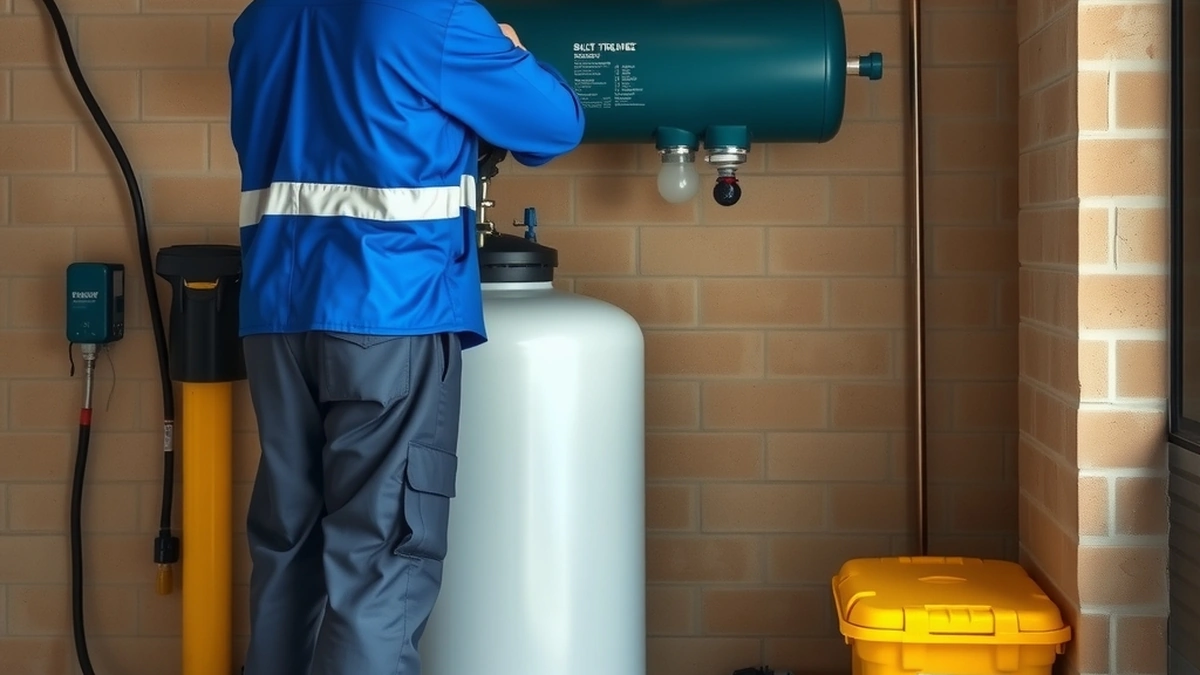
Salt-free water softener dealers near you include water treatment specialists, plumbing companies, and big-box installers, with installed prices of $500 - $1,800. Ask for the media type, the warranty, and a before-and-after hardness test before signing.
- Installed cost
- $500 - $1,800
- Typical install time
- 2 - 4 hours
- Media life
- 3 - 10 years
- Removes hardness
- No
- Lab test
- $40 - $150
Some links on this page are affiliate links.If you buy through them we may earn a commission at no extra cost to you. We do not accept payment for rankings. Read the full disclosure.
Salt-free water softener dealers near you fall into three groups: water treatment specialists, plumbing companies, and installers arranged by a direct-to-consumer brand. Installed prices run $500 - $1,800, and the quality of the dealer matters more than the badge on the tank.
Who Sells and Installs Them
Water treatment specialists are the most knowledgeable and the most expensive. They test the water, size the unit, install it, and service it. Many also sell softeners, so they can explain the difference honestly.
Plumbing companies install conditioners as part of a broader service. They are good at the plumbing and less likely to know the media science. Ask whether they have installed the specific brand before.
Direct-to-consumer brands sell online and connect the buyer with a local installer. That can be the cheapest path and the hardest to service, because warranty labor runs through a contractor who did not sell the unit.
Big-box stores sell cartridge-style conditioners and refer installation to a contractor network. Those units are small and suit a single appliance or a small home.
What the Quote Should Include
| Line item | Typical range | Notes |
|---|---|---|
| Conditioner unit | $300 - $1,200 | Media and tank |
| Bypass valve | $30 - $80 | Essential for service |
| Labor | $150 - $400 | 2 - 4 hours |
| Permit | $0 - $150 | Some jurisdictions require one |
| Water test | $40 - $150 | Should precede the sale |
| Total installed | $500 - $1,800 | Typical range |
A quote that omits the bypass valve is a quote that will grow. A quote that omits the water test is a quote from someone guessing.
Ask whether the price includes hauling away packaging, flushing the media, and a follow-up hardness test. Those are small items that separate a professional install from a box drop.
Questions That Separate Dealers
Ask what media the unit uses and how it works. A dealer who cannot explain template assisted crystallization or a similar mechanism is selling a box, not a solution.
Ask for the tested claim. Some media have third-party data on scale reduction; many do not. A dealer who says “it just works” is telling you there is no evidence to show.
Ask for the media replacement cost and interval. Ranges run from three years to ten, and a $400 media change every four years changes the ten-year cost more than the sticker price does.
Ask what happens if the water still spots. A dealer who promises spot-free glass is overselling, because conditioning does not remove minerals. A dealer who explains the limits is worth listening to.
Red Flags in a Local Pitch
The first red flag is a claim that the unit softens water. It does not, and a dealer who says otherwise either misunderstands the product or is counting on the buyer not knowing the difference.
The second is a hardness demonstration that compares conditioned water to untreated water without a control. A fair test shows the before and after numbers from a lab, and those numbers will not move.
The third is a price quoted before a water test. Without knowing hardness, iron, and pH, the dealer cannot size the unit or know whether conditioning is even the right category.
The fourth is a high-pressure same-day discount. Legitimate installers schedule work; they do not need a signature tonight. Walk away and get a second quote, which costs nothing.
What to Do With the Quote
Photograph the quote and compare line items across three dealers. The unit model, the media, the labor, and the warranty should each be visible. A single lump sum hides the parts that matter.
Ask for the media specification sheet, which lists the media type, the expected life, and any test data. Keep it with the invoice. When the media needs replacement in five years, that sheet tells you what to buy.
Installation Day
- Confirm the main line location and shut off the water.
- Install the bypass valve and mount the tank on a level surface.
- Connect the inlet and outlet in the direction marked on the head.
- Flush the media for several minutes per the manufacturer.
- Restore pressure and check every fitting for leaks.
- Test hardness before and after, and record both numbers.
Most installs take two to four hours. There is no drain and usually no electrical work, which is why the labor is lower than a softener install at $500 - $1,500.
What You Are Actually Buying
A salt-free conditioner does not soften water. It changes how calcium and magnesium crystallize so scale adheres less to pipes and heaters. The grains per gallon reading does not change.
That makes it a reasonable purchase for a household that wants less scale in a water heater or a tankless coil without salt, a drain, or added sodium. It is a poor purchase for a household that wants spot-free glass, fluffy towels, and better lather.
If the dealer cannot state that distinction clearly, find another dealer. The technology is legitimate; the marketing around it often is not.
Comparing Local Quotes
Get three quotes, each itemized. Compare the unit model, the media life, the labor, the warranty, and the water test. A $700 quote with a three-year media life can cost more over a decade than a $1,100 quote with a ten-year media.
Check the license and insurance before anyone touches the plumbing. Most states publish a contractor license lookup, and a legitimate dealer will provide a certificate without being asked twice.
For the technology, see salt free water softeners and salt based vs salt free softener. For pricing, see salt free water softener cost. For the treatment decision, see how to treat hard water.
Frequently asked questions
Who installs salt-free water softeners near me?
Water treatment dealers, plumbing companies, and some home improvement contractors install them. A few brands sell direct and arrange a local installer.
How much should a salt-free system cost installed?
Expect $500-$1,800 installed depending on the media, tank size, and labor. Quotes above that usually bundle a filtration stage or a service plan.
What should I ask a salt-free dealer?
Ask for the media type, the tested scale-reduction claim, the media replacement cost, the warranty, and whether the quote includes a bypass valve.
Do salt-free systems need a drain or power?
Most do not. They have no regeneration cycle, so no drain is required, and most units use no electricity.
How do I verify a dealer is legitimate?
Check the state plumbing or contractor license, ask for insurance, and read reviews that mention service after the sale rather than installation speed.
Will a salt-free system make my water soft?
No. It conditions the water so scale adheres less, but calcium and magnesium remain. A test still reads hard, and soap still lathers poorly.
Sources
Some links are affiliate links.If you buy through them we may earn a commission at no extra cost to you. We do not accept payment for rankings. Read the full disclosure.


