sulfur filter maintenance schedule
Sulfur filter maintenance is a monthly backwash check, media replacement every 2-5 years, and vent or chemical checks. See intervals and annual costs.
Sulfur filter maintenance is a monthly backwash inspection, media replacement every 2-5 years at $250-$700, and twice-yearly vent or chemical feed checks. Annual cost runs $100-$250 depending on design.
- Backwash check
- Monthly
- Media life
- 2 - 5 years
- Media cost
- $250 - $700
- Vent check
- Every 6 months
- Annual cost
- $100 - $250
Some links on this page are affiliate links.If you buy through them we may earn a commission at no extra cost to you. We do not accept payment for rankings. Read the full disclosure.
Sulfur filter maintenance is a monthly backwash check, a vent or chemical feed inspection every six months, and media replacement every 2-5 years at $250-$700. Annual cost runs $100-$250. The odor returning is the first sign that something in that cycle has stopped.
What the filter is fighting
A sulfur filter removes hydrogen sulfide, the gas behind the rotten-egg smell in well water. It oxidizes the gas into elemental sulfur and sulfate, then filters the solids out.
The load varies enormously. A well at 1 ppm needs a modest carbon bed; a well at 8 ppm needs air injection or chemical oxidation and a larger tank. Maintenance intervals follow the load, not the calendar in the manual.
That is why two identical-looking tanks can need media at year two and year five. The difference is how much sulfur passed through them.
The maintenance calendar
| Interval | Task | Cost |
|---|---|---|
| Monthly | Watch a backwash, confirm drain flow | $0 |
| Monthly | Check chemical tank level, if equipped | $0 |
| Every 3-6 months | Sediment pre-filter change | $10 - $30 |
| Every 6 months | Air compressor intake and vent check | $0 |
| Annually | Test hydrogen sulfide and iron | $40 - $150 |
| Annually | Replace metering pump tubing, if equipped | $15 - $40 |
| Every 2-5 years | Replace media | $250 - $700 |
A media-only system sits near $100 per year. A chemical oxidation system adds $60-$150 per year in oxidant, which pushes the total toward $250.
Backwash, watched properly
Trigger a manual cycle and stand there for it. The drain should run strongly at 5-10 GPM, the water should turn dark as the bed lifts, and the rinse should run clear.
A weak drain stream means a clogged line, a failed flow control, or a valve not opening. Any of those leaves the bed fouled, and the filter passes the smell within days.
Media escaping to the drain means the backwash flow is too high. A flow restrictor fixes it, but lost media has to be replaced to restore bed depth.
The cycle should run every 3-7 days. A filter set to backwash weekly on a 6 ppm well will exhaust long before its rated life.
Air injection service
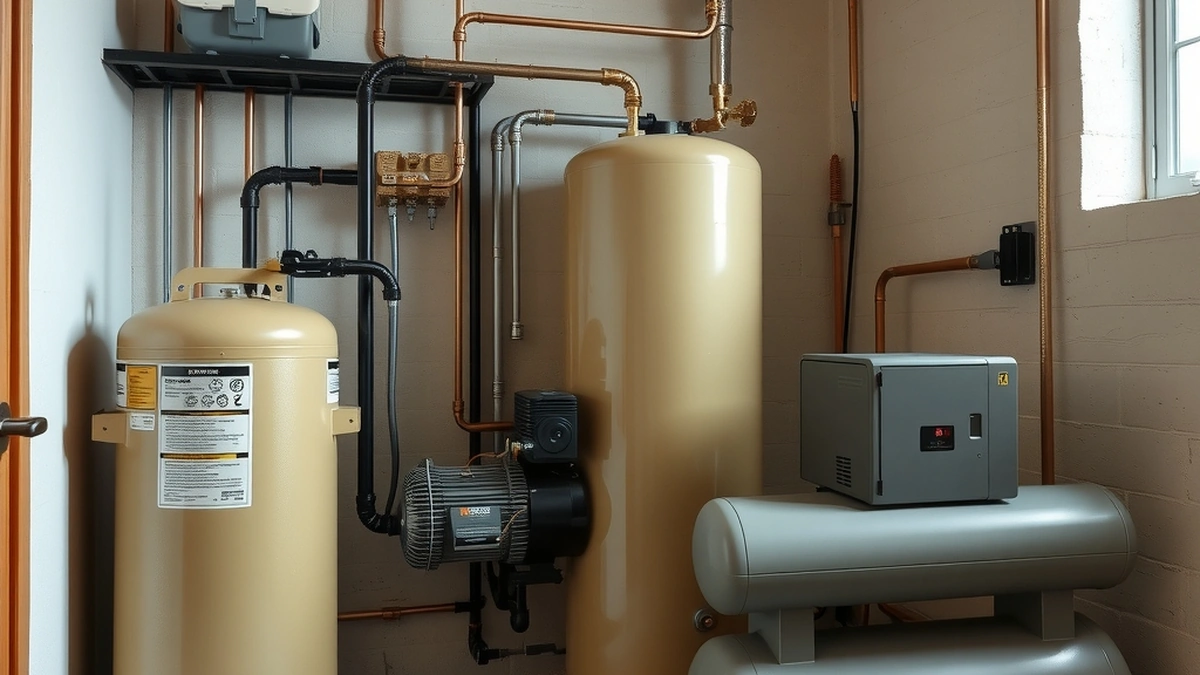
The compressor is a small diaphragm pump that pulls ambient air into the tank head. Its intake filter clogs with dust, and a clogged intake means no oxidation.
Check the intake every six months, replace the filter pad if discolored, and confirm the compressor runs during regeneration. Listen for the pump and feel for air at the vent.
The vent line must be clear. Kinks, ice, and insect nests are all common, and all produce the same symptom: the smell returns while the valve still cycles normally.
The air check valve at the tank inlet fails occasionally. It is a $20-$50 part, and replacing it restores air draw immediately.
Chemical oxidation service
A metering pump injects chlorine or hydrogen peroxide ahead of a contact tank. Maintenance is about the pump, not the media.
Check the solution tank monthly. A tank that empties faster than expected means a pump setting too high or a leaking injection fitting.
Replace the pump tubing annually. Tubing hardens and splits, and a split tube leaks oxidant onto the floor instead of into the water. That is $15-$40 and ten minutes.
Test residual oxidant monthly with a simple test kit. Too little and the sulfur passes; too much and the carbon downstream exhausts early.
When the well is the problem
Sulfur bacteria live in the well, not the filter. They produce the same smell and a slimy growth in toilet tanks, and no filter removes them permanently.
If the smell returns within days of a media change, or if the toilet tank grows slime, the well needs shock chlorination and possibly continuous disinfection. Hydrogen sulfide treatment explains the difference between the gas and the bacteria.
Iron usually accompanies sulfur, and iron fouling shortens media life. A combined iron and sulfur filter handles both, but the maintenance interval follows the higher load. Sulfur removal options compares the designs.
Cost over ten years
Two media changes at $450 is $900. Ten annual tests at $60 is $600. Twenty pre-filter cartridges at $15 is $300. Total: $1,800 over ten years, or $180 per year for a media system.
A chemical system adds $100 per year in oxidant and tubing, which brings the ten-year figure to roughly $2,800. That is the price of handing a higher sulfur load.
For the installation side, sulfur filter installation covers the vent and drain work. If the smell only appears after rain, well water smells after rain explains why the source may be the issue rather than the filter.
A yearly service routine
Once a year, work through the system from the well to the tap. It takes about an hour and catches most failures before they become a service call.
- Trigger a manual backwash and confirm drain flow and clarity.
- Check the vent termination for blockage, ice, or nests.
- Replace the metering pump tubing if the system uses chemical feed.
- Test hydrogen sulfide at a cold tap and compare to last year.
- Exercise the bypass valves and inspect the drain line for scale.
If the smell has returned at half the previous concentration, the bed is fading and media replacement is due within a year. If it has returned at full strength within weeks of a service, the well is reinfecting the system, and shock chlorinate well is the next step rather than another media change.
Frequently asked questions
How often does a sulfur filter need maintenance?
A monthly backwash check, a vent or chemical feed inspection every six months, and media replacement every 2-5 years. Hydrogen sulfide load drives the media interval.
How much does sulfur filter media replacement cost?
Two hundred fifty to seven hundred dollars installed, depending on tank size and whether the media is catalytic carbon or an oxidation blend.
Why does my sulfur filter stop removing the smell?
Usually an exhausted bed, a failed backwash, or a blocked vent on an air injection unit. Sulfur bacteria in the well can also reinfect the system faster than the filter can treat it.
Does a sulfur filter need a pre-filter?
A sediment pre-filter protects the valve and reduces backwash frequency. Change it every 3-6 months at $10-$30.
How often should a sulfur filter backwash?
Every 3-7 days depending on load. High hydrogen sulfide concentrations need more frequent cycles, and a filter that runs too long between backwashes will foul.
What maintenance does chemical oxidation need?
Check the solution tank level monthly, test residual oxidant, and replace the metering pump tubing annually. Tubing costs $15-$40 and is the most common failure point.
Sources
Some links are affiliate links.If you buy through them we may earn a commission at no extra cost to you. We do not accept payment for rankings. Read the full disclosure.