sulfur filter troubleshooting
Smell back, weak backwash, or air draw failing? Work through drain flow, vent, and media. See causes and $20-$700 fixes for sulfur filters.
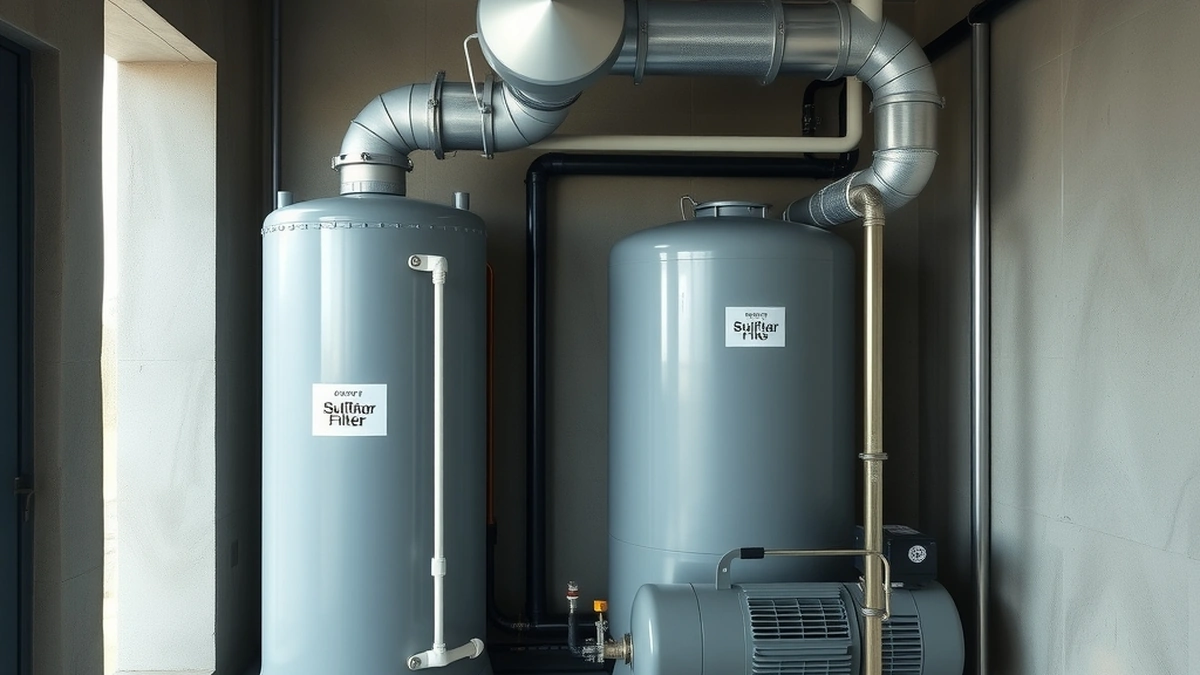
Sulfur smell returning usually means a failed backwash, a blocked vent, exhausted media, or sulfur bacteria in the well. Check drain flow and air draw first, then media age, then test the well.
- Media
- $250 - $700
- Vent check
- Every 6 months
- Drain flow
- 5 - 10 GPM
- Media life
- 2 - 5 years
- Typical repair
- $20 - $300
Some links on this page are affiliate links.If you buy through them we may earn a commission at no extra cost to you. We do not accept payment for rankings. Read the full disclosure.
A sulfur smell returning usually means a failed backwash, a blocked vent, exhausted media, or sulfur bacteria in the well. Check drain flow and air draw first. Those two checks cost nothing and explain most recurrences.
The smell has three possible sources
Hydrogen sulfide gas in the water, sulfur bacteria in the well, and a water heater producing its own sulfide are the three sources, and they need different fixes.
Gas alone is a treatment problem. Bacteria are a well problem first. A water heater with a magnesium anode rod can produce sulfide from sulfate, which shows up only in hot water.
Test cold water at a bypass tap. If the cold water smells, the problem is in the well or the filter. If only hot water smells, the heater is the source.
The symptom table
| Symptom | Likely cause | Fix |
|---|---|---|
| Smell returns gradually | Media exhausting | $250 - $700 |
| Smell returns suddenly | Vent or air draw failure | $10 - $80 |
| Smell only in hot water | Water heater anode | $50 - $200 |
| Weak backwash | Clogged drain or valve | $0 - $150 |
| Continuous drain flow | Valve stuck in backwash | $100 - $300 |
| Slime in toilet tank | Sulfur bacteria | $100 - $300 |
That last row is the one people miss. Slime means the well is reinfecting the system, and no filter media survives that indefinitely.
Diagnose in this order
- Test cold water at a bypass tap, then at a treated tap.
- Test hot water separately.
- Trigger a backwash and watch the drain.
- Check the vent termination for blockage.
- Check the air intake filter and compressor.
- Note the media install date.
If cold water at the bypass smells and treated water does not, the filter is working and the smell is coming from somewhere else.
Testing hot versus cold
Fill two glasses, one from the cold tap and one from the hot. Smell both after a minute.
Hot-only smell points to the water heater. Flushing the tank and replacing a magnesium anode with an aluminum one is the usual fix, at $50-$200.
Cold smell means the source. That is the filter’s job, and the diagnosis moves to the tank.
Air injection failures
The compressor pulls air into the tank head to oxidize the gas. If air stops, the filter passes sulfur while running normally.
Check the intake filter pad every six months. It clogs with dust and costs $10-$30 to replace.
Check the vent for kinks, ice, and nests. A blocked vent is common in winter and after insect season.
Check the check valve at the tank inlet, and confirm the compressor actually runs by listening during the cycle; a silent compressor with a live controller is usually a failed diaphragm. A failed valve lets water back into the air line, and the compressor runs without delivering air.
Media replacement
Media lasts two to five years depending on load. A 6 ppm well exhausts it faster than a 1 ppm well, and the difference shows up in the backwash frequency first.
Replacement runs $250-$700 installed. A 2-cubic-foot tank takes about two hours.
Do not top off old media. The bed stratifies and the fresh material does the work while the old fouls.
Chemical oxidation problems
A metering pump injects chlorine or peroxide ahead of a contact tank. If the smell returns, check the solution level first.
An empty tank is the simplest failure and the most common. Refill and run a manual cycle.
Check the injection tubing for cracks. Tubing hardens and splits, and a split line leaks onto the floor instead of into the water.
Test residual oxidant monthly. Too little and sulfur passes; too much and the carbon downstream exhausts early.
When the well is the source
Shock chlorination at $100-$300 is the first step when bacteria are present. Retest after five days.
If positives or odors recur, continuous disinfection at $600-$1,500 is the durable answer.
A compromised casing or grout lets surface water in, and no treatment equipment fixes that. A well contractor is the right call.
What a good backwash looks like
Trigger a manual cycle and stay for the whole thing. The drain should run hard at 5-10 GPM, the water should darken as the bed lifts, and the rinse should run clear within a minute or two.
A drain that starts clear and stays clear means the bed is not being disturbed. Either the flow is too low or the media has compacted into a mass that backwash cannot break.
A drain that runs hard but never darkens means the media has lost its capacity and is simply passing water. That is a replacement, not a cleaning.
Time the cycle. Most residential units run 10-15 minutes of backwash and 5-10 minutes of rinse. A cycle that finishes in three minutes is not cleaning anything.
Then test the water again after two full cycles. A filter that fixes the smell for a day and then fails is usually undersized for the load rather than broken. Sulfur filter cost covers what a larger tank would cost, and sulfur removal options compares the designs.
Prevention
Watch one backwash monthly. Check the vent and intake every six months. Test hydrogen sulfide annually. Keep a spare intake filter.
Write the media date on the tank so the replacement is planned rather than reactive, and note the hydrogen sulfide number from the last test beside it. Media life tracks that number more closely than the calendar. Sulfur filter maintenance covers the annual routine, and hydrogen sulfide treatment explains the chemistry. “”
Frequently asked questions
Why does the sulfur smell come back after treatment?
A failed backwash, a blocked vent on an air injection unit, exhausted media, or sulfur bacteria reinfecting the well. Check drain flow and air draw before replacing media.
How do I know if my sulfur filter is backwashing properly?
Watch a manual cycle. The drain should run at 5-10 GPM, the water should darken as the bed lifts, and the rinse should run clear.
Why is my air injection filter not drawing air?
A clogged intake filter, a blocked vent, or a failed check valve at the tank inlet. The intake filter is $10-$30 and the check valve $20-$50.
How long does sulfur filter media last?
Two to five years depending on hydrogen sulfide load. A 6 ppm well exhausts media faster than a 1 ppm well, and the difference is measured in years.
Can sulfur bacteria be fixed with a filter?
No. Bacteria live in the well, and a filter treats the water after it arrives. The well needs shock chlorination or continuous disinfection.
Why is my sulfur filter using so much water?
Backwash frequency set too high, or a valve stuck in backwash. Check the drain for constant flow when no cycle is running.
Sources
Some links are affiliate links.If you buy through them we may earn a commission at no extra cost to you. We do not accept payment for rankings. Read the full disclosure.