
Water Hardness Test Strips: Accuracy and Use
Hardness strips read 0-25 GPG in seconds and cost under $25. See how accurate they are, how to use them, and when a lab test is the better call.
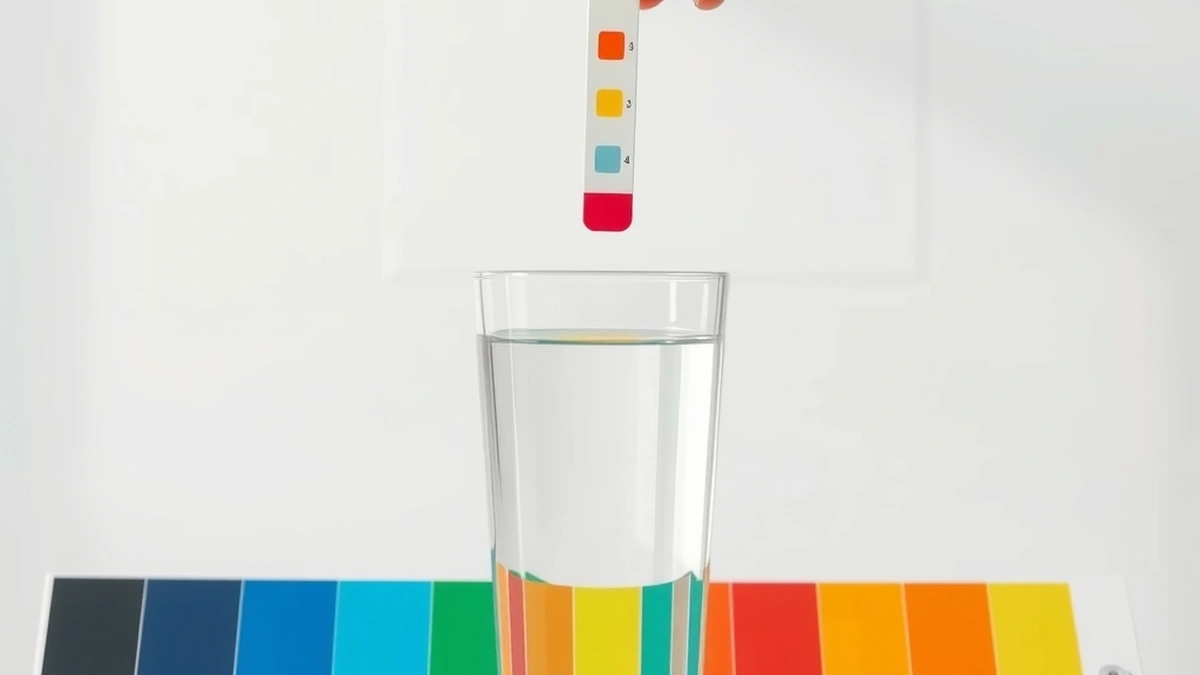
Water hardness test strips are dip-and-read indicators that report grains per gallon in about 30 seconds. They cost $10 - $25 for 25 - 100 strips and are accurate to roughly plus or minus 1 - 2 GPG, which is enough to screen but not to size a softener.
- Strip cost
- $10 - $25 per tube
- Read time
- 15 - 60 seconds
- Accuracy
- Plus or minus 1 - 2 GPG
- Typical range
- 0 - 25 GPG
- Lab panel
- $40 - $150
Some links on this page are affiliate links.If you buy through them we may earn a commission at no extra cost to you. We do not accept payment for rankings. Read the full disclosure.
Water hardness test strips are dip-and-read indicators that show calcium and magnesium concentration as a color change. They cost $10 - $25 for a tube of 25 - 100 strips, read in under a minute, and are accurate to roughly plus or minus 1 - 2 grains per gallon. That is enough to screen, not to size equipment.
How a Hardness Strip Works
A hardness strip carries a pad impregnated with a colorimetric reagent, usually a chelating dye that changes color as it binds calcium and magnesium ions. The more hardness in the sample, the more the pad shifts along a color scale.
The label provides a chart with blocks of color matched to grains per gallon. You dip, wait the stated time, and compare the pad to the chart. The reading is the block that matches most closely.
Strips are formulated for a range, commonly 0 - 25 GPG, with gradations at 0, 3, 7, 15, and 25 in simple versions, or finer steps in better ones. A 0 - 25 range covers everything from soft municipal water to very hard well water.
How Accurate They Really Are
The honest number is plus or minus 1 - 2 GPG. That is fine for answering “is this soft, hard, or very hard” and poor for answering “is this 11 or 13 GPG.”
Two things drive the error. Color matching is subjective, and the difference between adjacent blocks can be subtle. Strip degradation is the other: an expired tube or one left open in a humid bathroom gives readings that drift high or low.
For sizing a softener, a 2 GPG error matters. A household at 12 GPG and 300 gallons a day carries 3,600 grains daily. At 14 GPG the same household carries 4,200. That difference shifts the regeneration frequency and the capacity recommendation, which is why dealers ask for a lab number.
| Method | Cost | Accuracy | Best use |
|---|---|---|---|
| Test strip | $10 - $25 | Plus or minus 1 - 2 GPG | Quick screen |
| Drop titration kit | $20 - $60 | About 1 GPG | Repeatable home testing |
| Digital photometer | $50 - $150 | About 0.5 - 1 GPG | Frequent testing |
| Lab panel | $40 - $150 | Laboratory grade | Sizing and safety |
Using a Strip Correctly
- Collect a sample in a clean glass and let it reach room temperature.
- Dip the strip for the time stated on the label, usually one second.
- Shake off excess water rather than blotting, unless the instructions say otherwise.
- Wait the full development time; reading early gives a low result.
- Match the pad to the chart in natural daylight, not under a colored lamp.
- Record the reading with the date and the tap it came from.
Sample from the cold tap, and bypass any softener. Water from a softened line will read near zero and tell you nothing about the raw supply. If you want to verify that a softener is working, sample before and after the unit and compare.
What Strips Cannot Tell You
A hardness strip reports one parameter. It says nothing about iron, manganese, pH, nitrate, arsenic, lead, bacteria, or PFAS.
That matters because hardness is rarely the only issue in well water. Iron above 2 - 3 PPM changes the treatment plan, and a softener alone will foul. Nitrate above 10 mg/L needs reverse osmosis at the tap. Bacteria need disinfection, not softening.
A $40 - $150 lab panel covers the safety parameters and the chemistry that drives equipment selection. Use the strip to decide whether to order the panel, not to replace it. For the annual testing schedule, see water tests for wells.
When a Strip Is the Right Tool
Strips earn their place in three situations. The first is a quick check before a service call, so you know whether hardness is even plausible. The second is monitoring a softener over time, where a consistent method matters more than absolute accuracy. The third is screening a new home or a rental before committing to a test budget.
They are also useful for verifying a regeneration cycle. Sample the softener outlet right after a regeneration and again a few days later. A jump from 0 to 4 GPG suggests the resin is exhausted or the brine draw is failing.
Storage matters more than most buyers expect. Keep the tube capped and dry, and check the expiration date before trusting a reading. A strip that has sat open in a humid laundry room for a year will read high on soft water and send you shopping for a softener you do not need.
From Reading to Decision
A strip reading under 3 GPG means soft water. No treatment is justified for hardness, and any scale you see is coming from something else, such as a water heater running too hot.
A reading of 3 - 7 GPG is moderately hard. Cleaning habits may be enough, and a softener is a judgment call based on how much the symptoms bother you.
A reading of 7 GPG or higher justifies a lab test and a softener quote. Installed cost is $1,200 - $4,500, salt runs $120 - $400 a year, and resin lasts 8 - 12 years with a rebed at $300 - $600.
A reading above 15 GPG is very hard and usually means visible scale within weeks of cleaning. Confirm with a lab before buying, then size the unit by grains per gallon times daily gallons.
For the sizing math, see water softener sizing and water softener grain capacity. For the treatment options, see how to treat hard water. For a comparison of test kits, see hard water test kit.
Frequently asked questions
How accurate are hardness test strips?
They are typically accurate to plus or minus 1-2 grains per gallon, which is fine for screening but too coarse for sizing a softener precisely.
How do I read a hardness test strip?
Dip the strip in the sample for one second, shake off excess, wait the time stated on the label, then match the pad color to the chart within the window.
Do test strips detect iron and bacteria?
Some multi-parameter strips include iron or pH, but strips cannot test for bacteria, nitrate, arsenic, or lead. Those need a laboratory.
Can I use a strip to size a softener?
Use it to decide whether to test further. Sizing needs a lab number plus daily water use, because the grain capacity calculation depends on both.
Why do two strips give different readings?
Color matching is subjective, and strips degrade with humidity. Read in good light, use an unexpired tube, and average two or three strips if the results disagree.
Are digital hardness testers better?
A digital photometer removes the color-matching guesswork and costs $50-$150. It is more consistent than strips but still less comprehensive than a lab panel.
Sources
Some links are affiliate links.If you buy through them we may earn a commission at no extra cost to you. We do not accept payment for rankings. Read the full disclosure.


