How Much Electricity a Softener Uses
Typical residential water softener electricity consumption, cost per year, and what drives the numbers.
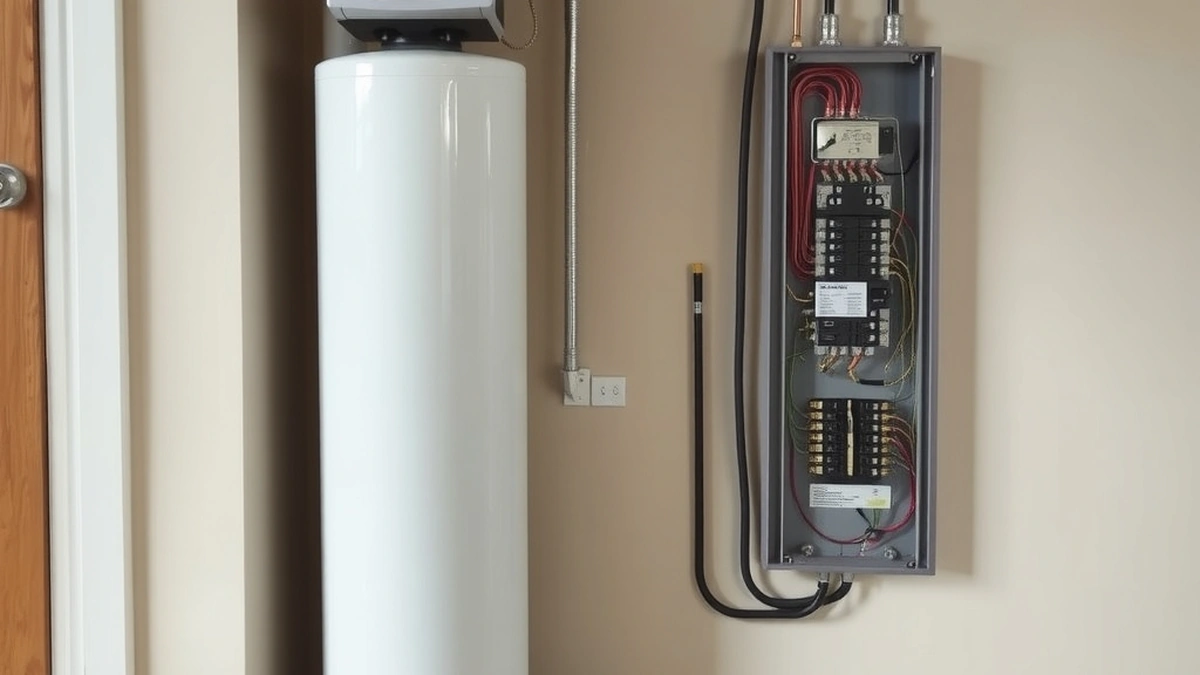
A standard residential softener typically uses about 20 to 50 kWh per year, costing roughly $3 to $8 annually at average U.S. electricity rates.
- Typical annual electricity use
- 20-50 kWh
- Typical annual electricity cost
- $3-$8
- Control valve power draw
- 5-15 watts
- Regeneration frequency
- Every 2-14 days
- Equipment cost range
- $600-$2,500
Some links on this page are affiliate links.If you buy through them we may earn a commission at no extra cost to you. We do not accept payment for rankings. Read the full disclosure.
A typical residential water softener uses very little electricity. Most units draw only enough power to run the control valve timer and the small motor that moves the valve during regeneration. Across a full year, that usually adds up to roughly 20 to 50 kilowatt-hours (kWh), or about $3 to $8 at average U.S. residential electricity rates.
Electricity is one of the smallest operating costs for a softener. Salt, water used during regeneration, and eventual resin replacement generally cost more over the life of the system. Before buying any equipment, Water Treatment Pro recommends starting with a water test to confirm hardness and iron levels, then sizing the softener to match actual water use.
What Uses Electricity in a Softener
A standard ion-exchange softener has two main electrical components:
- Control valve timer or meter – Keeps time or tracks water flow to determine when regeneration is needed.
- Valve motor – Rotates the valve to direct water through backwash, brine draw, rinse, and return-to-service steps.
The electronics typically draw about 5 to 15 watts while idle. The motor draws more during regeneration, but each regeneration cycle lasts only a couple of hours and may happen anywhere from every few days to every two weeks, depending on household water use and softener capacity.
Typical Annual Electricity Use
Estimates vary by unit size, control valve efficiency, and regeneration frequency. A reasonable planning range for a standard residential softener is:
| Item | Estimate |
|---|---|
| Annual electricity use | 20-50 kWh |
| Annual electricity cost | $3-$8 |
| Idle power draw | 5-15 watts |
| Regeneration cycles per year | 25-180 |
To show the arithmetic, assume a softener uses 40 kWh per year and electricity costs $0.16 per kWh:
40 kWh × $0.16/kWh = $6.40 per year
If the same home has a larger softener that regenerates more often and uses 60 kWh per year:
60 kWh × $0.16/kWh = $9.60 per year
Even at the high end, electricity remains a minor line item compared with salt and water.
How Regeneration Frequency Affects Power
Regeneration is the main event that uses electricity. A softener regenerates based on either a timer or a water meter. Metered units usually use less power overall because they regenerate only when needed, while timer units may regenerate on a fixed schedule whether the resin is exhausted or not.
Assume a household uses 300 gallons per day with water hardness of 10 grains per gallon (gpg):
300 gallons/day × 10 gpg = 3,000 grains/day
A 32,000-grain softener would theoretically run about:
32,000 grains ÷ 3,000 grains/day ≈ 10.7 days between regenerations
That is roughly 34 regenerations per year. If each regeneration cycle uses about 1 kWh of electricity for the motor and controls:
34 cycles × 1 kWh = 34 kWh per year
At $0.16 per kWh:
34 kWh × $0.16/kWh = $5.44 per year
Higher hardness or higher water use means more frequent regeneration and slightly more electricity, but the total cost still stays in the single digits for most homes.
Electricity Compared With Other Operating Costs
Electricity is only one part of what a softener costs to run. Salt is usually the largest recurring expense, followed by water used during regeneration. Resin replacement happens less often but can be a significant cost.
Typical annual ranges for a residential softener:
- Electricity: $3-$8
- Salt: $120-$400
- Water for regeneration: varies by local sewer and water rates
- Resin rebed (every 8-12 years): $300-$600
Over a 10- to 15-year softener life, electricity might total $30 to $120. Salt over the same period could easily run $1,200 to $6,000. When comparing models, efficiency in salt and water use matters more than electricity use.
For context on total ownership, see the breakdown at how much does a water softener cost and water softener installation cost. Salt costs are detailed at water softener salt cost.
Timer vs. Metered Controls
Timer-controlled softeners regenerate on a fixed calendar schedule. A meter-controlled softener regenerates after a set volume of water has passed through. Metered units often save salt, water, and a small amount of electricity because they avoid unnecessary regenerations.
If a timer unit regenerates every 3 days regardless of use:
365 days ÷ 3 = 122 regenerations per year
A metered unit in the same home might regenerate only 40 to 60 times per year. At 1 kWh per cycle, the difference could be 60 to 80 kWh annually, or roughly $10 to $13 at $0.16 per kWh. That is not enough to justify buying a metered unit on electricity alone, but it is part of the efficiency picture.
Does Softener Size Change Electricity Use?
Softener capacity is measured in grains, commonly 24,000 to 64,000 grains for residential units. A larger softener can hold more resin and go longer between regenerations, but each regeneration may use more brine and take slightly longer. The electrical difference between sizes is small compared with the difference in salt use and upfront cost.
Equipment typically ranges from $600 to $2,500, with installed costs from $1,200 to $4,500. Choosing the right size depends on tested hardness, household water use, and iron levels—not on electricity savings.
Salt-Free Conditioners and Electricity
Salt-free conditioners do not use ion exchange and do not require regeneration. Some use no electricity at all, while others use a small amount for a control display or flow sensor. These devices are not softeners and do not remove hardness minerals in the same way. If electricity use is the only concern, a salt-free conditioner may draw less power, but it is a different technology with different performance characteristics.
For whole-house alternatives, see whole-house water filter cost.
Bottom Line
A residential water softener typically uses 20 to 50 kWh of electricity per year, costing about $3 to $8 at average U.S. rates. Regeneration frequency, control type, and household water use drive the variation, but electricity is a minor operating cost compared with salt, water, and resin replacement. Test your water first, size the equipment to your actual demand, and treat electricity as a background expense rather than a deciding factor.
For related equipment costs, see reverse osmosis system cost and whole-house water filter cost.
Frequently asked questions
Does a softener use much electricity?
No. Most residential softeners use only a small amount of power to run the control valve timer and motor during regeneration.
How many kWh does a softener use per year?
A typical unit uses roughly 20 to 50 kWh annually, depending on regeneration frequency and control valve type.
What is the yearly electricity cost for a softener?
At average U.S. residential rates, expect about $3 to $8 per year in electricity costs.
Does regeneration use more electricity?
Yes. The motor and valve consume power during the regeneration cycle, but each cycle is short and infrequent.
Do salt-free conditioners use electricity?
Many salt-free conditioners use little or no electricity, but they do not soften water in the same way as ion-exchange softeners.
Should electricity cost factor into softener buying decisions?
It is a minor operating cost compared with salt, water, and potential resin replacement over the system life.
Sources
Some links are affiliate links.If you buy through them we may earn a commission at no extra cost to you. We do not accept payment for rankings. Read the full disclosure.