
Waterdrop Reverse Osmosis: Lineup, Cost, Filters
Waterdrop sells under-sink, tankless, and countertop RO systems from $200 to $800. See how the categories differ and what filters cost per year.
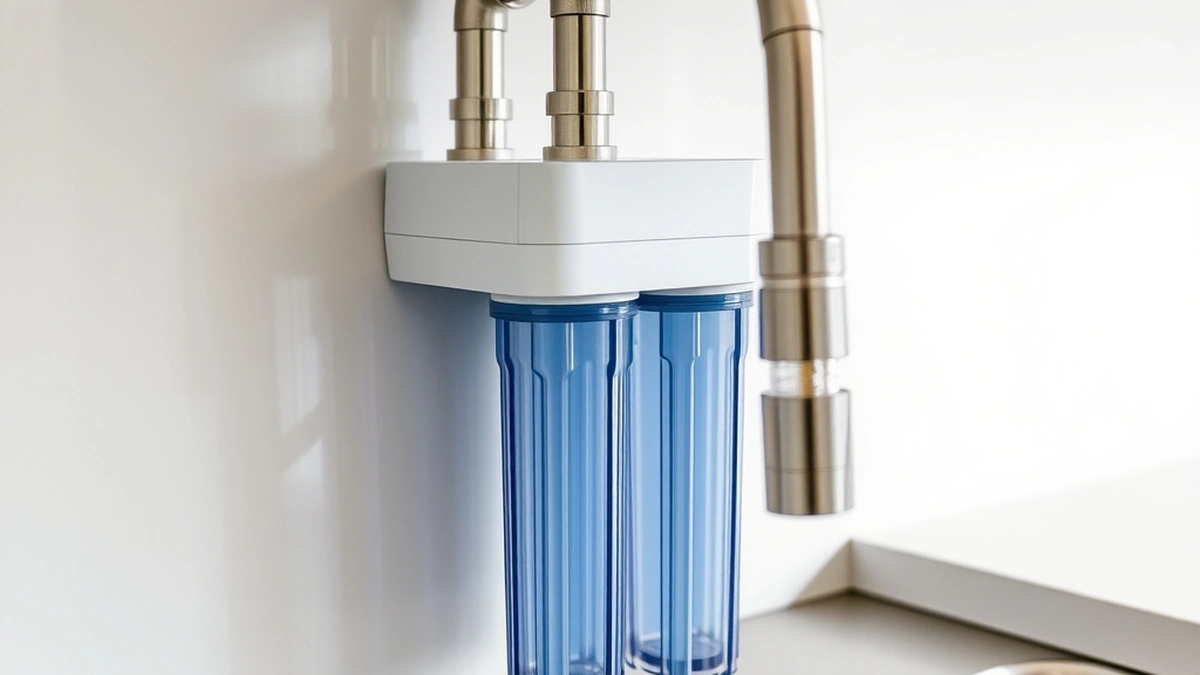
Waterdrop reverse osmosis systems cover under-sink, tankless, and countertop formats priced roughly $200 - $800. Filters run $50 - $150 a year, and the brand's units are widely sold online, so check the NSF listing number for the specific model before buying.
- Unit price range
- $200 - $800
- Filter cost per year
- $50 - $150
- Formats
- Under-sink, tankless, countertop
- Membrane life
- 2 - 3 years
- Warranty
- 1 - 3 years by model
Some links on this page are affiliate links.If you buy through them we may earn a commission at no extra cost to you. We do not accept payment for rankings. Read the full disclosure.
Waterdrop reverse osmosis systems are sold direct online in three formats: under-sink units with a storage tank, tankless units that filter on demand, and countertop models that need no plumbing. Prices run roughly $200 - $800, and replacement filters cost $50 - $150 a year depending on the cartridge design.
The Three Formats
Waterdrop’s under-sink line is the broadest. These are four- to six-stage systems with a pressure tank, a dedicated faucet, and cartridges that twist out for replacement. Prices cluster at $200 - $500, which puts them at the low end of the under-sink market.
The tankless line uses a booster pump and a higher-flow membrane, with no storage tank. Units run $400 - $800 and deliver water on demand at roughly 0.5 - 1 gallon per minute. They need an outlet and 40 - 80 PSI at the inlet.
The countertop line is the plug-in category: a self-contained unit that fills from a pitcher or a faucet diverter and needs no drain. Prices run $250 - $600. Production is lower than the under-sink units, and the inlet tank needs refilling.
The lineup also includes pitcher and faucet filters that are not RO at all. Do not confuse them with the RO systems when comparing prices.
What the Money Buys
| Format | Price | Production | Plumbing | Best for |
|---|---|---|---|---|
| Under-sink, tank | $200 - $500 | 50 - 100 GPD | Supply and drain | Owned homes |
| Tankless | $400 - $800 | 400 - 800 GPD | Supply and drain, outlet | Tight cabinets |
| Countertop | $250 - $600 | 50 - 100 GPD | None | Renters |
At the low end, the under-sink units compete directly with retail systems from other brands at similar prices. The differences are in cartridge design, warranty length, and whether the model carries an NSF listing.
At the top end, the tankless units cost as much as a dealer-installed generic system. The comparison there is not brand against brand but convenience against service: a $700 tankless unit you install yourself versus a $1,200 - $2,500 dealer install with a local warranty.
Filter Costs and Cartridge Design
Filters are the number that decides long-term value. A four-stage under-sink unit typically needs a sediment and carbon set every 6 - 12 months and a membrane every 2 - 3 years.
Annual filter cost lands at $50 - $150. The spread comes from cartridge design: a system using a single combined filter block is cheaper to maintain than one using four separate proprietary cartridges.
Before buying, price a full replacement set. If the set costs $120 and the unit costs $250, you are buying a $250 housing with a $120 annual subscription. That can still be a good deal, but it should be a conscious one.
Membrane life is 2 - 3 years on paper. Hard water, high sediment, and unchlorinated well water all shorten it. A softener or sediment filter ahead of the RO is cheaper than replacing membranes early.
Verifying the Certification
Reverse osmosis claims are easy to make and hard to check, so use the NSF database rather than the product page. Search the manufacturer name and look for the specific model number.
A legitimate listing names the standard. NSF/ANSI 58 covers reverse osmosis systems and their contaminant reduction claims. NSF/ANSI 42 covers taste and odor. NSF/ANSI 53 covers a list of specific contaminants. NSF/ANSI 372 covers lead content in the materials, which is a plumbing safety standard, not a filtration claim.
If a listing exists for a similar model but not the exact one, treat the claim as unverified. Certification is granted per system configuration, and a cartridge change can void it.
Installing an Under-Sink Unit
- Shut off the cold water supply and open the faucet to drain the line.
- Mount the faucet in an existing hole or drill one with a hole saw; some units include a counter adapter.
- Connect the feed line to the cold supply with the included saddle valve or a proper shutoff tee.
- Route the reject line to the drain with an air gap or check valve as the manual requires.
- Set the tank in place, connect it, and open the supply.
- Flush 5 - 10 minutes, then discard the first tank of water.
Push-fit connections are reliable when the tube is cut square and pushed fully home. A tube that stops short will weep. Cut with a proper tube cutter, not a knife.
Servicing and Support
Waterdrop sells replacement cartridges directly, which is convenient but also means the brand controls the price. Warranty terms range from one to three years by model, and claims usually run through the retailer.
Keep the order confirmation and the model number. A warranty claim without proof of purchase is often refused, and model numbers change frequently as the lineup turns over.
If a unit fails, the common culprits are a clogged prefilter, a failed booster pump, or a leaking push-fit connection. Change the prefilters first, then check pressure at the tank. A pump that runs constantly with no production is usually a sign of a bad check valve or a spent membrane.
Who Should Buy One
Buy Waterdrop if you want a low-cost under-sink RO, you are comfortable with a self-install, and you have priced the replacement filters. The online pricing is competitive and the formats cover most kitchen layouts.
Look elsewhere if you want dealer service, if the model you are considering lacks an NSF listing for its exact configuration, or if the annual filter set costs more than a third of the unit price. Those are the cases where a different brand or a service contract makes more sense.
For the underlying technology, see how reverse osmosis works. For the competing online brand, see iSpring vs Waterdrop. For annual costs across the category, see reverse osmosis system cost, and for maintenance timing, reverse osmosis maintenance.
Frequently asked questions
Is Waterdrop a reliable RO brand?
It is a high-volume online brand with a broad lineup. Reliability varies by model, so check the NSF listing, the warranty term, and the replacement filter price before buying.
How much do Waterdrop filters cost?
Most replacement sets run $50-$150 per year depending on the model. Proprietary cartridges sit at the top of that range and standard designs at the bottom.
Do Waterdrop systems carry NSF certification?
Many models are listed to NSF/ANSI standards 42, 53, 58, or 372. Certification is model-specific, so verify the listing number on the NSF database rather than the product page.
Where are Waterdrop RO systems made?
The company manufactures in China and sells globally. That is common across the category and does not by itself indicate quality; the listing and warranty matter more.
Can I install a Waterdrop under-sink RO myself?
Yes. Most models use push-fit connections and a drill-free faucet adapter, and installation takes about an hour for a homeowner with basic tools.
How long does a Waterdrop RO membrane last?
Typically 2-3 years, depending on feed water quality and volume. Hard or sediment-heavy water shortens membrane life and warrants a prefilter ahead of the unit.
Sources
Some links are affiliate links.If you buy through them we may earn a commission at no extra cost to you. We do not accept payment for rankings. Read the full disclosure.


