
Zero water filter
ZeroWater pitchers use ion exchange plus carbon to cut dissolved solids to near zero. See what that means, what it costs, and when it is overkill.
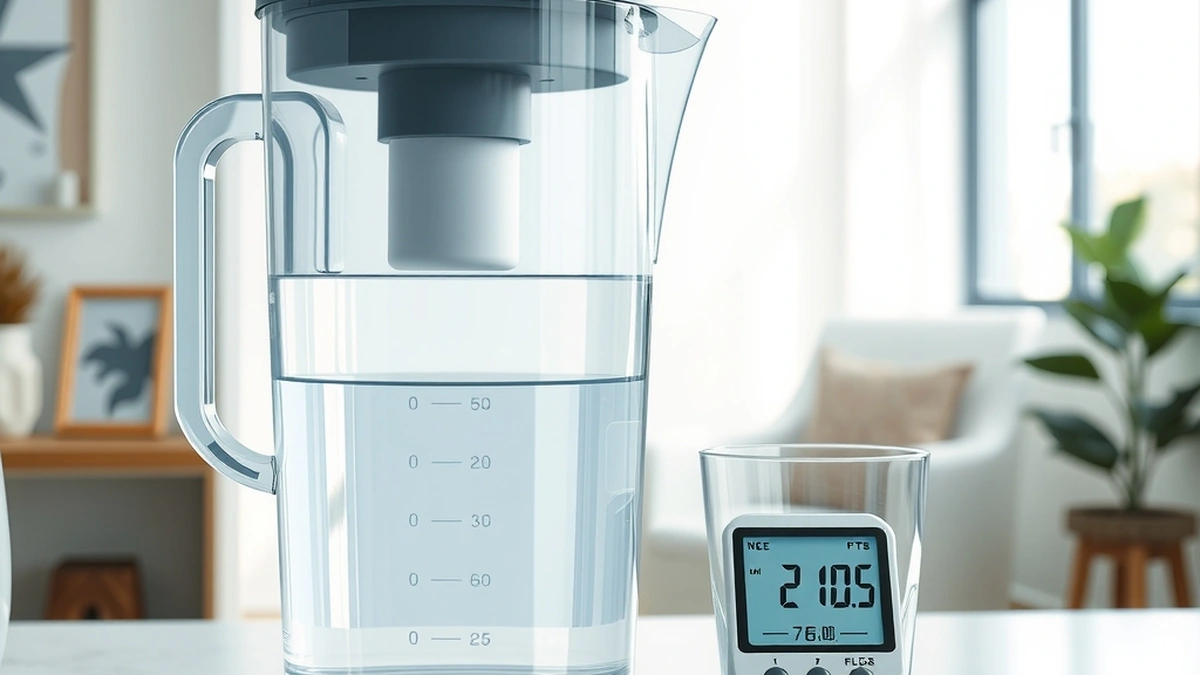
ZeroWater pitchers combine carbon and ion exchange resin to reduce total dissolved solids to near zero, which no standard pitcher does. Cartridges cost more and exhaust faster, at roughly $0.40 to $0.60 per gallon, so the format suits low-volume users with a TDS complaint.
- Pitcher cost
- $30 - $60
- Cartridge
- $15 - $25
- Cost per gallon
- $0.40 - $0.60
- Cartridge volume
- About 25 - 40 gallons
- Includes TDS meter
- On most models
Some links on this page are affiliate links.If you buy through them we may earn a commission at no extra cost to you. We do not accept payment for rankings. Read the full disclosure.
A ZeroWater pitcher is a carbon and ion exchange filter that reduces total dissolved solids to near zero. Standard pitchers remove chlorine and leave the minerals; this one removes both. That difference is real, and it comes with a cartridge that costs several times as much per gallon.
What the Filter Does
The cartridge contains activated carbon and a bed of mixed ion exchange resin. Carbon handles chlorine and organics; the resin exchanges dissolved ions for hydrogen and hydroxide, which combine into water.
The result is water with very low TDS. A pitcher that starts with tap water at 250 ppm can produce water reading 0 to 10 ppm, which is why the product ships with a TDS meter.
| Measurement | Tap water | Standard pitcher | ZeroWater |
|---|---|---|---|
| TDS | 200 - 400 ppm | 180 - 380 ppm | 0 - 20 ppm |
| Chlorine | Present | Removed | Removed |
| Hardness | Unchanged | Unchanged | Reduced |
| Nitrate | Present | Unchanged | Partly reduced |
The nitrate row is not a guarantee. Ion exchange can reduce some nitrate, but a pitcher is not a certified nitrate treatment, and a well reading near 10 mg/L needs reverse osmosis.
The Cost per Gallon
This is where the format earns or loses its case.
| Item | Cost | Volume | Per gallon |
|---|---|---|---|
| ZeroWater cartridge | $15 - $25 | 25 - 40 gal | $0.40 - $0.60 |
| Standard pitcher cartridge | $6 - $20 | 40 gal | $0.15 - $0.50 |
| Under-sink RO | $60 - $150/yr | 700+ gal | $0.15 - $0.40 |
| Bottled water | $1.00 | 1 gal | $1.00 |
A household using 2 gallons a day would need 18 to 29 cartridges a year at $15 to $25 each, or $270 to $725. That is more than an under-sink RO system costs to run.
The cartridge life depends on the feed TDS. At 400 ppm, a cartridge may treat 25 gallons; at 120 ppm, closer to 40. Hard water and high TDS both shorten it.
When It Makes Sense
It makes sense in a narrow set of cases.
Low volume. One or two people drinking a quart or two a day. At that rate, the annual cartridge cost is $60 to $150, which is tolerable.
A TDS complaint with no better option. A renter who cannot install plumbing and wants low-solids water has few alternatives.
A specific use. Some coffee and espresso enthusiasts prefer low-TDS water for brewing, and a pitcher is a simple way to get it.
A backup. A pitcher in the fridge alongside an under-sink system is a reasonable convenience, not a primary treatment.
When It Does Not
It does not make sense for a family of four drinking 2 gallons a day. The cartridge cost exceeds an RO system’s running cost, and the refill frequency becomes a chore.
It does not make sense as a softener substitute. Reducing hardness one pitcher at a time does nothing for the water heater, the shower, or the laundry.
It does not make sense for nitrate or bacteria. A pitcher is not a certified treatment for either, and a positive bacteria test needs shock chlorination and UV.
It also does not make sense if the water is very hard. Ion exchange resin in a pitcher exhausts in proportion to the load, so 20 GPG water may kill a cartridge in a week. That is an expensive way to learn the house needs a softener.
Five Steps to Decide
- Measure your TDS with an inexpensive meter before buying.
- Count daily drinking water in gallons.
- Calculate annual cartridge cost from the rated volume at your TDS.
- Compare with an under-sink RO at $300 to $900 installed.
- Decide whether the format’s convenience outweighs the running cost.
What the TDS Number Means
Total dissolved solids is a sum, not an identity. A reading of 300 ppm tells you there are 300 milligrams of dissolved material per litre, not what that material is. It could be calcium and magnesium, sodium, nitrate, or a mix.
That is why a TDS meter is a useful trend tool and a poor diagnostic. A cartridge that stops lowering the number is exhausted. A feed reading that climbs over a year may mean the source changed. Neither tells you whether the water is safe.
For safety, use a lab panel at $40 to $150. For cartridge management, use the meter. Confusing the two is how households end up reassured by a low TDS number while a nitrate problem goes untested.
Living With One
Change the cartridge when the TDS reading stops dropping, not when the light says so. The included meter is the useful indicator.
Rinse the reservoir weekly. Low-TDS water in a plastic pitcher still grows biofilm, and the lack of chlorine means nothing is inhibiting it.
Store the pitcher in the fridge and drink the water within a couple of days. Low-mineral water tastes flat to some people, which is a preference rather than a defect.
If the water tastes metallic after a cartridge change, flush a full reservoir before drinking. Resin fines are harmless but unpleasant.
The Honest Comparison
ZeroWater solves a problem most households do not have. If the complaint is chlorine taste, a $30 standard pitcher or a $150 under-sink carbon filter does the job for less. If the complaint is dissolved solids, an under-sink RO does it better and cheaper per gallon over a year.
The pitcher’s real advantage is that it requires no installation and no plumbing, which matters for renters and for anyone who wants filtered water without a project.
For the standard pitcher comparison, see water filter pitcher reviews and best water filter pitcher. For the dissolved-solids treatment that scales, reverse osmosis covers the membrane process, and bottled water versus a filter works the cost comparison.
Frequently asked questions
What makes ZeroWater different from other pitchers?
It uses a mixed ion exchange resin in addition to carbon, which removes dissolved solids as well as chlorine, so a TDS meter reads near zero instead of the same as tap water.
How much does a ZeroWater filter cost per gallon?
Cartridges run $15 to $25 and treat about 25 to 40 gallons, which works out to roughly $0.40 to $0.60 per gallon, several times the cost of a standard carbon pitcher.
Why do ZeroWater cartridges wear out so fast?
The ion exchange resin has a limited capacity and exhausts in proportion to the dissolved solids in the feed water, so harder or higher-TDS water shortens cartridge life.
Does ZeroWater remove hardness?
It reduces hardness along with other dissolved solids, but it does so at one pitcher at a time, which is not a practical substitute for a softener in a whole house.
Is zero TDS water safe to drink?
Yes, the water is safe; it lacks dissolved minerals, and the minerals in drinking water are a small part of dietary intake, so the concern is taste rather than safety.
Do I need a TDS meter with a ZeroWater pitcher?
Most models include one, and it is useful because cartridge exhaustion tracks TDS rather than gallons; a reading that stops dropping means the cartridge is spent.
Sources
Some links are affiliate links.If you buy through them we may earn a commission at no extra cost to you. We do not accept payment for rankings. Read the full disclosure.


