
Rhino Well Water Whole House Filter: What It Handles
A Rhino whole-house filter is a carbon and sediment system, not a softener. See what it removes from well water, what it misses, and the install cost.
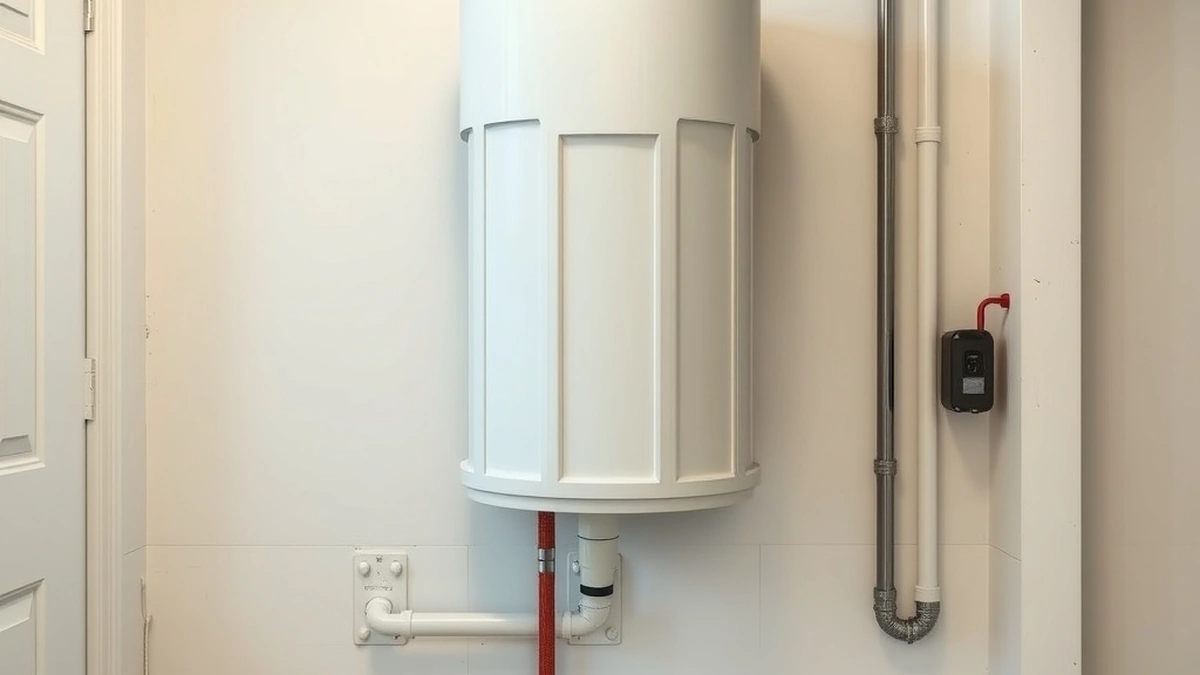
A Rhino whole-house filter is a carbon and sediment system that reduces chlorine, taste, odor, and grit at every tap. It does not remove hardness, iron, or bacteria, so well water usually needs a sediment prefilter, iron treatment, or softener ahead of it.
- System price
- $700 - $2,500
- Installed
- $1,000 - $3,000
- Flow rate
- 8 - 15 GPM
- Removes hardness
- No
- Cartridge life
- 6 - 12 months or 3 - 5 years
Some links on this page are affiliate links.If you buy through them we may earn a commission at no extra cost to you. We do not accept payment for rankings. Read the full disclosure.
A Rhino whole-house filter is a point-of-entry carbon and sediment system installed where the water line enters the house. It reduces chlorine, taste, odor, and grit at every tap. It does not remove hardness, iron, or bacteria, which is the limit that matters most for well water.
What the System Is
A Rhino filter is a whole-house carbon filtration system, sold as a tank or a cartridge housing depending on the model. Water passes through sediment media and activated carbon before it reaches the plumbing.
The sediment stage catches sand, rust, and pipe debris. The carbon stage adsorbs chlorine, organic compounds, and the taste and odor notes those carry. Some models add a scale-control media that alters crystal behavior, which is not the same as softening.
Flow rating is 8 - 15 GPM, which suits a typical 3 - 4 bedroom house. The unit installs on the main line after the pressure tank or meter, with a bypass valve so the house can be served while the filter is serviced.
What It Removes, and What It Does Not
| Parameter | Rhino carbon filter | Needs a different stage |
|---|---|---|
| Chlorine | Yes | Not applicable |
| Sediment | Yes | Backwashing filter for heavy loads |
| Taste and odor | Partial | Oxidation for sulfur |
| Hardness | No | Softener or conditioner |
| Iron | No | Iron filter |
| Manganese | No | Oxidizing filter |
| Bacteria | No | UV or chlorination |
| Nitrate | No | Reverse osmosis |
| Arsenic | No | Adsorptive media or RO |
The pattern is clear: carbon handles aesthetics and chlorine, not chemistry. A well with 8 PPM iron will clog a carbon bed in months, because the iron oxidizes and coats the media. That is why well water systems put pretreatment ahead of carbon, not behind it.
Well Water Needs a Train
Raw well water usually carries more than carbon can address. The standard sequence is sediment, then iron or sulfur treatment, then softening, then carbon, then UV if bacteria are a concern.
A Rhino filter fits at the carbon position. It does not replace the sediment prefilter, the iron filter, or the softener. Buying it as a standalone well water solution usually leads to a second purchase within a year.
The cost arithmetic for a real train: sediment filter $150 - $600, iron filter $800 - $2,500, softener $1,200 - $4,500, and a carbon filter $500 - $1,800. Total installed is $2,650 - $9,400, depending on how many problems the lab report shows.
Installation and Cost
A Rhino system sells for $700 - $2,500 depending on size and model. Professional installation adds $300 - $800 for the bypass, fittings, and mounting, for an installed range of $1,000 - $3,000.
That is a significant investment for a device that does not address hardness or iron. Before buying, ask what problem the filter solves. If the answer is chlorine taste in municipal water, the price is reasonable. If the answer is “well water,” the filter is one stage of several.
Installation requires a bypass loop, a drain for backwashing models, and enough space for the tank. A backwashing unit needs a drain and a power outlet; a cartridge unit needs clearance to change housings.
Cartridge and Media Life
Cartridge systems change every 6 - 12 months, at $80 - $300 a year. Tank systems use granular carbon or catalytic media rated for 3 - 5 years or a stated gallon capacity, and the media replacement costs more when it comes due.
Chlorine capacity is the limiting factor in municipal water. A carbon bed treats a fixed number of gallons before the media is exhausted, and the rating assumes a chlorine concentration. Higher chlorine shortens life.
In well water, iron and sediment are the limiting factors. A carbon bed that sees 3 PPM iron will exhaust long before its gallon rating, which is why the prefilter and iron filter come first.
Maintenance That Protects the Investment
- Test the raw water before specifying the system, and test again after installation.
- Change sediment cartridges every 3 - 6 months and carbon every 6 - 12 months.
- Backwash a tank-style unit on the schedule the manufacturer specifies, not when you remember.
- Sanitize the housing and lines annually if the water is unchlorinated.
- Watch for pressure drop across the filter; a 10 PSI loss means it is loading up.
- Keep a log of cartridge dates and part numbers.
Pressure drop is the most useful diagnostic. A filter that starts at 2 PSI and climbs to 12 PSI is loaded. A filter that reads high immediately after a change may have an undersized housing for the flow.
Water testing after installation is what proves the system works. A $40 - $150 lab panel taken after the filter tells you whether taste improvements match the numbers, and it catches a bypass valve left partly open during service. Test annually for bacteria and nitrate if the supply is a private well.
When a Rhino Filter Makes Sense
It makes sense for municipal water with a chlorine taste, for a house that wants whole-house sediment and carbon without a backwashing drain, and as the final polishing stage in a well water train after iron and hardness are handled.
It does not make sense as the only treatment on well water with iron, sulfur, hardness, or bacteria. Those problems need their own stages, and carbon will not substitute.
For the whole-house category, see best whole house water filter and whole house water filter cost. For the well-specific version, see best well water filter and well water purification system. If hardness is the main issue, whole house water softener for hard water covers that path.
Frequently asked questions
Does a Rhino filter soften water?
No. It filters sediment, chlorine, taste, and odor through carbon media. Hardness minerals pass through, so scale and soap scum continue unless a softener is added.
Can a Rhino system handle well water?
It can filter sediment and taste, but raw well water with iron, sulfur, or bacteria needs pretreatment. Carbon alone will foul quickly on high-iron water.
How much does a Rhino whole-house filter cost?
Systems typically sell for $700-$2,500, and professional installation adds $300-$800, for an installed range of roughly $1,000-$3,000.
How often do the filters need changing?
Sediment and carbon stages usually change every 6-12 months, while some tank-style systems use media rated for 3-5 years or a stated gallon capacity.
Does it remove iron from well water?
No, not in a meaningful way. Iron needs oxidation and a backwashing filter. Carbon filters can become fouled by iron and lose capacity quickly.
Will it improve the taste of well water?
It can reduce earthy or musty notes and chlorine taste, but sulfur odor needs oxidation and filtration, not carbon alone.
Sources
Some links are affiliate links.If you buy through them we may earn a commission at no extra cost to you. We do not accept payment for rankings. Read the full disclosure.


