
Water Well Service Near Me: What It Costs and Who to Call
Well service covers inspection, pump repair, and water testing. See typical prices, the credentials to check, and what to ask before a crew arrives.
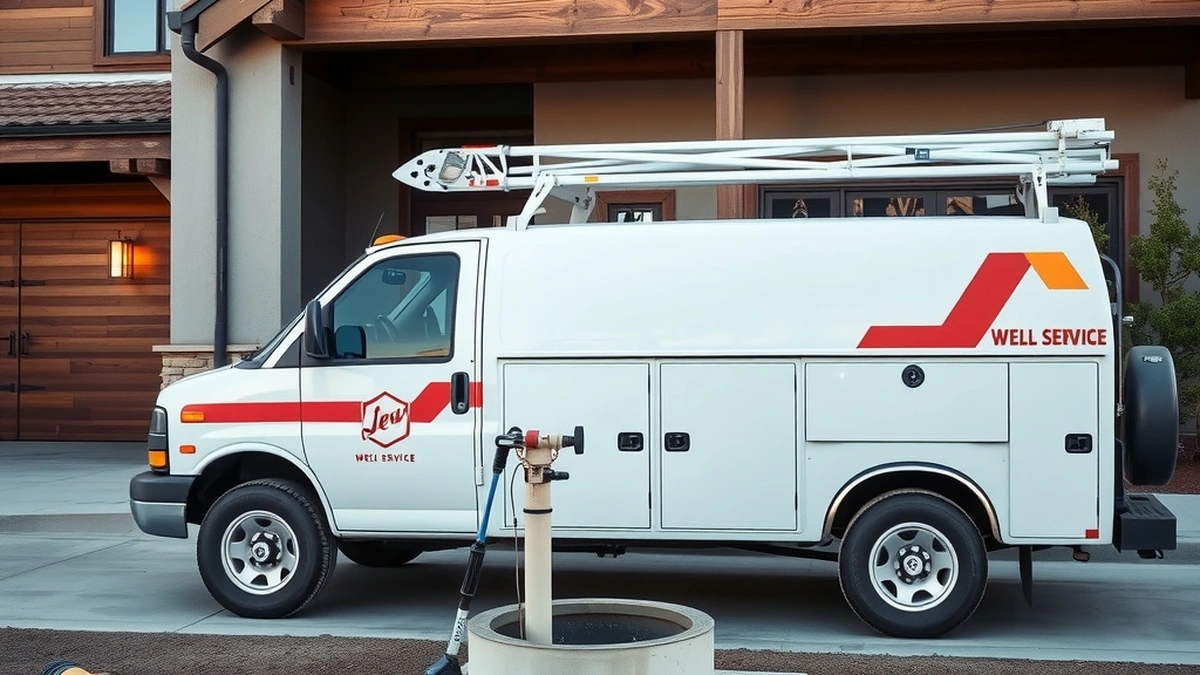
Water well service near you comes from licensed drilling and pump contractors, who handle inspection, pump replacement, pressure problems, and water testing. Expect $150 - $400 for an inspection, $500 - $1,500 to pull and reset a pump, and $40 - $150 for a lab test.
- Well inspection
- $150 - $400
- Pump pull and reset
- $500 - $1,500
- Lab water test
- $40 - $150
- Emergency call
- $200 - $500 after hours
- Licensing
- State or county, varies
Some links on this page are affiliate links.If you buy through them we may earn a commission at no extra cost to you. We do not accept payment for rankings. Read the full disclosure.
Water well service near you is provided by licensed well drillers and pump contractors, not general plumbers. They inspect the wellhead, pressure tank, and controls, pull and replace submersible pumps, and diagnose water quality problems. An inspection costs $150 - $400, and a pump pull runs $500 - $1,500 plus parts.
What Well Service Covers
Well service divides into four jobs. The first is inspection: pressure check, tank charge, control box, wiring, wellhead seal, and a look at the water. The second is mechanical repair: pumps, pressure switches, tanks, check valves, and pitless adapters. The third is well rehabilitation: cleaning, surging, or hydrofracturing a well that has lost yield. The fourth is water testing and treatment.
Most calls fall into the first two. A pump that will not start, a system that short cycles, or water that suddenly runs dirty are the common complaints. Each has a diagnostic path that starts at the pressure gauge and the breaker.
Not every plumber handles wells. A submersible pump sits hundreds of feet down a casing, and pulling it requires a hoist, a pump puller, and experience with the drop pipe and torque arrester. Ask specifically whether the contractor does well work, not just plumbing.
Typical Prices
| Service | Typical cost | Notes |
|---|---|---|
| Inspection and diagnosis | $150 - $400 | Often credited toward repair |
| Pressure switch replacement | $150 - $350 | Part is $20 - $60 |
| Pressure tank replacement | $500 - $1,500 | Tank and labor |
| Pump pull and reset | $500 - $1,500 | Depth dependent |
| Submersible pump replacement | $1,000 - $3,000 | Pump plus labor |
| Well cleaning or surging | $800 - $2,500 | Yield dependent |
| Lab water test | $40 - $150 | Basic panel |
These are estimates for typical residential work, not quotes. Depth is the biggest variable: a 100-foot well is a different job from a 500-foot well, and the pump, wire, and drop pipe all scale with it.
Emergency calls carry a premium. After-hours or weekend response often adds $200 - $500 to the standard rate. If the house has no water and no storage, that premium is usually worth paying.
How to Vet a Contractor
- Check the state driller license. Most states license well contractors, and the number should be verifiable in a public database.
- Ask for a certificate of insurance covering general liability and workers’ compensation.
- Request the well log for your property. If the contractor drilled the well, they should have it; if not, the state or county often keeps a copy.
- Get two written quotes for any job over $500, itemized by part and labor.
- Ask whether the quote includes pulling the pump, replacing the drop pipe, and disinfecting the well after the work.
- Confirm the payment terms and whether a service call fee is credited toward the repair.
A contractor who will not provide a license number or insurance certificate is not worth the risk. Well work involves 240-volt power, heavy equipment, and an opening in the ground that must be sealed correctly.
What Happens on a Service Call
The technician starts at the pressure gauge. A gauge that reads zero with the pump running points to a pump or supply problem. A gauge that swings rapidly points to a waterlogged tank. A gauge that holds steady but the pump will not start points to the switch, control box, or breaker.
Next comes the tank. The technician checks the air precharge with the system drained, which should be 2 PSI below the cut-in pressure. A tank that is full of water and has no air charge is waterlogged and needs replacement or recharging.
Then the electrical check: voltage at the switch, amp draw at the pump, and a visual inspection of the wiring and control box. A pump drawing locked-rotor current is failing; a pump drawing nothing has an open circuit.
Only after those checks does the crew pull the pump. That is the expensive step, and a good contractor explains why it is necessary before starting.
Water Testing and Treatment
Many well problems are water quality problems, not mechanical ones. Iron staining, sulfur odor, hardness scale, and sediment all call for a lab test before equipment is selected. A basic panel costs $40 - $150 and covers bacteria, nitrate, hardness, iron, manganese, and pH.
Treatment pricing follows the test. A softener installed runs $1,200 - $4,500. An iron filter runs $800 - $2,500. A sulfur filter runs $1,000 - $3,000. A UV unit needs a lamp every 12 months at $30 - $90.
Be cautious about a contractor who quotes treatment before the lab report arrives. The sequence should be test, then design, then install. For the treatment decision path, see well water treatment and well water treatment cost.
Maintenance That Prevents Calls
An annual inspection catches most failures before they strand the house. Check the pressure gauge weekly, listen for short cycling, and note any change in taste, color, or pressure.
Keep the wellhead clear and the cap sealed. A cracked cap lets insects and surface water into the casing, which is the usual route for coliform bacteria. Grade the ground around the wellhead so runoff moves away.
Test the water every year for bacteria and nitrate. A $40 - $80 test is cheaper than a service call, and it catches problems that have no visible symptom.
For the mechanical side, see water wells and pumps and submersible well water pump. For control settings, see water well pressure switch. If the water is hard, well water purification system covers the treatment train.
Frequently asked questions
How do I find a reputable well contractor?
Start with your state's driller licensing database and the local health department, then check insurance, ask for the well log, and get two written quotes for anything beyond a service call.
How much does a well inspection cost?
A basic inspection runs $150-$400, including a pressure check, tank inspection, and visual assessment of the wellhead and controls.
What does pulling a pump cost?
Pulling and resetting a submersible pump typically costs $500-$1,500 depending on depth, plus the cost of any parts replaced while the pump is out.
Should I be home for well service?
Yes, for the first visit. The contractor needs access to the pressure tank, breaker panel, and wellhead, and you should see the failed part before it is replaced.
Do well contractors test water?
Many do, and some send samples to a certified lab. You can also collect the sample yourself and deliver it, which usually costs less.
What is a well log and why does it matter?
A well log records the depth, casing, strata, and yield when the well was drilled. It tells a contractor what to expect before pulling a pump.
Sources
Some links are affiliate links.If you buy through them we may earn a commission at no extra cost to you. We do not accept payment for rankings. Read the full disclosure.


